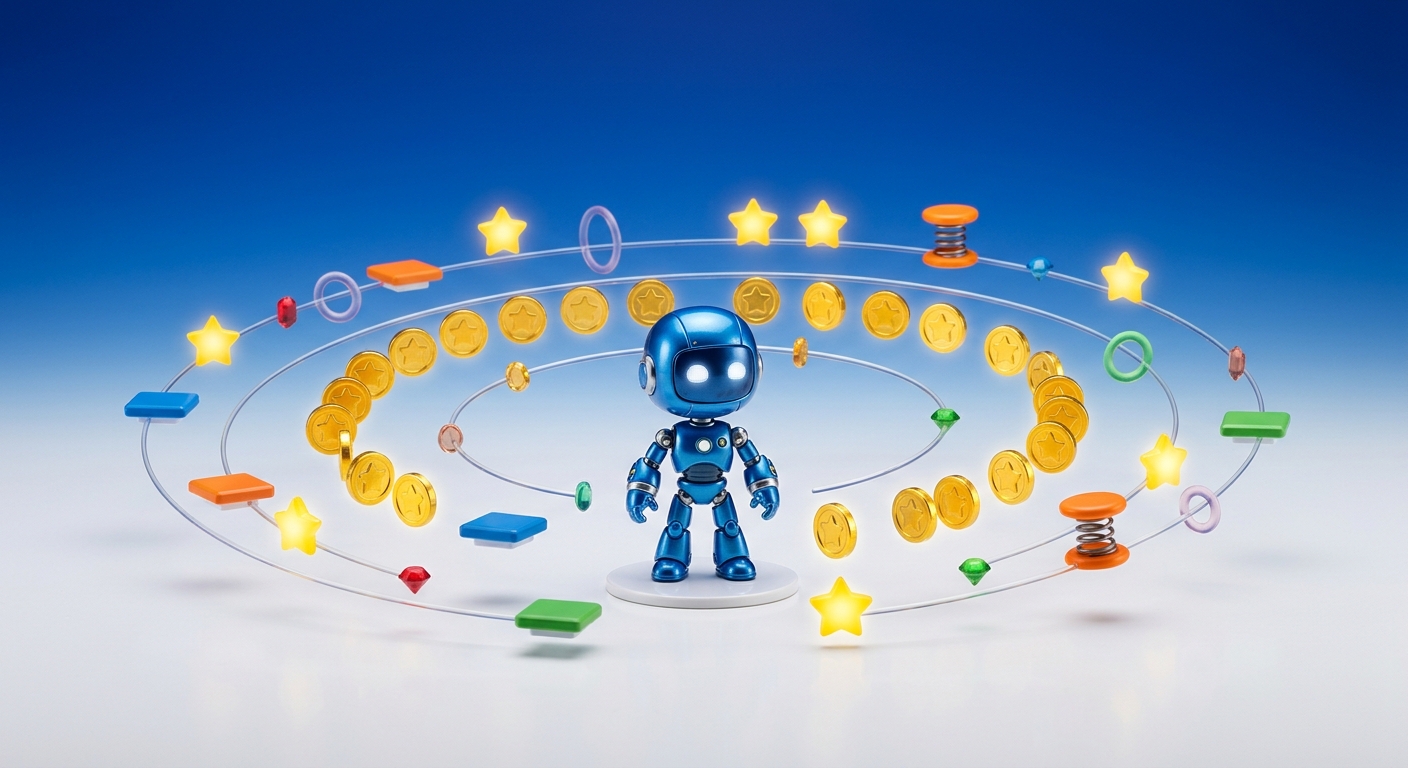
Team Asobi's Astro Bot arrived in September 2024 carrying the full weight of PlayStation's thirty-year history on its tiny robotic shoulders. The cameos are everywhere: franchise icons rendered as collectible bots, levels dressed in the visual language of beloved Sony exclusives, a general atmosphere of carefully curated affection. That context made the question almost inevitable. Was the praise real, or were critics and players simply applauding their own memories?
The mechanics would survive transplantation into a world with no PlayStation cameos at all. That is the clearest test of whether nostalgia is crutch or decoration.
A Critical Darling Built on Joyful Foundations
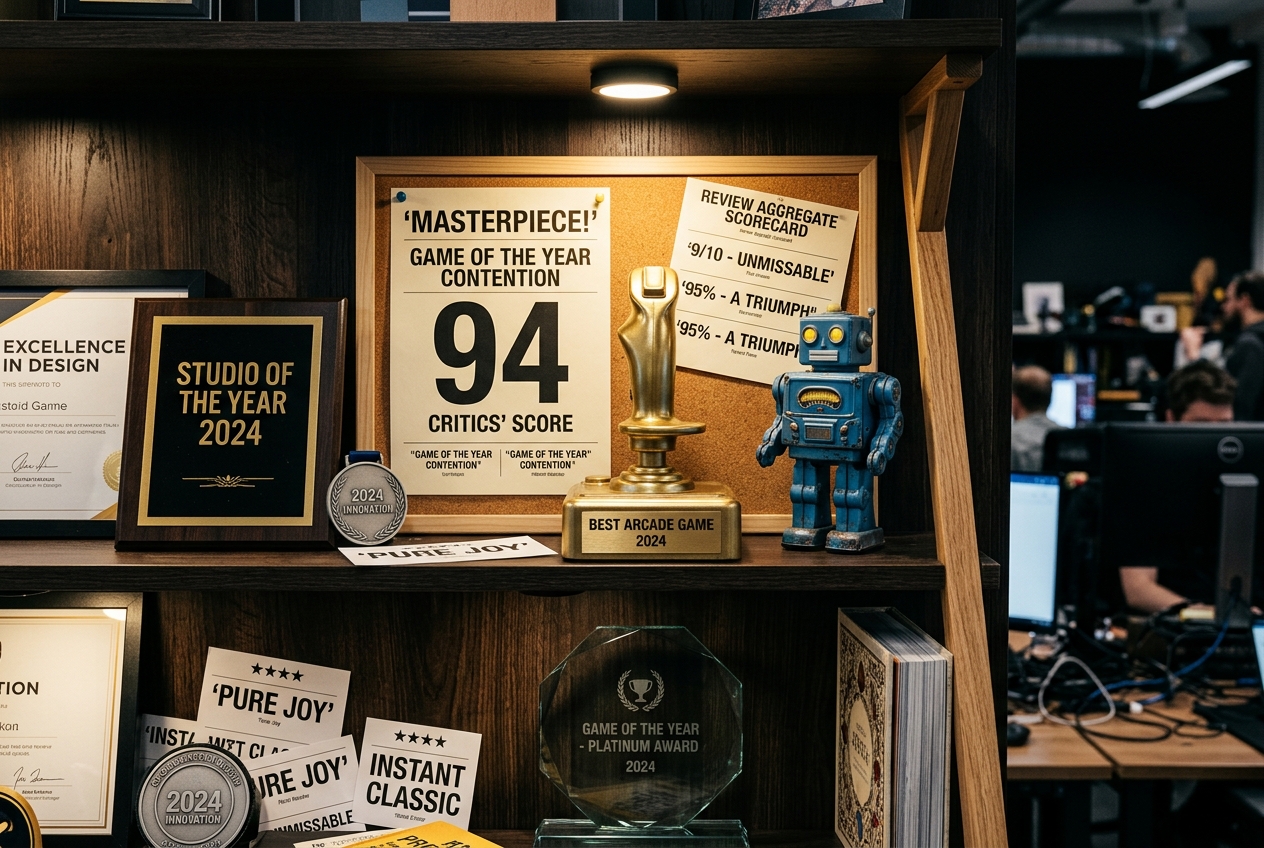
The numbers tell part of the story. Astro Bot landed a 94 on OpenCritic, placing it in the 100th percentile of all scored games on the platform. That kind of ranking is a statistical outlier, not a participation ribbon. What made the score more striking was its consistency: the gap between the highest and lowest critical assessments was unusually narrow. The game did not polarize. It quietly, cheerfully conquered every reviewer who touched it.
IGN's Simon Cardy awarded it a 9 out of 10, calling it "a very inventive platformer," and that word surfaces repeatedly across the critical consensus. Inventive. Not nostalgic. Not charming in a vague, hard-to-argue-with way. Inventive implies mechanical creativity, which implies something earnable by design rather than by brand loyalty alone. For a mascot platformer released in a crowded window, sustaining unanimous enthusiasm at that level points to a studio that understood its medium with rare precision.
Fan Service or Genuine Craft?
The nostalgia question deserves a direct answer. Yes, the game is built as an explicit celebration of PlayStation history. Levels, costumes, and cameo bots reference franchises from Ape Escape to God of War, and longtime fans will feel that recognition in their chest. The concern is legitimate: critics emotionally attached to those properties might grade more generously than the design strictly warrants.
But the evidence from deeper critical reads pushes back against that worry. Nerds of a Feather, a site with a reputation for literary rigor in games criticism, treated the nostalgia layer as garnish rather than main course. Their argument: the stage design and DualSense integration would impress a player with zero PlayStation history. That framing is useful because it isolates what the game actually does mechanically from what it references culturally.
The DualSense integration is the clearest example. Haptic feedback and adaptive trigger resistance are used not as gimmicks but as informational channels. The controller becomes part of the game's spatial language, communicating texture, resistance, and impact in ways that competitors have not matched. That is a design decision, not a licensing arrangement. You cannot outsource that quality to nostalgia.
Award Season Validation and Studio Ascendancy
The industry's formal recognition added another layer to the story. The Golden Joystick Awards 2024 crowned Team Asobi as Studio of the Year, placing a small Sony-internal team alongside developers with far larger rosters and budgets. Winning that award on the back of a single title is genuinely difficult in a landscape that typically rewards prolific output. The win reflects not just Astro Bot's quality but the totality of the studio's vision for what a PlayStation-exclusive platformer could be.
The arc itself is worth noting. Team Asobi went from shipping Astro's Playroom as a PS5 pack-in tech demo to sweeping a major awards ceremony in under four years. That trajectory is one of the more compelling studio-growth stories in recent console history. It also carries real commercial weight: a studio that can convert critical goodwill into a genuine franchise gives Sony a family-friendly prestige anchor that the platform has historically lacked, at least compared to what Nintendo has built around Mario.
Games like Star Dive and Segment Storm show how tight design loops can create lasting appeal in shorter formats. Astro Bot operates in the opposite direction, using the same principle across a full-length game: every mechanic earns its place, and nothing outstays its welcome.
Standalone Masterpiece or Contextual Triumph? The Verdict
The most honest reading of the evidence is that Astro Bot operates on two simultaneous frequencies. As a PlayStation museum piece, it is emotionally resonant for longtime fans. As a pure platformer, it is rigorous, surprising, and demanding enough to hold its own against the genre's benchmarks. Those two things are not in conflict. They coexist because the design is strong enough to carry both.
Level variety is a recurring point of praise across sources. Each world introduces a new mechanic or DualSense interaction before retiring it, preventing the fatigue that afflicts platformers that fall in love with one idea and repeat it past its welcome. That kind of editorial discipline is harder than it looks, and it is the kind of discipline that nostalgia cannot manufacture.
Difficulty calibration also earned consistent positive notes. The game offers enough resistance to satisfy experienced players without constructing barriers that would push away the younger or more casual audience its cheerful aesthetic explicitly invites. That balance is a design achievement, not a default setting.
The PlayStation history sets the table. The feast is something anyone willing to sit down can enjoy. That is the distinction that matters, and the data, the awards, and the depth of critical engagement all point toward the same conclusion: the game holds up on its own terms, with or without the context that surrounds it.
Sources

Priya Nambiar covers competitive gaming and emerging esports ecosystems for GoAndGame, with a particular focus on Southeast Asian scenes and grassroots tournament culture. She came up through community forums before moving into sports journalism, and that background shapes everything she writes.


