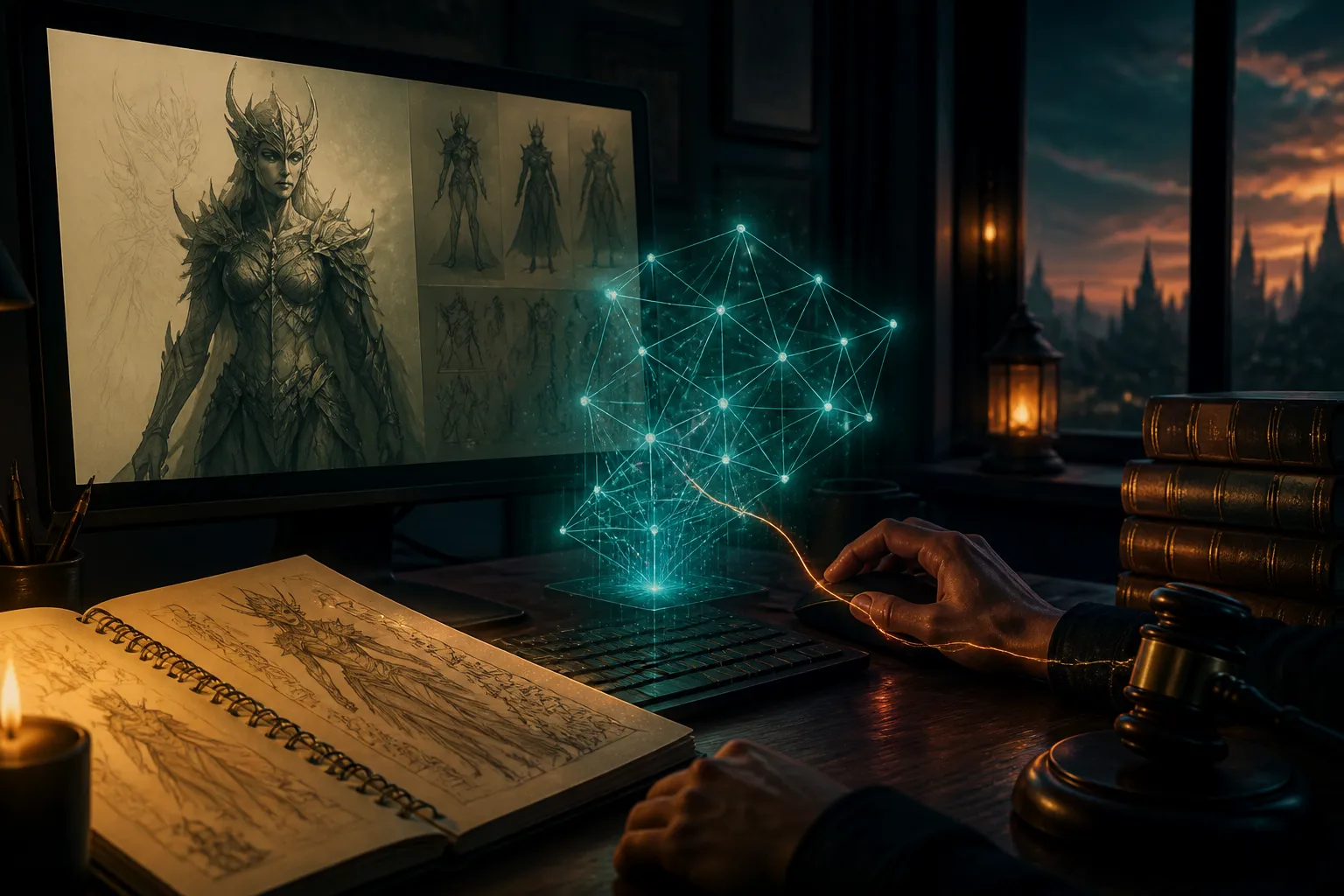
AI tools are now part of many game pipelines. Concept art, placeholder dialogue and code suggestions all come out of a prompt box. The legal question behind them is simple to ask. Who owns what comes out? In the U.S., the Copyright Office has given a partial answer, and studios should know exactly how far it goes.
How the Copyright Office Got Here
The Office began examining copyright and AI in early 2023. It looked at two issues: whether works made with AI can be copyrighted, and how copyrighted material is used to train AI models. In August 2023 it published a notice of inquiry in the Federal Register and asked the public to weigh in. By December 2023 it had received over 10,000 comments. The reply deadline was also extended, in an announcement dated November 15, 2023.
The findings are being released as a three-part report. Part 1, on digital replicas, came out on July 31, 2024, and recommended a federal digital replica law. Part 2 covers the copyrightability of generative AI outputs. It was published on January 29, 2025. Part 3, on generative AI training, appeared in pre-publication form on May 9, 2025. The Office has said a final version will follow, and it does not expect substantive changes to the analysis or conclusions. Part 2 is the one that matters most for anyone shipping assets.
What Counts as Human Authorship
Part 2 sets a clear test. Output from generative AI can be protected only where a human author has determined enough of the expressive elements. If a machine decides those elements, the Register of Copyrights has said, that material is not protected.
The report names two routes to protection. The first applies when a human-authored work is perceptible in the AI output. The second applies when a human makes creative arrangements or modifications to the output. Prompts alone do not clear the bar. A long, careful prompt is still just a prompt.
The Office also leaves room for AI-assisted work. Using AI to help create something does not bar copyright. Neither does placing AI-generated material inside a larger human-made work. The human-made parts can still be protected. The Office also concluded that the case has not been made for new law giving extra protection to AI outputs. It considers existing principles flexible enough, as they have been for earlier technologies.
What It Means for a Studio Pipeline
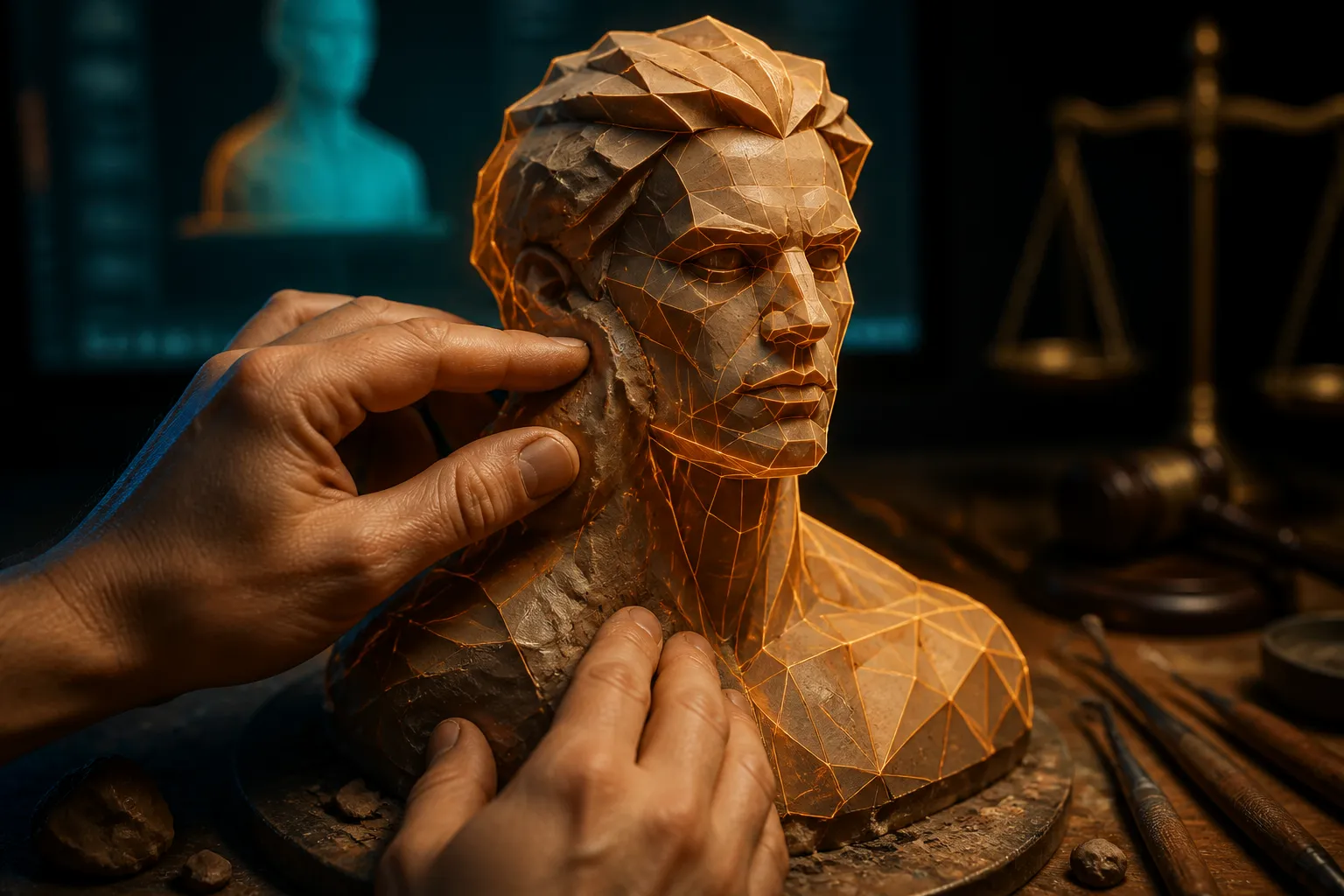
The practical risk is plain. If a machine determined the expressive elements of an asset, the studio may have nothing to claim. A background painting taken straight from an image generator is a likely example. So is a block of code pasted in from an assistant with no human review or reworking. The Office's position points that way, though it does not rule on specific game assets.
The fix is human involvement that can be shown. The Office's framework turns on how a person arranged, selected or modified the output. So a studio should be able to point to that work. Say an artist paints over a generated sketch and redraws the silhouette. Save the layered file, not just the final export. A designer who rewrites generated quest text should keep the draft and the edit.
None of this needs a new department. It needs habits. Decide which assets may start from AI output. Require a named person to revise them. Keep version history. Simply pressing generate is not the creative act the Office describes. The shaping afterward may be.
What the Office Has Not Addressed
The reports are general. They do not say how the rules apply to AI-generated art, code, dialogue or other assets in games. A studio has to apply broad principles to its own pipeline, and nobody has tested those applications yet. Where the line sits between enough human input and too little is still unclear for most real cases.
Part 3 raises a separate set of questions about training data and fair use. Developers who worry about where a model's training material came from should read that part directly and watch for the final version. This article does not summarize its reasoning.
The reports also stop at the U.S. border. They say nothing about copyright law elsewhere. They do not cover contracts, licensing terms with AI vendors or platform policies, which often decide what a studio may do in practice. And they offer no workflow guidance for building AI tools into production. Studios will have to write their own rules for now. The one firm point is the requirement for a human hand in the work, and a studio that cannot show that hand should not assume it owns the result.
Sources
- Copyright and Artificial Intelligence | U.S. Copyright Office
- https://vertexaisearch.cloud.google.com/grounding-api-redirect/AUZIYQH4jehW2t0w0JHokwKCDREYbuuENvkT-dewE8MO7LjUl57rqkbXVpV1gAu1c8bKMex6cuPYJidzofHafzKuFCX7ajc_iWpCcWYJVqP9it93Krbo1eVuDHonws0pi7I4Azau6_czBiHL85JDREgLJqMXDpywtlscaJgPZfK7QuNz0-2Q2VnmV83vXq8b8QlG3bWq-15GC6SV6nQQYw==
- NewsNet Issue 1060 | U.S. Copyright Office
Julian Thorne is a seasoned house writer for GoAndGame, known for his deep dives into obscure game mechanics and industry trends. He often explores the sociological impact of gaming, blending critical analysis with historical context.


