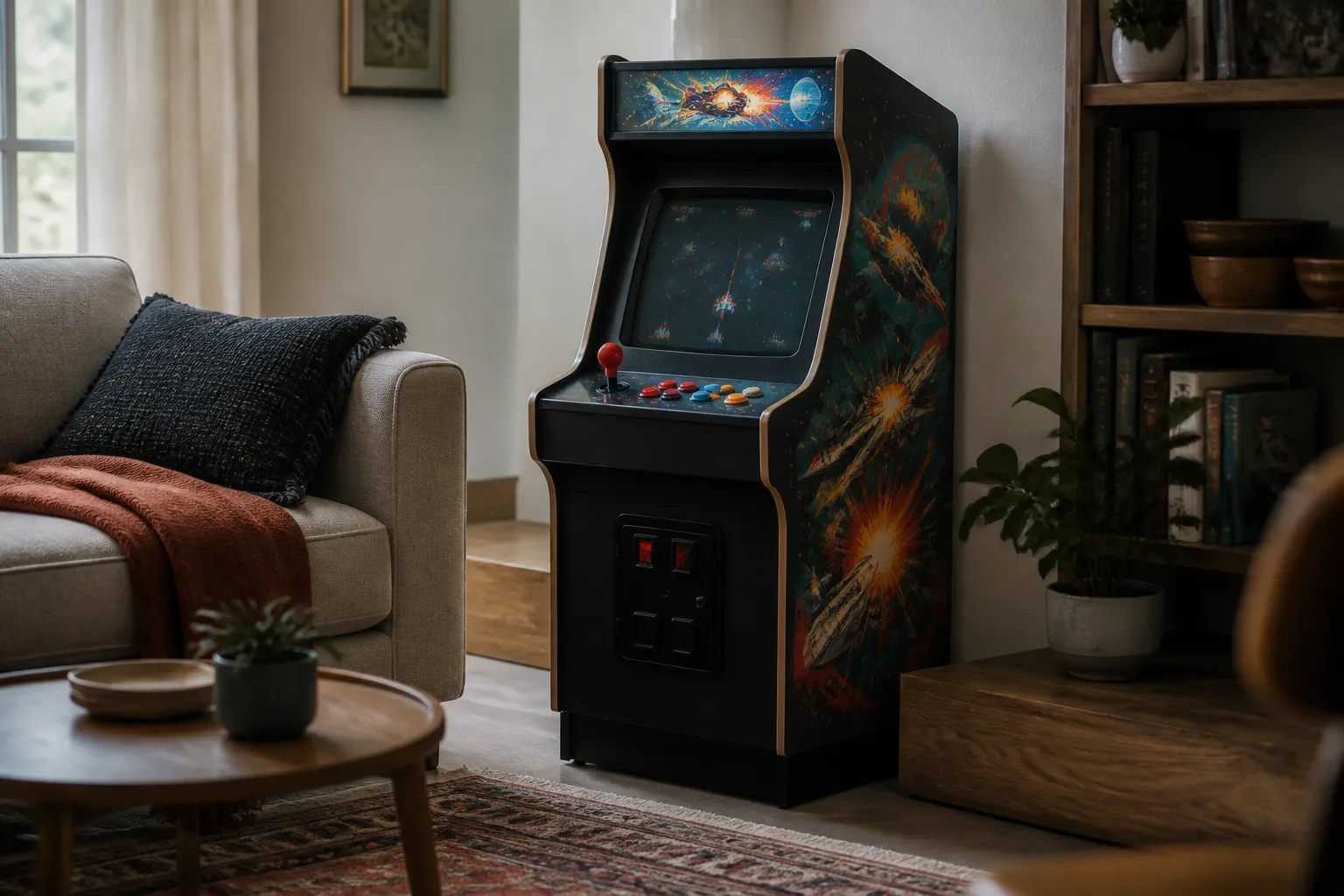
Arcade1Up built its product around one problem: fit. Full-size arcade recreations are heavy and costly, and they do not suit most homes. The company's answer was a smaller cabinet. That choice tells you who the company hopes is buying, even though the sources do not show who actually is.
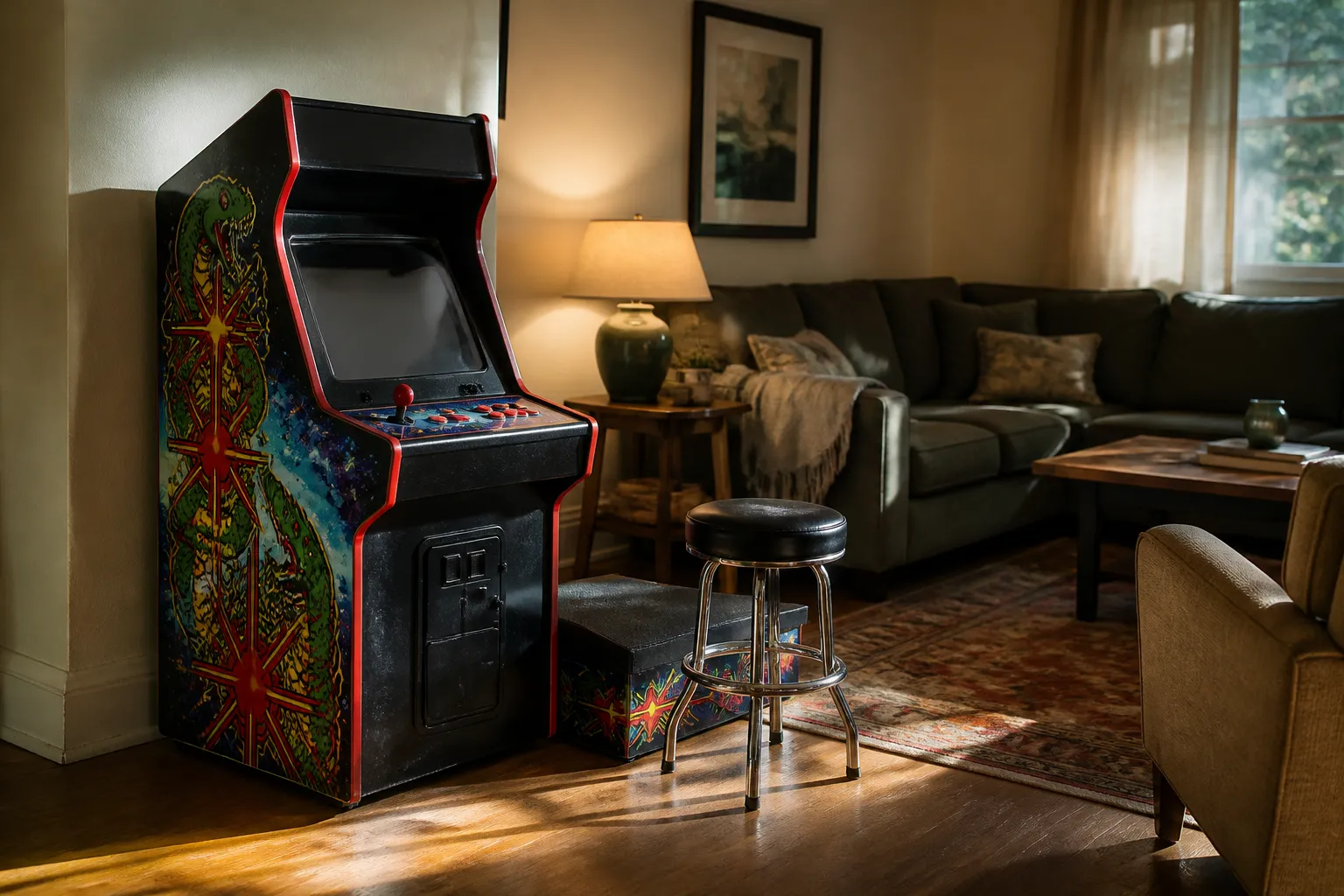
Where the Cabinet Came From
Arcade1Up launched in September 2018 as a subsidiary of Tastemakers, Inc., based in Miami. According to Wikipedia, CEO Scott Bachrach wanted an alternative to custom arcade recreations. Those were costly and heavy, and they were poorly suited to homes, offices, or arcade bars. So the origin story starts with a fit problem. Nostalgia comes second.
The answer was a 3/4-scale cabinet running games on modern components and emulation. Licensing began with early 1970s and 1980s titles from Namco, Midway, and Atari. Games from the 1990s onward came later. The catalog grew outward from a small, familiar core.
The Product Lines and Price Points
Today the lineup runs across Supreme Series, Deluxe Series, and Countercades. Themed releases include OutRun, Sonic the Hedgehog, Street Fighter II, PAC-MAN, and Ultimate Mortal Kombat 3. Current Supreme listings on the company's shop page run from $599 to $699.99. Ultimate Mortal Kombat 3 is at the top, and OutRun is at $599. Street Fighter II and PAC-MAN are each $649.99. The Ms. PAC-MAN Pub Table lists at $599.99.
The same sources describe a basic unit with an MSRP of about $250. The two figures come from different pages and are not dated, so I would not treat them as a clean before and after. They do show a wide spread between a basic cabinet and a Supreme one. The Supreme listings describe 19-inch BOE displays, while early kits shipped with a 17-inch LCD. A bigger screen is one visible difference, though the sources do not say what else justifies the gap.
Most systems ship with between two and twelve games from the same family or genre, sharing one control set. A fighting cabinet will not play a driving game well. Judge value by the game list and the controls, not by the count alone.
Where Buyers Encounter the Product
Wayfair lists Arcade1Up under game room furniture. The cabinets sit beside gaming chairs, gaming desks, and game tables. That placement suggests the cabinet is being sold as something you furnish a room with. The company also sells through its own site and major retailers, and it advertises free shipping within the continental US.
I would not push this too far. The sources do not say which channel sells the most. A shelf position shows intent. It does not show behavior. Anyone claiming to know the typical buyer from a retailer category page is guessing.
Fit, Assembly, and Build Quality
Assembled cabinets stand about 4 feet tall and weigh under 60 pounds. Optional risers add about a foot. Those numbers decide whether a cabinet works in a spare room, an office corner, or a small bar. Measure the spot first, including ceiling height if you plan to add a riser, and check that you can carry a boxed unit to where it will live.
Early units shipped as ready-to-assemble kits. They came with pre-cut fiberboard side frames, marquee stickers, a controller panel, and the emulation and power hardware. Ask whether the model you want arrives assembled and how long a build takes. The company also offers a companion app, product registration, and a warranty page, though the sources do not spell out what the warranty covers.
The first production run had reported quality control problems. The company says it used them to improve later products. That is a company-side account, and the sources include no independent reviews of current builds or of how risers change play. Check recent buyer reviews before spending $600 or more.
- Is it a kit, and how long does assembly take?
- Which games are included, and from which publisher?
- What does the warranty cover, and how do returns work?
What the Sources Cannot Tell Us
The gaps are large. The sources do not identify buyers: households, collectors, offices, or bars. They do not describe motives. They give no sales volume, market size, or category growth, so I cannot call this a measurable boom. What I can see is the company's own expansion in product lines and price tiers.
Open questions remain. What is the current financial state of Tastemakers and Arcade1Up, and what was the leadership change noted in the Wikipedia infobox? Does emulation raise licensing issues beyond the early deals? Shipping costs outside the continental US are also unstated. Until someone publishes sales data or a buyer survey, the read stays narrow. The product is designed for tight spaces and sold as furniture. Who says yes to that pitch is still unknown.

Priya Nambiar covers competitive gaming and emerging esports ecosystems for GoAndGame, with a particular focus on Southeast Asian scenes and grassroots tournament culture. She came up through community forums before moving into sports journalism, and that background shapes everything she writes.


