
On October 22, 2025, Valve changed one rule in Counter-Strike 2 and a speculative market lost roughly the value of a mid-sized country's tech sector in an afternoon. If you run a small tournament that takes skins as prizes or partner payment, that afternoon is your risk model. Here is how to read it without panic and without false comfort.
What the October 2025 update changed
The update added a Trade Up option. Players can combine five high-tier Covert skins and get a rare knife or glove in return. Reports describe it as a path that was closed before. Previously, ten skins of one color traded up to the next tier, and gold items were excluded from that process.
The rarity ladder matters here. Weapon cases are loot boxes that cost real money to open. They yield grey or blue (common), purple (uncommon), red (rare) or gold (extremely rare). Gold covers knives and gloves, and it sits at the top of the speculative market because scarcity is the whole point. Make gold easier to reach and you have changed what scarcity means. Supply of the top tier rose, and prices followed it down.
Size and speed of the price drop
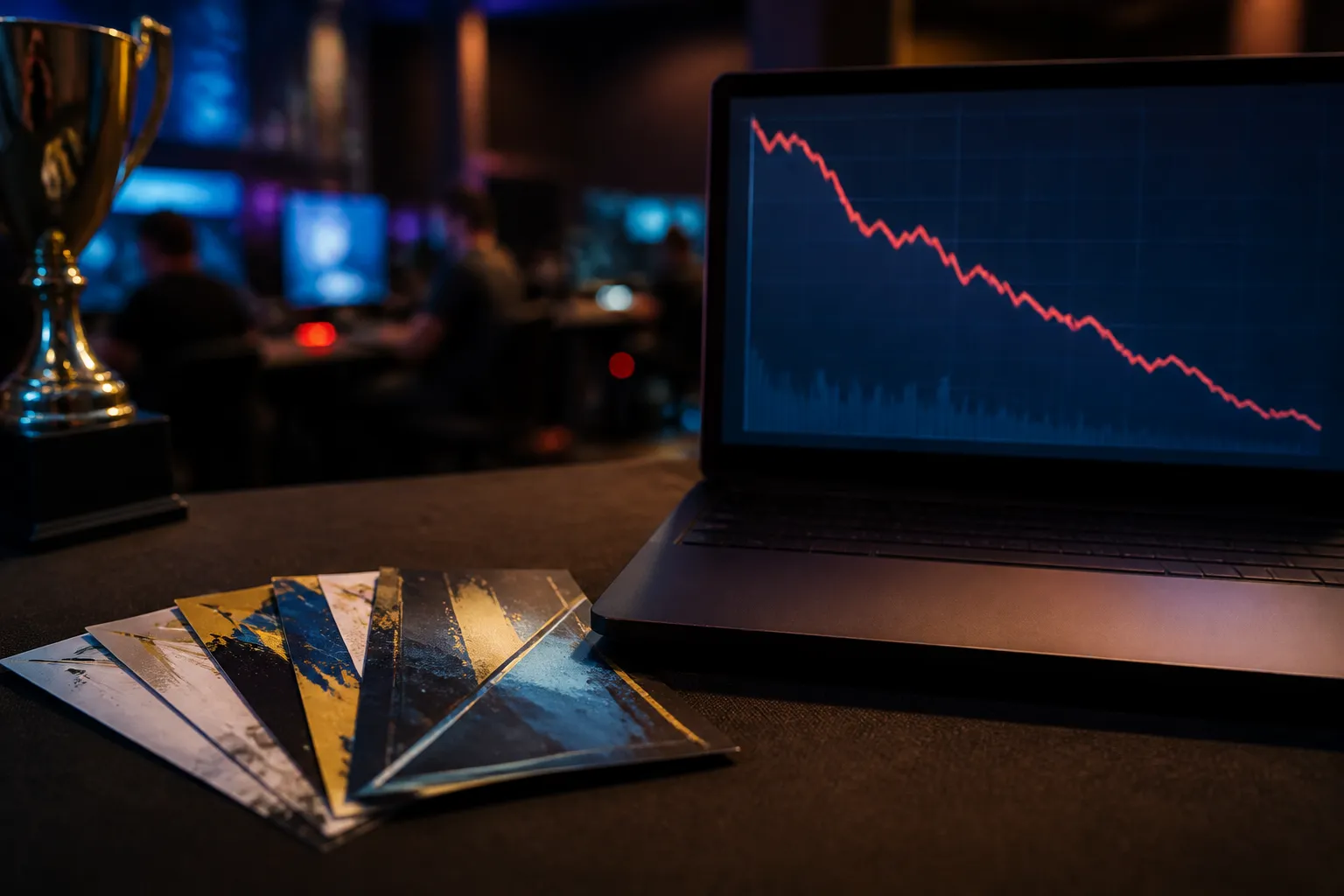
The numbers are big, and they are not audited. Analysts estimated nearly $2 billion vanished from the CS2 item economy within hours. Price Empire reported a 42 percent drop in the value of trending skins inside 24 hours. Another report put total market cap falling from $5.9 billion to $4.2 billion in a day, a loss of about $1.75 billion.
Notice the spread. Estimates run from $1.75 billion to $2 billion, and they come from analysts and analytics sites, not from Valve. Treat the crash as large and fast, not as a precise figure.
The single-item view is more useful for an organizer. The M4A1 Hot Rod reportedly lost nearly $2,000 off its average listing price. Imagine that item as a prize pool line. The value you announced on Monday is not the value your winner holds on Tuesday.
Trade Protection and the scam side of the story
The same push touched fraud. Trade Protection locks skins received in a trade for seven days and flags them as Trade Protected. Victims can reverse a fraudulent trade inside that window, and the items return to their original owners.
Scammers live on speed. Bot chains hop stolen items between accounts, and instant third-party resellers can cash them out in minutes. A seven-day lock breaks that rhythm. One report suggests a scammer who once made $10,000 on a rare knife might now earn about half that, if the item sells at all.
For event organizers, the red flags are familiar to anyone from community forums. Phishing steals Steam credentials. Fake verification bots trick users into handing over items. Cloned marketplaces mimic real trading interfaces. If a participant gets burned through a link posted in your Discord, your event name is attached to the story. That is a reputation cost no sponsor invoice covers.
What this means for small tournament sponsorship
Start with one rule. Value any skin-denominated prize or partner asset as volatile. The update showed how fast value can disappear, and nothing in the sources suggests it cannot happen again.
Then ask three questions before signing anything:
- Are payouts or prizes denominated in skins, and how exposed are they to a sudden drop?
- Does the sponsor's audience depend on trade-up or case-opening activity that this update changed?
- Could scam risk from fake trading pages or phishing touch participants or the event's name?
Now the gaps, stated plainly. The sources do not say how small tournaments currently land skin-linked or gambling-adjacent sponsors, or what typical amounts look like. They say nothing on contract terms, disclosure rules or Valve's policies for tournament partners. They do not tell us whether prices have recovered since the first drop. And they do not cover how regulators in any jurisdiction treat case openings or skin trading.
So the skeptical-optimistic read is narrow. Skin money can still fund a bracket. But pay out in cash or fixed-value terms where you can, write the valuation date into any deal, and keep a scam warning pinned where your players actually read.
Sources

Priya Nambiar covers competitive gaming and emerging esports ecosystems for GoAndGame, with a particular focus on Southeast Asian scenes and grassroots tournament culture. She came up through community forums before moving into sports journalism, and that background shapes everything she writes.


