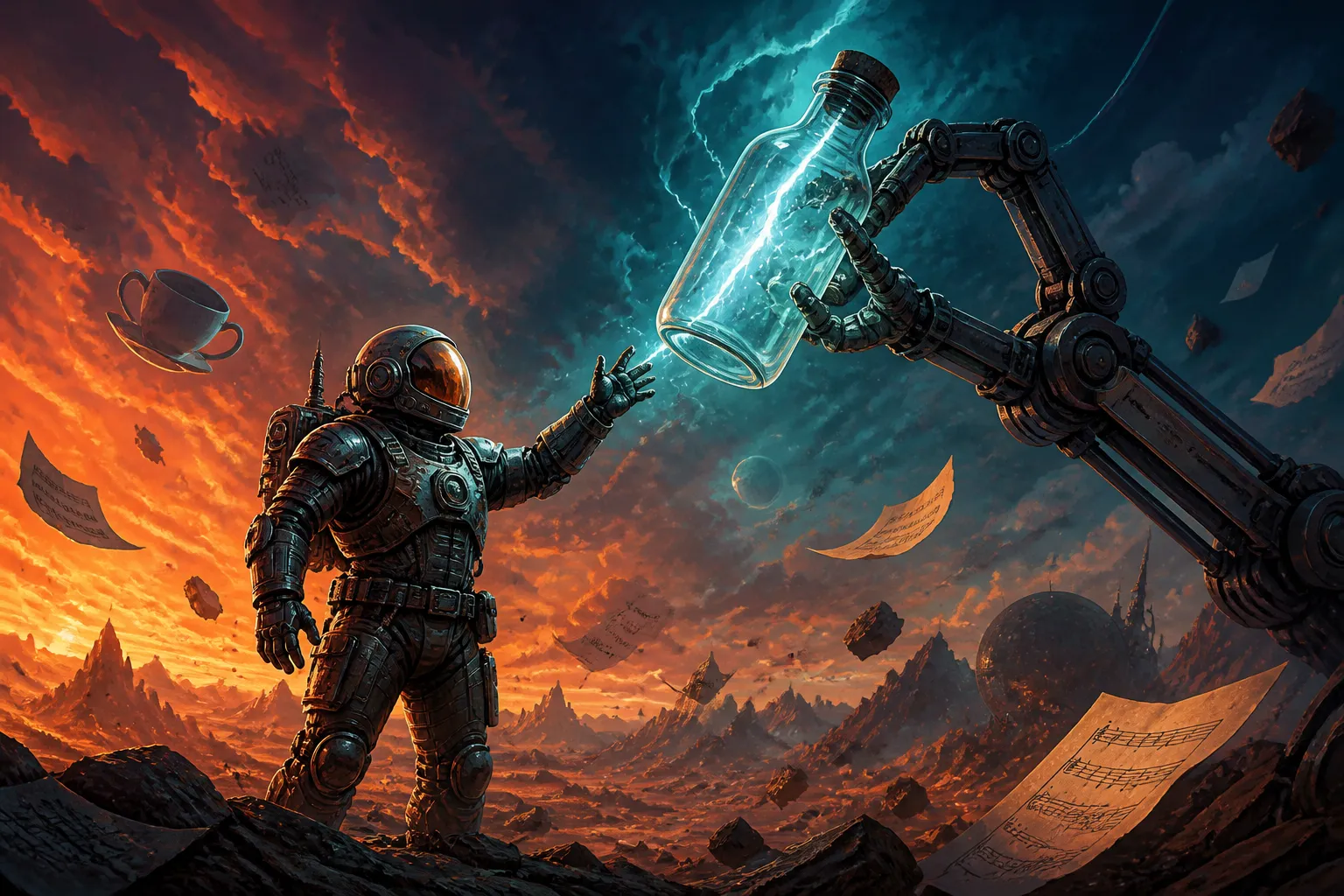
The academic and professional gaming circuits frequently offer glimpses into the mechanisms of popular titles, but often these glimpses arrive as titles and speaker lists, not complete disclosures. Such is the case with the forthcoming GDC 2025 sessions concerning Helldivers 2. Two specific listings have surfaced on the GDC Vault, outlining presentations from key figures behind the game.
Johan Pilestedt of Arrowhead Game Studios is slated to present "Helldivers 2: Capturing Lightning in a Bottle" under the Design track. Concurrently, Wilbert Roget of RogetMusic will lead an Audio session titled "A Cup of Liber-Tea: Scoring Satire with Sincerity in 'Helldivers 2'." These listings are direct facts. Beyond these titles, speakers, and track categories, the sources remain silent on content, arguments, or conclusions. This limitation demands a critical approach to any claims derived from them.
The Elusive Spark of Emergent Design
Pilestedt's session title, "Capturing Lightning in a Bottle," presents a design challenge at its core. It suggests an examination of how something intrinsically volatile and unpredictable, the "lightning", was harnessed within a structured game environment. This framing implicitly acknowledges that some of Helldivers 2's perceived success stems from emergent phenomena, player-driven narratives, or unexpected community engagement. The 'bottle' represents the design framework, the rules, and the systems built to contain or, more accurately, to guide this emergent chaos.
A critical analysis of this concept would question the degree of genuine "capture." Does it imply a mastery over player behavior, or a flexible system designed to embrace and adapt to player unpredictability? Historical game design often grappled with this tension, from early sandbox titles where player movement created novel scenarios, to more contemporary systems that feed player statistics back into game world events. The "lightning" in Helldivers 2 could refer to the game's immediate cultural impact, its viral moments, or the seemingly spontaneous player-led meta-narratives that extend beyond the explicit game lore. Understanding this "capture" requires more than a title; it demands insight into the actual design processes and iterations.

The implied subject is not merely the development of a successful game, but the deliberate cultivation of environments where success and failure manifest in compelling, often unexpected ways. This extends beyond simple win/loss conditions to the broader experience of a mission gone spectacularly wrong, yet yielding memorable stories. The philosophical challenge here is to distinguish between planned design and happy accident, and to analyze how game developers account for the latter.
The Dichotomy of Sound: Satire and Sincerity
Roget's audio session, "A Cup of Liber-Tea: Scoring Satire with Sincerity," offers another intriguing juxtaposition. The title itself suggests a deliberate balancing act. Satire typically relies on exaggeration, irony, and often a degree of detachment to critique or mock. Sincerity, however, implies genuine emotion, earnestness, and a direct appeal to feeling. To achieve both simultaneously, particularly through music, is a sophisticated undertaking.
The audio design in Helldivers 2, if this title is any indication, must navigate this dual mandate. How does one compose a score that both underscores the bombastic, jingoistic humor of Super Earth's propaganda while also evoking a genuine sense of camaraderie, sacrifice, or urgency during gameplay? This is not merely about writing two different types of music. It suggests an intertwining, where the exaggerated fanfares of liberty might, in moments of intense combat, genuinely stir a player's resolve. This approach recalls historical examples in media where overt nationalism in scores was repurposed for dramatic effect, sometimes even subverting its original intent through context.
Consider the martial themes that often accompany "democratic" victories or strategic briefings in the game. Are these purely ironic, or do they also function to genuinely elevate the player's sense of purpose, however misguided that purpose might be in the game's satirical frame? The answer likely lies in the precise musical techniques employed, such as orchestration, harmonic language, and thematic development. Roget's session could shed light on how audio composition can simultaneously critique and endorse, creating a complex emotional response rather than a singular, clear message.
"Metaphysics of Democratic Chaos": An Unattributed Framing
It is crucial to note that the framing "The Art of Glorious Failure - Navigating the Metaphysics of Democratic Chaos" is editorial. It does not appear in either GDC Vault listing. Therefore, attributing claims about the "metaphysics of democratic chaos" or "glorious failure" directly to Pilestedt or Roget's forthcoming talks would be speculative. This framing, while provocative, represents an interpretive lens applied to the game, not a documented finding from these specific sessions.
The concept of "democratic chaos" as a player-driven phenomenon, where the collective actions of a large player base create unpredictable, emergent outcomes, is certainly relevant to Helldivers 2. Players operate with a degree of agency, contributing to galactic campaigns without centralized coordination beyond high-level objectives. The "chaos" part stems from the individual decisions compounding into system-wide effects, often not perfectly aligning with a single, clear strategy. The "metaphysics" would then inquire into the fundamental nature of this player agency, its constraints, and its ultimate impact on the game world's persistent state. This goes beyond simple mechanics; it questions the very being of the player-driven narrative.
For such a philosophical exploration to hold academic weight, it requires a foundation of evidence. Relying solely on a session title to infer content about player psychology, systemic design, or the philosophical underpinnings of game failure is insufficient. The critical observer must differentiate between a potential area of inquiry suggested by a game's characteristics and an actual argument presented by its creators.
Closing the Information Gap
To move beyond titles and into substantive analysis of Helldivers 2's design and audio, specific content from these GDC 2025 sessions is indispensable. The current GDC Vault pages provide no such details; they do not include abstracts, slide decks, or session recordings. Furthermore, the presence of a member login notice on the GDC Vault pages suggests that access to recordings, once available, may be restricted, requiring confirmation of availability for non-members.
The absence of session dates, lengths, or direct links to presentation materials means any current discussion about the "how" or "why" behind Helldivers 2's design success or audio philosophy remains largely theoretical. A comprehensive understanding requires the session recordings, official transcripts, or authoritative summaries from the speakers themselves. Until then, these GDC 2025 listings serve as intriguing signposts, hinting at potential areas of study but offering little in the way of concrete answers.

Julian Thorne is a seasoned house writer for GoAndGame, known for his deep dives into obscure game mechanics and industry trends. He often explores the sociological impact of gaming, blending critical analysis with historical context.


