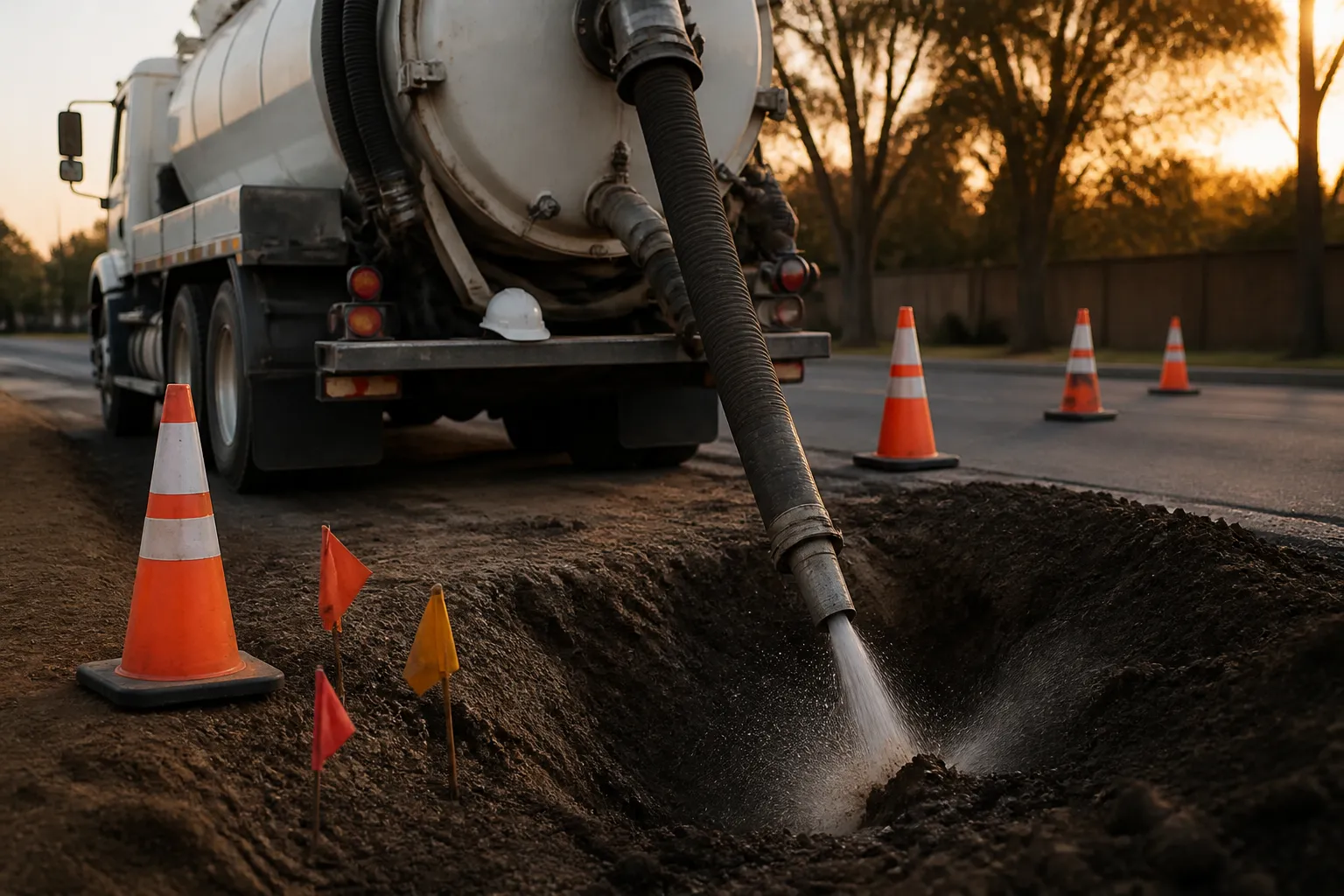
Say "dirt pump" and half the room thinks of a game, the other half thinks of a truck. This guide is about the truck side: vacuum excavation, the practice of loosening soil with water or air and sucking the mess away. The title promises pressure management and not boxing yourself in. The sources cover the first part loosely and the second not at all. I will tell you where that line falls as we go.
What vacuum excavation is and why crews use it
Vacuum excavation is often called soft digging. It is non-destructive. A high-pressure stream of water or air breaks up the soil, and a vacuum pulls the debris out. No bucket teeth, no shovel blade scraping a buried line.
The payoff is precision. Done correctly, it lowers the risk of striking existing utilities, and it is more precise than manual digging or mechanical equipment. Note the phrase "done correctly." The method does not make a careless crew safe. It just gives a careful crew better odds.
There are two core flavors. Hydro excavation uses a water pump to make a powerful stream. Air excavation uses compressed air. Everything else in the planning flows from that choice.
How the machine and the process work
The setup is a truck- or trailer-mounted unit. It carries a high-pressure source (water or air), a vacuum hose, and a debris tank. The operator works the hose, the loosened material gets pulled into the tank, and the hole gets deeper without anyone swinging a tool at it.
With hydro, pressurized water leaves an oscillating nozzle and breaks up the soil. Some units have onboard boilers that heat the water, which helps in frozen ground and tough soil. With air, compressed air dislodges the soil and adds no moisture. That suits dry conditions, and the excavated material stays suitable for potential reuse.
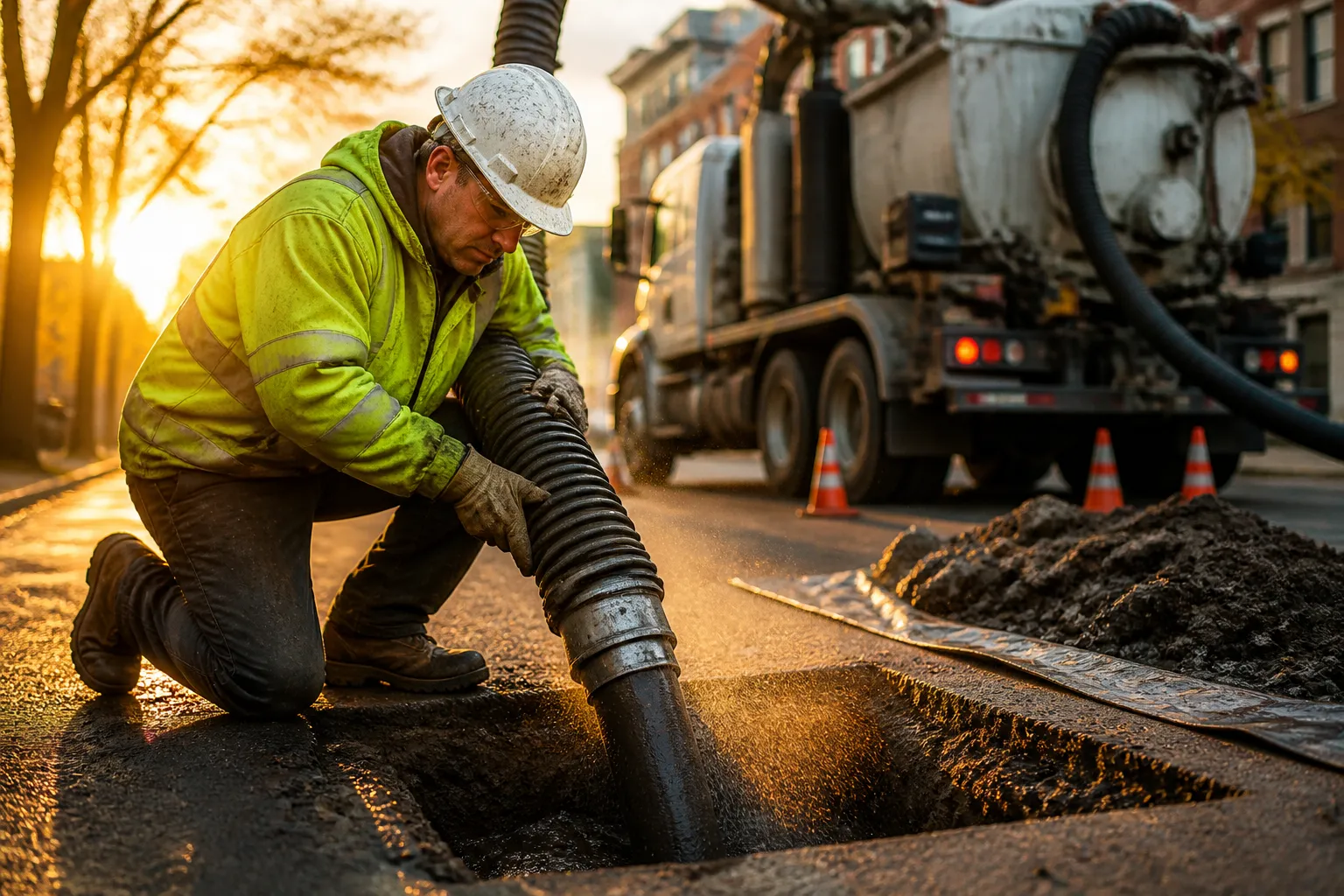
Then comes suction. The hose pulls the loose debris into the storage tank. In practice the operator is balancing two things at once: how fast the stream loosens material and how fast the hose can clear it. Fall behind on either and the hole gets messy.
Choosing a method, a machine, and a plan for the spoils
The decision rule is short. Pick air for dry conditions and for jobs where reusing the dug material matters. Pick hydro for tough soil or frozen ground.
Disposal follows from that pick, and this is where crews get caught. Air avoids the hunt for an approved dump site. Add water and the debris cannot simply go back in the hole. You need an approved spoil location. Ask that question before the first pass, not after the tank is full.
Red flag: water-laden debris shoved back into the hole with no approved disposal location. That conflicts with the source's guidance.
On machines, Ditch Witch labels its trailer vacs HX and its truck vacs HXT. The Warlock Series are the largest truck vacs in that fleet. For tight quarters, the source points to compact options such as the W8. The source gives no prices, so budget questions go to a dealer.
Questions to ask before anyone starts
- Is the method hydro or air?
- Will water be added to the debris?
- If so, is an approved dump site identified for spoils?
- Does the work follow the Common Ground Alliance guidance on excavation within the tolerance zone?
That last one points to the CGA Best Practices Guide, Version 22.0. Section 5.32 covers vacuum excavation, and section 5.20 covers excavation within the tolerance zone. The pages I reviewed returned only navigation text. So I can tell you those sections exist, not what they require. Read them directly before you rely on them.
What the sources do not tell you
Here is the honest gap list. There are no cost figures. There is nothing on operator training or certification. There are no depth limits, pressure ratings, or PSI and GPM settings, which means the "manage pressure" part of the title is not answered here. Utility locating, state one-call rules, and permitting are also missing, and you need all of those before any dig.
The biggest hole is the "boxing yourself in" idea. None of the sources address getting a crew or machine trapped on a site. Treat it as an open question and plan access, exit routes, and tank-dump trips with your supervisor and the manufacturer's manual.
If you want the game version of all this, Dirt Pump is in the arcade. It will teach you about pressure and getting trapped much faster than the sources will.
Sources

Mara Solis is a staff writer at GoAndGame covering board games, tabletop strategy, and the culture around competitive play. She has spent years logging hours at game tables from local hobby shops to international conventions. Her writing blends practical insight with a genuine enthusiasm for the communities games create.


