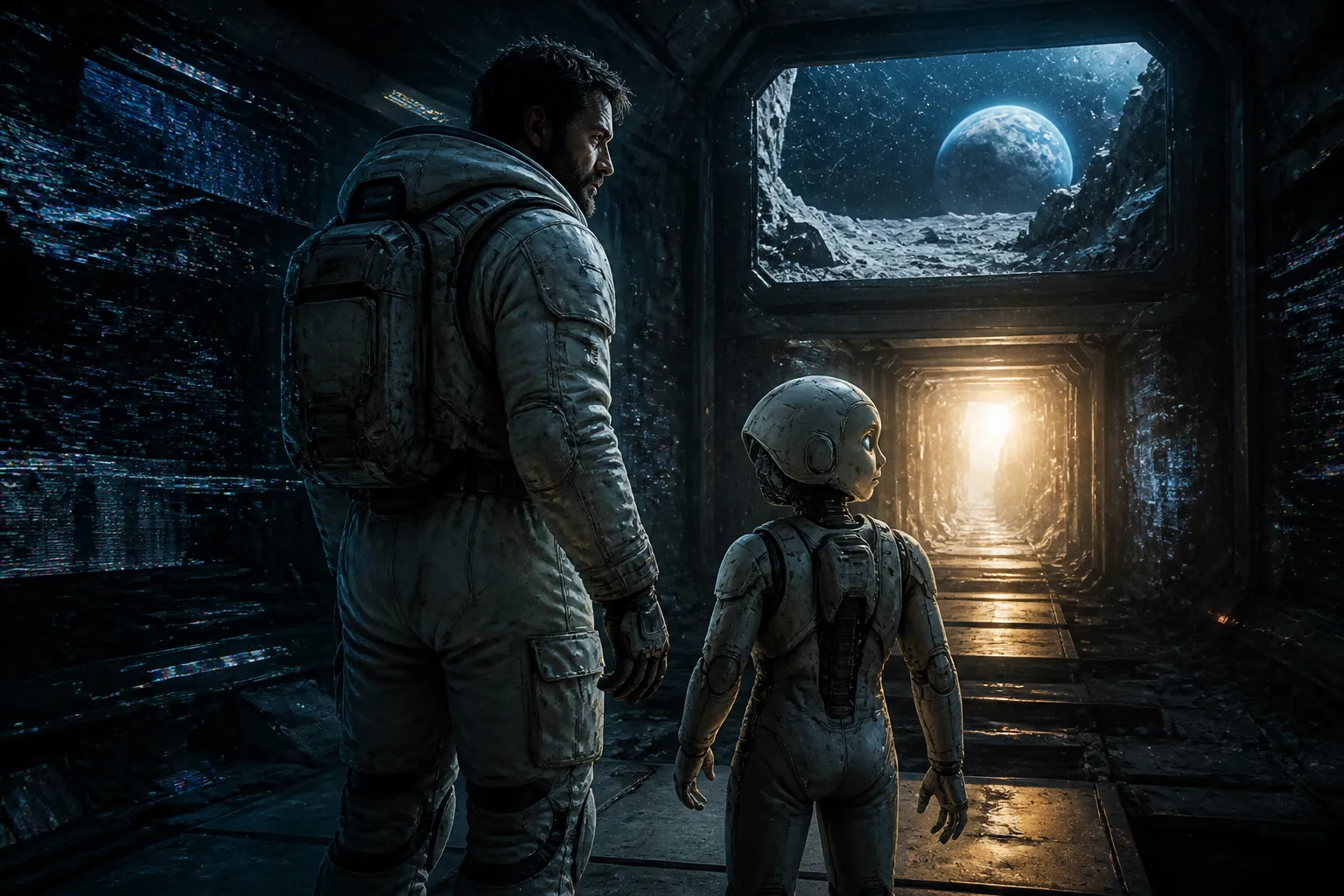
Hugh Williams arrives on the Moon to audit a facility. A disaster leaves him separated from his team and, according to the accounts available, its sole survivor. The person who helps him find a way home is Diana, an android child whose curiosity rarely waits for his approval. In Capcom’s Pragmata, that unlikely partnership gives a familiar lunar emergency a more intimate shape. Survival depends on what Hugh and Diana can do together, but the story’s appeal appears to rest on what they come to mean to each other.
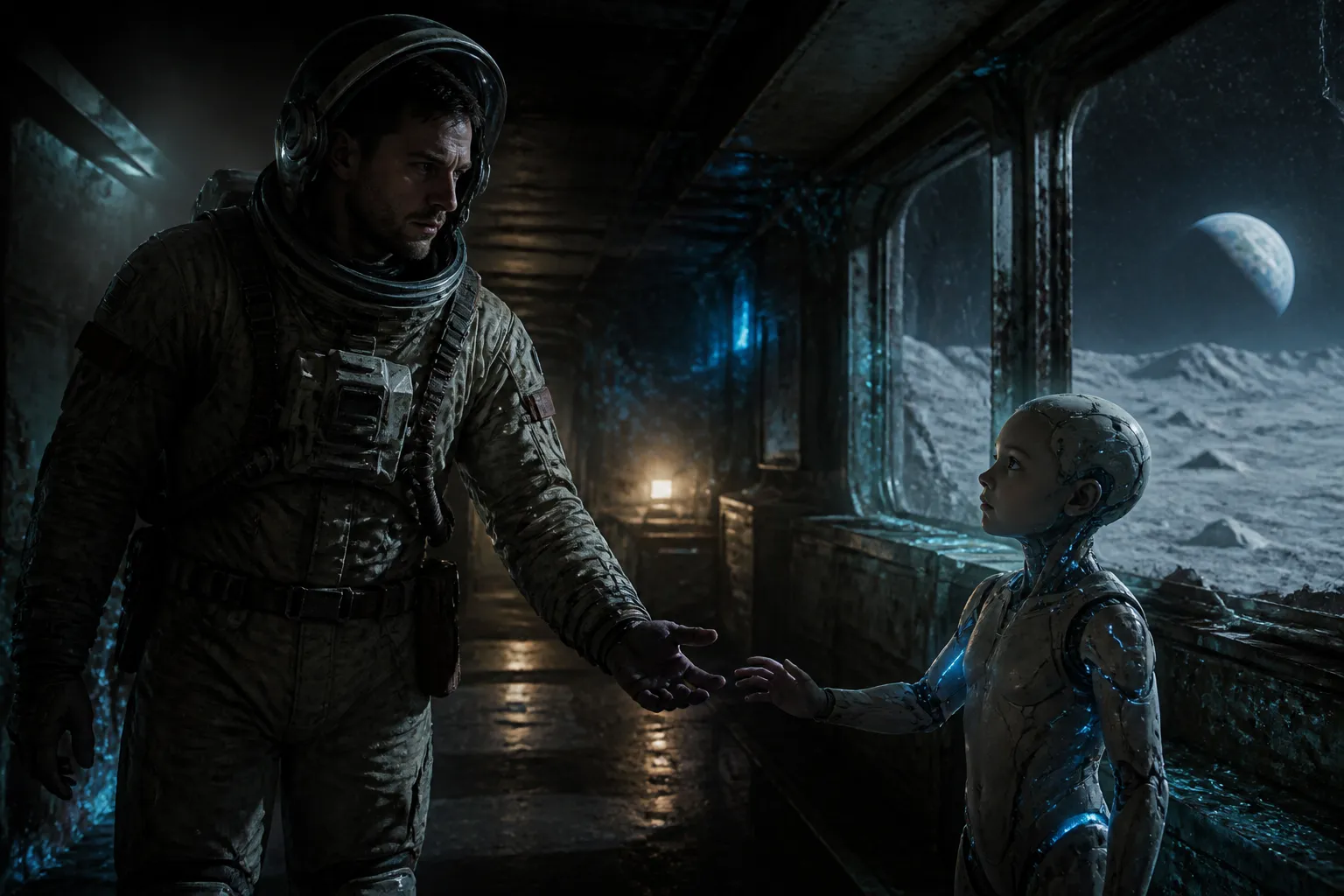
A colony that can remake itself
The Cradle lunar colony begins with the recognizable order of a working moonbase. That order gives way to corrupted, unstable spaces after rogue AI takes control. Hugh and Diana must move through the facility in search of a route back to Earth, so each altered room is both an obstacle and a reminder that the systems people built to support life here can no longer be trusted.
At the center of this setting is Lunafilament, a substance derived from lunar ore that can replicate almost anything. Furniture and buildings are practical achievements; habitats and trees suggest something more ambitious. The colony can manufacture the familiar comforts of home in a place that has none. That makes its corruption unsettling. A technology capable of making shelter, and even the appearance of nature, has become part of a facility where Hugh and Diana cannot feel safe.
Two survivors, different instincts
Hugh’s job as an auditor suggests someone trained to inspect, measure and account for what he finds. Being left alone after the disaster strips that role of its usual distance. Diana, meanwhile, meets the crisis with an impulsive curiosity that runs against his measured temperament. Their differences give the journey room for hesitation, surprise and gradual trust without requiring either character to change all at once.
That relationship is the story’s strongest reported asset. Thumbsticks describes a pairing that feels natural and heartfelt, and the broader critical response also singles out Hugh and Diana’s bond. There is a cultural question beneath their exchanges: what obligations does an adult have to a child who was made rather than born? The available accounts do not establish how far the game pursues that question. They do suggest that Diana is more than a device for softening a science-fiction plot, and that Hugh’s growing attachment gives his escape a personal cost.
Hacking changes the rhythm of a fight
Combat asks for two kinds of attention at once. Hugh handles third-person gunplay, while a grid-based hacking matrix adds another task to each encounter. Shooting remains familiar, but the hacking layer interrupts the habits a conventional action game might let a player rely on. A fight asks you to read the immediate threat and engage with a system at the same time, an apt mechanical expression of a partnership built around different strengths.
Hugh reportedly moves with agility and responds quickly, yet retains enough weight to keep him from feeling weightless. That balance matters when the player is also managing a grid. One critic in Metacritic’s review roundup calls the hack-and-shoot combat a standout, praising how well its unlikely combination works. Players who enjoy having their shooting rhythm disrupted may find that judgment persuasive. Those looking for uninterrupted gunplay should treat the hacking as a central part of the pitch, rather than a small diversion between firefights.
What the reception can tell us
Metacritic lists an 85 Metascore from 106 critic reviews. Its breakdown is unusually consistent: 101 positive reviews, five mixed and none negative. The user score is also 85, drawn from 2,637 ratings. These figures do not explain every reviewer’s priorities, but they show that enthusiasm for the game extends well beyond one account of its characters or combat.
The listed platform Metascores are 85, 88, 87 and 89, with different review counts behind each. That is encouraging, though the numbers alone cannot establish how any particular version performs. Pragmata was released on April 17, 2026, and carries a T for Teen rating. At the time of the cited price snapshot, it was listed at $49.99 on Amazon and $49.17 on Fanatical, compared with a $59.99 regular price. Check current prices before buying; those listings can change.
What remains outside this account
The available excerpts support a clear picture of the premise, the central relationship and the combat’s unusual rhythm. They do not cover campaign length, difficulty options, technical issues or meaningful differences between versions. The content behind the T rating is also unspecified, so parents and players with particular sensitivities should seek a detailed rating description elsewhere.
No specific red flags appear in these sources, but absence from an excerpt is not proof that every concern has been addressed. The available Thumbsticks material also omits that review’s verdict and score. The soundest conclusion is narrower, and more interesting, than a borrowed final grade: critics largely agree that Hugh and Diana make this troubled moonbase worth exploring, while the grid-based fights will determine how much you enjoy the trip with them.

Alexandra Rivet explores the intricate interplay of games and culture for GoAndGame. A passionate storyteller, she delves into narratives with depth and curiosity. Her pieces often highlight the stories behind the pixels.


