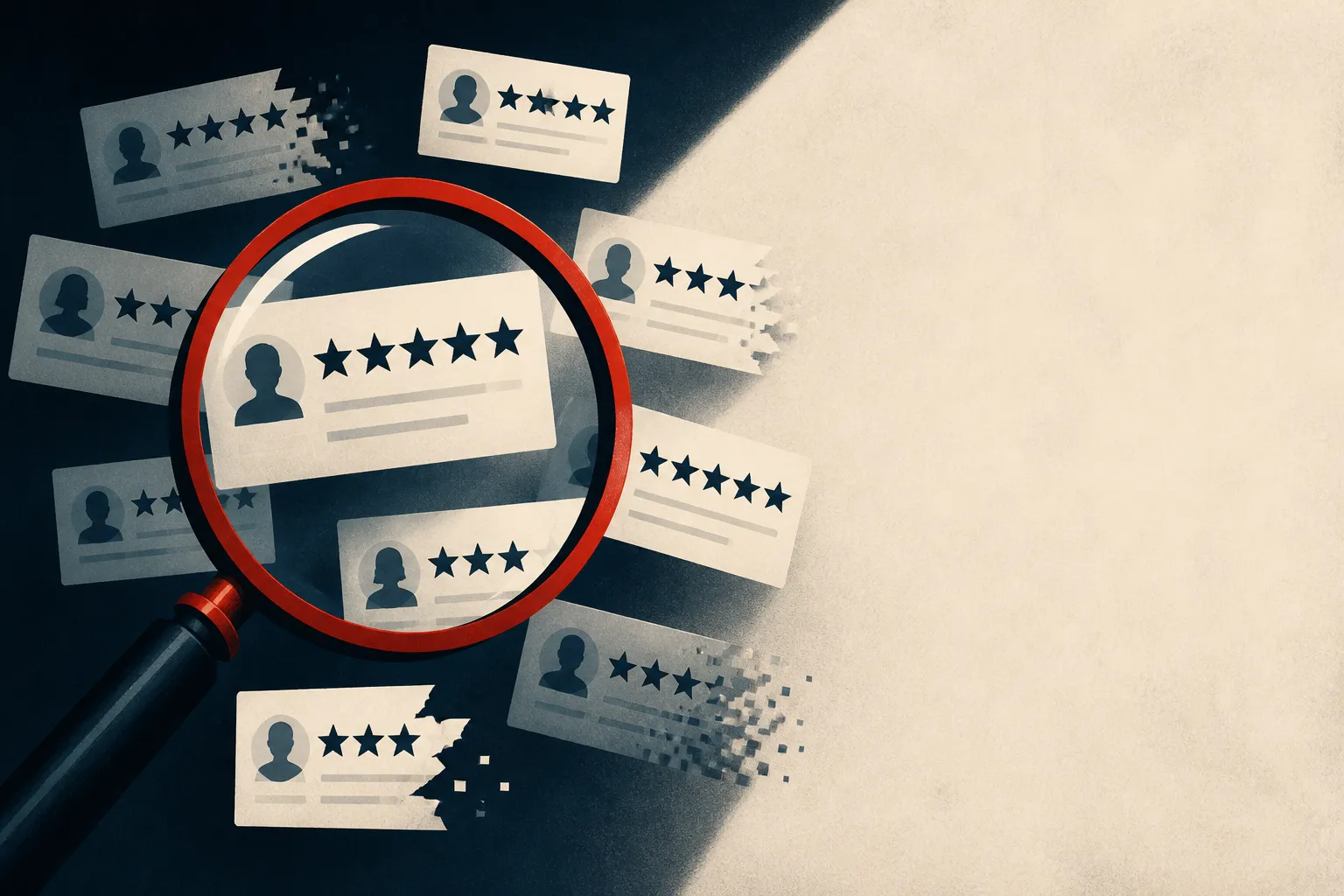
What the FTC announced in August 2024
In August 2024, the Federal Trade Commission announced a final rule banning fake reviews and testimonials. This was the central declaration. The agency specifically identified fake reviews and testimonials as the target of this new regulatory action.
The announcement itself remains brief. The full text of the rule is not available for public examination. This absence means we cannot analyze its precise definitions, nor can we definitively state what specific conduct falls under its prohibition. Relying on assumptions beyond the basic headline ban would be premature. This article focuses solely on the explicit claims made on the two FTC pages, acknowledging their inherent limits.
Historically, the FTC's mission includes preventing deceptive practices. This new rule attempts to address a persistent challenge in consumer trust. Yet, without the rule's specific language, its true impact, scope, and enforceability remain matters of speculation, not fact. The devil is often in the details, and those details are presently withheld.
Warning letters in December 2025
In December 2025, the FTC released a business guidance post: "a warning letter (or ten) for businesses to comply with the Consumer Review Rule." This title implies an initial phase of communication with businesses. The post identifies the regulation as the Consumer Review Rule, stating that businesses must adhere to FTC standards regarding consumer reviews.
A warning letter serves as notification, not a formal penalty. The public sources do not identify the recipients of these letters. They also omit any specifics about the violations cited. Consequently, while we know the FTC has initiated written communications, signaling its monitoring of the marketplace, the depth of this engagement remains unclear. The precise number of letters issued, beyond the title's suggestion, and the exact behaviors prompting them are undisclosed. This initial action offers little tangible evidence of active enforcement.
Historically, warning letters often precede more stringent actions. However, without specific grounds for the warnings, or a clear view of the rule being enforced, these letters function more as a general statement of intent rather than a detailed roadmap for compliance. Businesses are asked to comply, but the framework for that compliance remains largely undefined in these public notices.

What the sources do not establish
The informational gaps are significant. The published sources offer no access to the complete text of the final rule. Critical details like its effective date and precise scope are also absent. This leaves readers unable to determine which businesses or digital platforms are most directly subject to its provisions. Such fundamental omissions create a substantial challenge for anyone seeking to understand or comply with the new regulation.
Financial aspects are similarly obscure. Neither of the FTC's pages specifies penalty amounts, potential fines, or any other monetary figures associated with non-compliance. There is also no discussion of prior enforcement actions related to consumer reviews. For businesses, particularly small sellers, this lack of financial transparency is critical. One cannot accurately assess the risk of a violation without understanding the potential economic consequences. This ambiguity complicates informed decision-making.
Consumers also find little direct assistance. The sources contain no practical guidance for identifying fake reviews. The existence of a ban on deceptive practices does not inherently equip a shopper to discern the credibility of a five-star rating encountered online. Until further, more practical information is released, consumers must rely on established skepticism: scrutinize mid-range reviews, seek out specific product details, and approach overwhelmingly positive, generic praise with caution. The philosophical problem of trust in anonymous online interactions persists, largely unaddressed by these initial announcements.
What readers can take from this
The concrete information, at this stage, remains minimal. The FTC formally approved a rule targeting fake reviews and testimonials in August 2024. By December 2025, it had begun dispatching warning letters related to what it terms the Consumer Review Rule. Both these actions are documented on the FTC's official website.
For businesses, the critical imperative is to consult the complete text of the rule when it becomes available, rather than relying on brief agency summaries. The two public pages alone are insufficient for full compliance. It is essential to identify the effective date and the full scope of the regulation. Where review practices appear ambiguous, seeking expert legal counsel becomes a necessary measure to mitigate potential risk. Proactive understanding is vital in the absence of clear, public guidance.
For shoppers, these initial disclosures offer no fundamental shift in how one should evaluate review platforms. They provide no new benchmarks for selecting trustworthy sources or critical questions to pose. The rule should be regarded as a theoretical deterrent, potentially leading to a reduction in fake content, rather than an ironclad guarantee of authenticity. The ultimate efficacy of this regulation, and whether its enforcement will prove genuinely impactful, will only become apparent through future, more substantial FTC actions. Until then, vigilance remains the consumer's primary defense.
Sources

Julian Thorne is a seasoned house writer for GoAndGame, known for his deep dives into obscure game mechanics and industry trends. He often explores the sociological impact of gaming, blending critical analysis with historical context.


