After a quarter-century of silence, SNK reintroduces the Fatal Fury series with City of the Wolves, a title poised to challenge contemporary notions of what a fighting game should be. This is not merely a revival; it is a declaration. The industry has evolved, often toward increasing complexity and expansive feature sets, yet City of the Wolves steps back, asserting a focused, almost minimalist, vision. It begs a critical re-evaluation of the genre's trajectory.
The initial assessment suggests a deliberate trade-off. While critics point to an underdeveloped interface and the absence of certain modern conveniences, the game reportedly excels in its core execution, a testament to SNK's enduring mechanical prowess. This return is less about catching up to current trends and more about carving its own path, offering a stark alternative for players who prioritize fundamental combat over systemic abstraction. It is a calculated risk, and one that resonates deeply with the series' historical lineage.
- The resurgence of Fatal Fury after more than 25 years signals a historical moment for a venerable fighting game franchise.
- Despite criticisms regarding a "lacking" UI and omitted modern features, the game reportedly performs strongly in its essential gameplay mechanics.
- This release functions as a direct counterpoint to many contemporary fighting titles, deliberately presenting a more focused combat experience.
- The game's foundational performance where it counts most confirms SNK's commitment to core fighting principles.
- For fans seeking an experience akin to Street Fighter 6 but without its specific system convolutions, City of the Wolves offers a clear alternative.
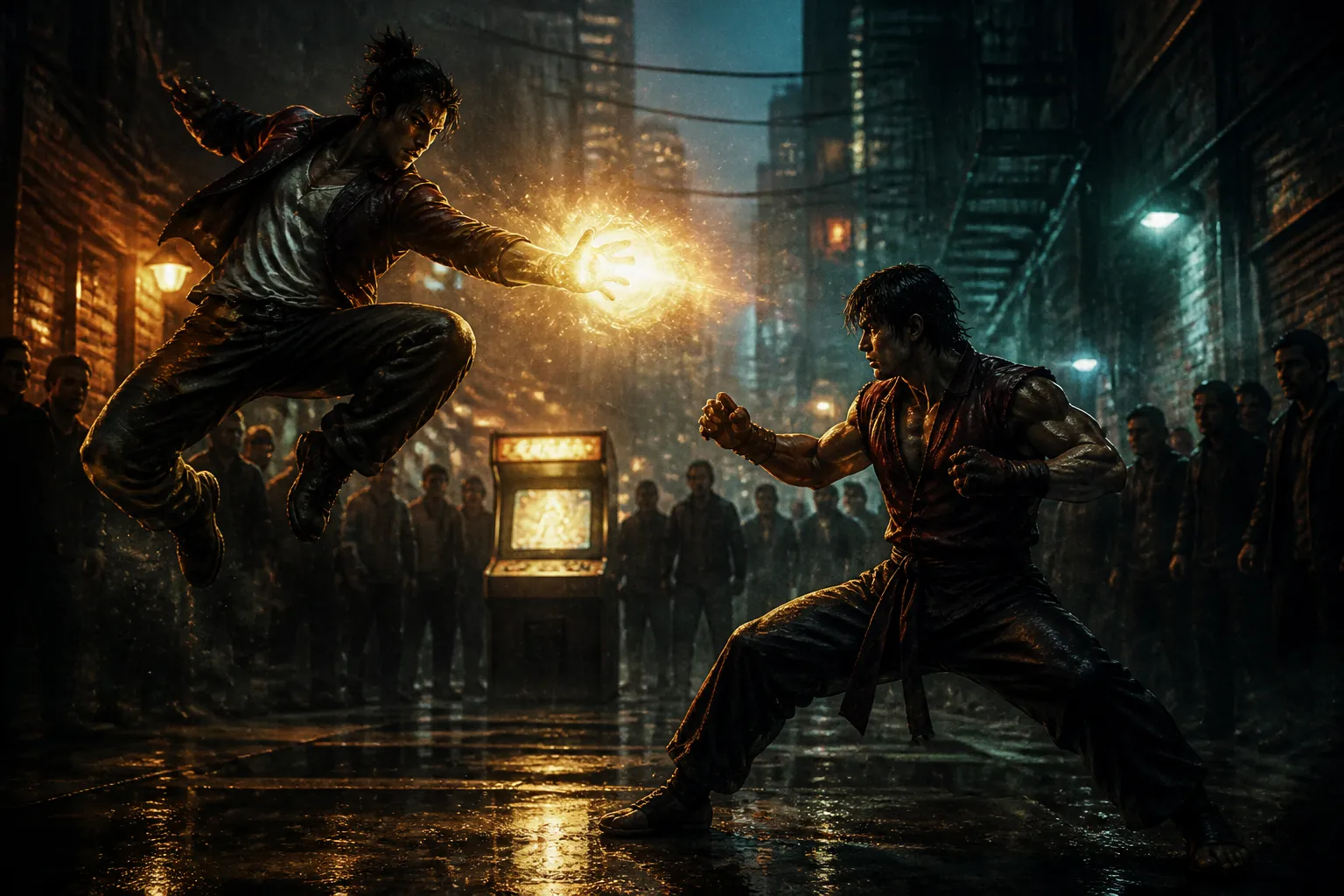
- The visual presentation has garnered significant praise, marking a notable evolution in SNK's artistic direction since titles like King of Fighters XIV.
A Quarter-Century's Reckoning
The very act of resurrecting Fatal Fury after a 25-year hiatus is itself a statement, one that forces a reckoning with what defines a fighting game in 2025. Mitchell Saltzman's review acknowledges the significant void filled by this release, especially for long-time enthusiasts of the franchise and SNK's broader catalog. To call a user interface "lacking to say the least" while simultaneously praising the game's performance "where it matters most" reveals a philosophical divide. It suggests that SNK has consciously chosen to prioritize the kinetic engagement of combat over the often-distracting sheen of modern accessibility features. This is a challenging stance, asking players to reconsider their own dependencies on what are increasingly framed as essential comforts. Is a truly great fighting game defined by its lobby system, or by the precision of its frames and the depth of its character interactions?
The Four-Button Philosophy
Fatal Fury: City of the Wolves anchors its gameplay in the classic four-button system, deploying light and heavy punches, alongside light and heavy kicks, each with context-sensitive close and far variations. This mirrors the design paradigms of 1990s fighting games, a direct descendant of the era when SNK famously vied with Street Fighter II. Saltzman aptly frames City of the Wolves as a more direct counterpoint to Street Fighter 6, deliberately omitting elements like SF6's neutral skipping system, Drive Impacts, and intricate throw loops. This is not an oversight; it is a calculated choice. While SNK's other franchises, King of Fighters and Samurai Shodown, offer distinct combat philosophies, City of the Wolves reclaims a specific niche. It offers a purified expression of fighting game mechanics, stripping away layers of meta-game systems to focus on fundamental timing, spacing, and reads. This echoes a historical commitment to direct confrontation, challenging players to master basics rather than adapt to a constantly shifting system.
Aesthetics of Intent
Will Borger's 2024 preview already highlighted the visual prowess of City of the Wolves, praising the vibrant character designs and the cel-shaded aesthetic as "gorgeous." This is not merely an aesthetic flourish; it is an integral component of the game's identity. The visual leap from King of Fighters XIV to this new Fatal Fury demonstrates a clear evolution in SNK's presentation capabilities. Yet, beyond technical fidelity, the art style itself contributes to the game's philosophical stance. Colorful, distinct characters communicate personality and impact with immediate clarity, reducing visual noise and enhancing the directness of combat. This approach ensures that the visual design serves the gameplay, rather than overshadowing it, a critical distinction in a genre where clarity of action is paramount. It prioritizes readability and impact, aligning with the game's emphasis on core mechanics over visual excess.
The Player's Conundrum
For potential players, Fatal Fury: City of the Wolves presents a compelling conundrum. Those seeking a fighting game with a structural kinship to Street Fighter 6, yet deliberately devoid of its signature mechanics, will find a precise fit. However, this appeal comes with a caveat. Players accustomed to the array of "modern-day fighting game features" that have become de facto standards will need to weigh their priorities. The notably "lacking" UI, as reported, is not a minor detail; it speaks to the game's overall presentation and ease of access. The decision to engage with City of the Wolves therefore becomes a question of values: Is the purity of the fighting engine sufficient to overcome a less polished user experience and the absence of expected conveniences? It forces players to confront what aspects of a fighting game are truly indispensable, and which are merely expected.
Unanswered Questions and the Imperative of Experience
Crucially, the current information leaves several fundamental questions unaddressed. Details such as price, release date, and specific platforms remain unknown, making any definitive purchasing advice premature. Furthermore, comprehensive insights into the roster, online modes, or single-player content are absent, leaving significant gaps in understanding the game's full scope. While reviews offer valuable perspectives, they cannot entirely substitute for direct experience. The precise practical implications of the "missing modern features" and the problematic UI on long-term play are yet to be fully articulated. Ultimately, the true measure of Fatal Fury: City of the Wolves will emerge from direct engagement. The historical context, critical insights, and aesthetic appraisal provide a framework, but the definitive judgment rests with the player's own hands-on experience and their personal valuation of its unique, challenging proposition.

Julian Thorne is a seasoned house writer for GoAndGame, known for his deep dives into obscure game mechanics and industry trends. He often explores the sociological impact of gaming, blending critical analysis with historical context.


