
You find something worth keeping. Now you have to leave with it. That simple demand gives Marathon its bite. Bungie’s extraction shooter lets you take loot from one run into the next, but only if you survive the journey out. Every useful pickup changes the question in your head: how much longer can I afford to stay?
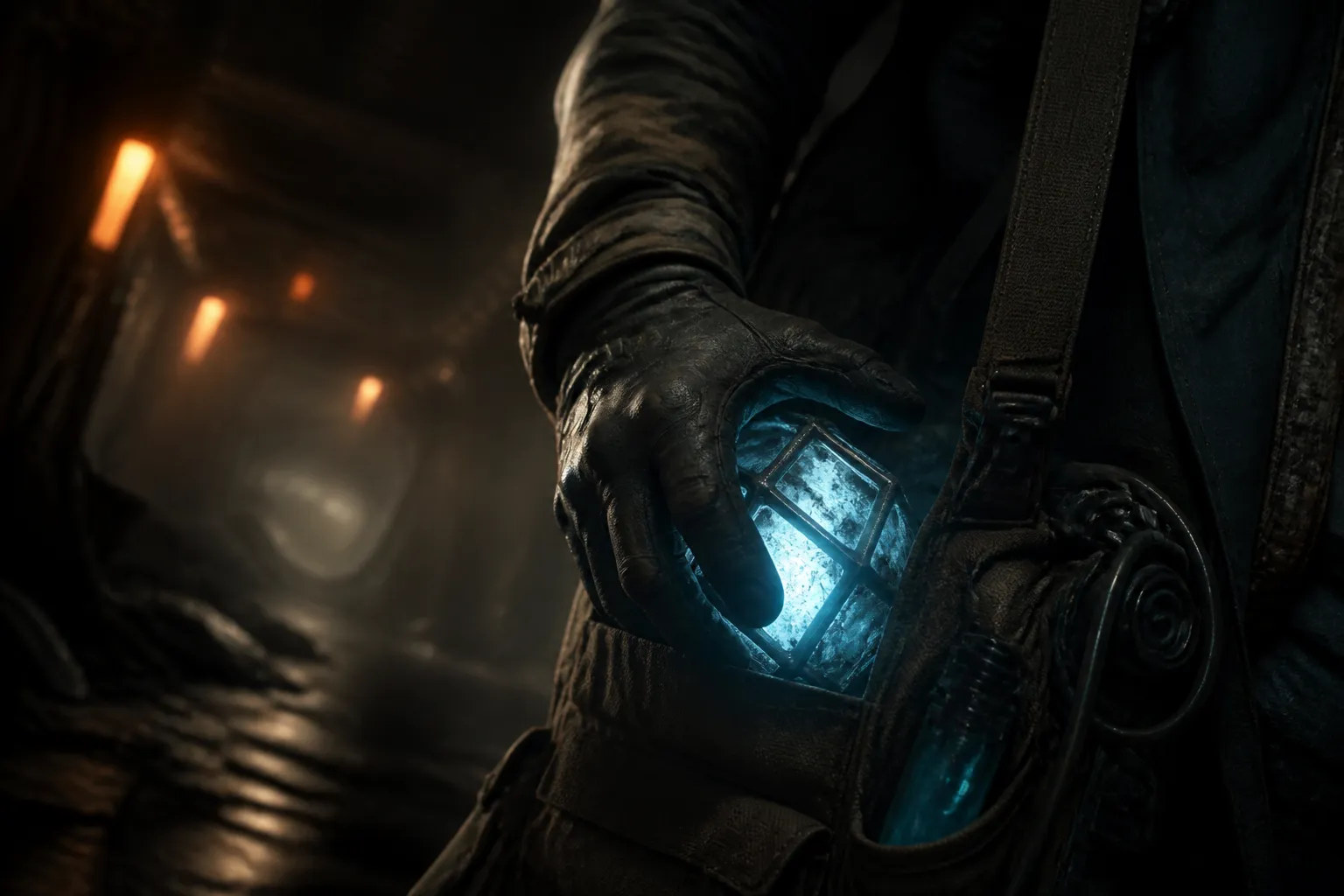
That pressure has room to build. Players drop onto large maps with random loot, then contend with roving AI-controlled enemies, environmental hazards, and other players. None of those threats needs to defeat you for the whole run. They only need to catch you before extraction. A bag of promising gear can make an ordinary route feel suddenly exposed.
The reviewed matches are concise and high-stakes, with a faster tempo and smaller, denser combat spaces than many comparable games. That pace matters because it leaves less time for a loss to become abstract. The gear you picked up a few minutes ago is still on your mind when you decide to push forward or head out.
Marathon’s strongest idea is that an extraction should have consequences beyond a completed match. Keeping loot makes the next drop more interesting. Losing it makes the trip back to the menu sting. The appeal rests on that uneasy connection between runs, and so does much of the game’s difficulty.
The core loop: risk what you carry
Extraction gives Marathon a different sense of victory from a straightforward fight to the last player. Winning an encounter can improve your odds of getting out, but it can also cost time, supplies, or a safe route. A useful find might be enough reason to leave; another opportunity nearby might persuade you to stay. The decision is small, frequent, and difficult to settle in advance.
That is where the mix of threats earns its place. AI enemy bands and environmental hazards can complicate a route even when no other player appears. Other players add a less predictable danger, since they have their own reasons to fight, hide, or leave. Death means losing what you failed to extract, so a bad decision can reach into future matches. Marathon asks you to think about survival as part of progression, not merely as the end of a firefight.
Runner Shells change the calculation
Your chosen Runner Shell shapes how you approach that risk. Shells have distinct active and passive powers, alongside differences in raw stats including health, shield, item speed, and the rate at which their Heat gauge builds. Those details give a choice of character practical weight. A power may suggest one way through trouble, while a stat difference changes how comfortable that plan feels when trouble arrives.
This is a hero-shooter influence put to work inside an extraction loop. The point is not just to find a favourite ability and use it repeatedly. It is to consider how a Shell’s strengths fit the gear you have, the objective you accepted, and your chances of leaving alive. The available accounts do not describe the full roster, so there is no need to declare a definitive best pick. The interesting choice is the one you must make before knowing exactly what a run will demand.
Factions give loot somewhere to go
Between drops, Factions offer objective-based contracts that feed Marathon’s main progression system. They award experience, loot, and longer-lasting rewards. Together with gear priorities and Runner builds, those contracts give a player reasons to value one successful extraction over another. Loot has a job beyond filling a menu: what you save can influence what you try next.
Factions also help place those decisions on Tau Ceti IV. Between runs, players can interact with them to learn about events on the planet, or read an expanding codex. The broader struggle concerns resources, control, and survival. It is a fitting setting for a game in which every trip asks what you can secure and what you are willing to lose. The available review account does not spell out every contract type or the details of the lasting reward system, so their full range remains unclear.
The first hours ask for patience
Marathon appears most comfortable speaking to people already drawn to extraction shooters. Its early hours are described as steep and punishing, which is a serious barrier when understanding the rules often requires risking equipment under pressure. A new player may grasp that loot must be carried out and still struggle to judge when a fight is worth taking or when a contract should wait.
The between-run material offers context, but it cannot remove the cost of learning in a live match. That cost is part of the tension dedicated players may want. It can also stop someone before the connections among Shells, contracts, and gear begin to feel rewarding. Marathon’s pace gives each attempt urgency; it does not promise a gentle introduction.
A verdict with limits
What emerges from the available accounts is a focused game built around carrying consequences forward. Its compact, dangerous runs make extraction feel consequential, while Shells and Factions give players choices to reconsider after each return. The same design makes the opening stretch demanding. If losing hard-won gear sharpens your attention, Marathon has a clear appeal. If you need space to learn before the stakes rise, its first hours may be a difficult place to find it.
Some practical questions remain open in these accounts. They do not establish a price, platform list, monetization details, specific Season 1 changes, or player population figures. They also provide no final score or long-term verdict. For now, the clearest measure of Marathon is the decision it keeps putting in front of you: take what you have, or risk one more encounter for something better.
Sources

Eliot Reed writes about the intricacies of virtual worlds, blending analysis with storytelling. As a house writer for GoAndGame, he delves deep into game mechanics and narratives, offering thought-provoking insights for players and developers alike.


