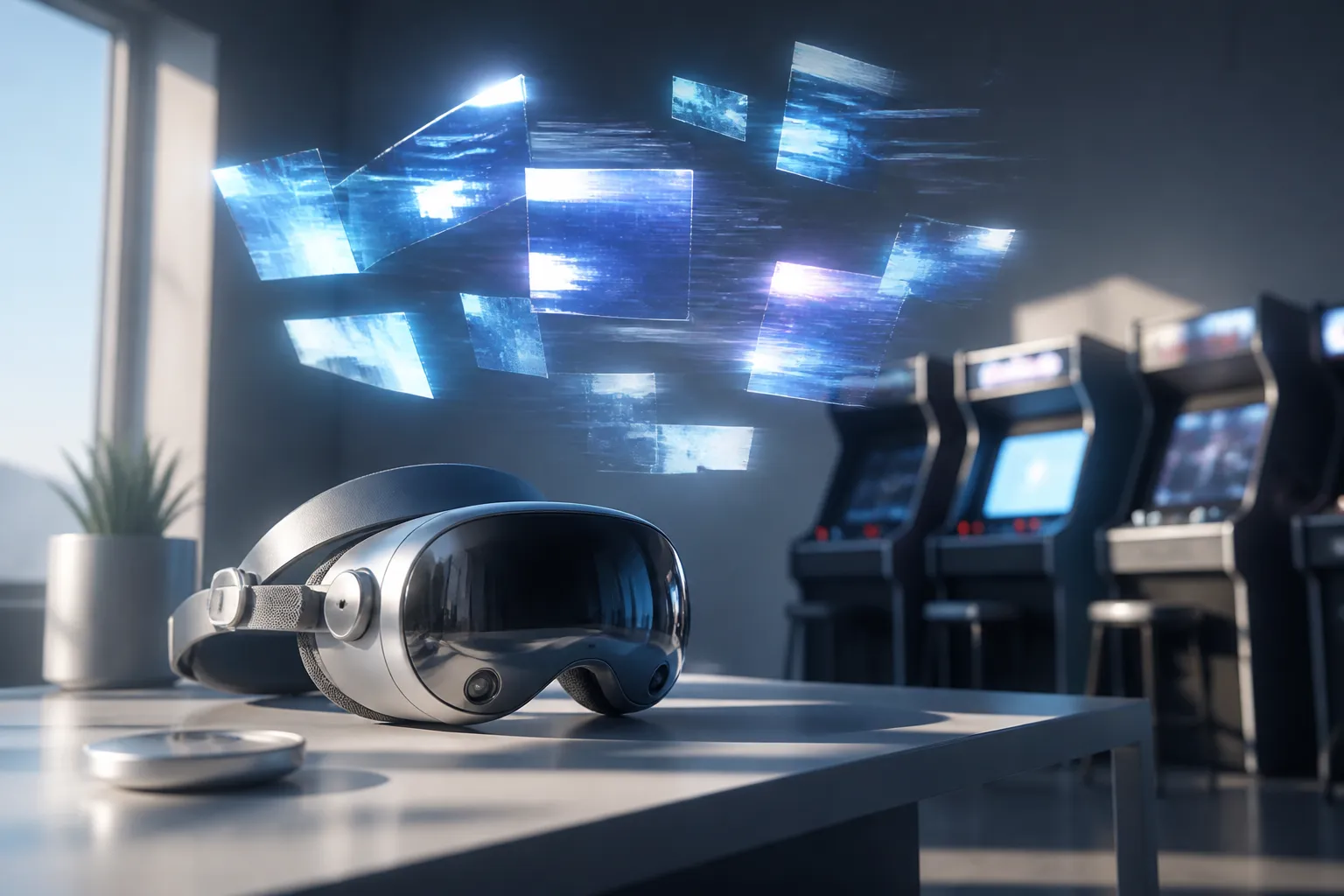
The Apple Vision Pro lists at $3,699. For that money, a reviewer found tracking that could not keep up with medium-intensity games. That is the whole problem for anyone who wants to play on it.
What the Review Actually Measured
Apple introduced the Vision Pro on January 19, 2024, according to Eventide Gaming's pre-order coverage. GearLab reviewed it in October 2024 and ranked it 75 overall, fourth of five headsets tested. Its bottom line calls the device a display geared more toward browsing, work and movie watching than gaming.
The category weights explain why. Tracking carries 35% of the score, and the Vision Pro got a 7.0. Comfort carries 30% and scored 7.1. Visuals scored 9.0 and Ease of Setup 9.5, but those two categories together carry only 20% of the weight. GearLab also credits the display with no discernible screen door effect, helped by automatic interpupillary distance adjustment, and calls the sound excellent.
The detail that matters most is tracking. GearLab says it was not fast or consistent enough for even medium-intensity games. A sharp picture does not help if the machine misses what your hands are doing. The review gives no tracking measurements or latency figures, so we have the verdict but not the numbers behind it.
Price and the Rival Field
The $3,699 figure is the list price at the time of GearLab's review, and it follows a January 2024 launch. Eventide describes its own purchase as over $3,500 plus tax, with the 256GB storage option. It also notes that AppleCare could cost $2,400 to fix, and its author put off buying it. Treat that as one buyer's account of a possible repair bill, not a standard price.
The rivals in the same review cost far less and scored higher. The Valve Index, at $999, scored 86. The PlayStation VR2, at $550, scored 85. The Meta Quest 3, at $500, scored 82. The Vision Pro costs more than seven times the Quest 3 and finished behind it.
Content is the second wall. GearLab says limited access outside Apple's ecosystem could be a dealbreaker for gamers. The sources do not say which games are available or how many titles exist. Eventide lists its test games, including Asphalt 8+, Sonic Dream Team, Oceanhorn 2, Steam Link and MirrorPlay, but its excerpt cuts off before any results. We cannot say how any of them ran.
Where the Old Arcade Habits Fit
Classic arcade play asks for fast hands and instant feedback. A game like Star Dive or Segment Storm lives or dies on how quickly the machine answers an input. Those games are a fair yardstick, because a headset that lags on medium-intensity play would struggle with them too. This is my comparison, not a test result. Nobody in the sources ran arcade-style games on the device.
GearLab frames the headset as better suited to stationary tasks and passive entertainment. That points away from frantic, reflex-driven play. The sources do not discuss gaming history at all, so any claim that the Vision Pro will reshape or erase the player's past is speculation. What the evidence supports is narrower. Today it is a strong screen with weak tracking for active games.
Who Should Buy It, and What to Ask First
GearLab says the headset may be a fun choice if the high price is not a barrier and your use is more sedentary than frenetic. If you want to watch films, browse and work in a headset, the case is reasonable. If you want to play fast games, the case is weak. GearLab points gamers to a separate breakdown of gaming-friendly VR headsets.
Ask three questions before spending anything.
- Does the tracking hold up for the games you play? GearLab says it did not for medium-intensity games.
- Is the content you want available outside the Apple ecosystem? GearLab calls the limited access a possible dealbreaker.
- Is your play style sedentary or active? The headset suits stationary use best.
One more caution. Eventide's one-month through one-year findings and final recommendation are not in the excerpt we have. Until those results are public, a long-term gaming verdict is not possible. For fast games, buy something else.
Sources

Julian Thorne is a seasoned house writer for GoAndGame, known for his deep dives into obscure game mechanics and industry trends. He often explores the sociological impact of gaming, blending critical analysis with historical context.


