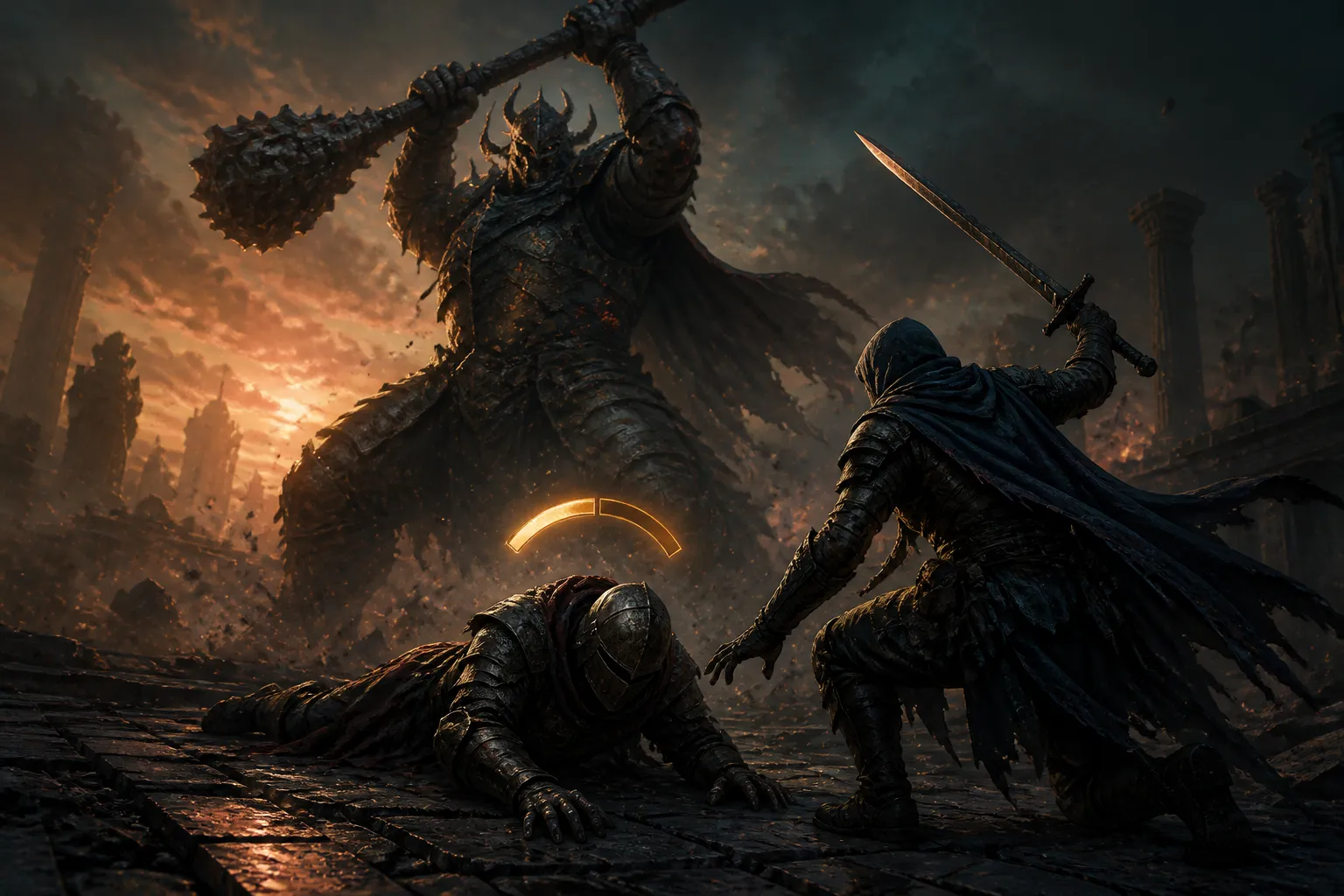
A teammate drops, the boss keeps moving, and the safe route to the revive may vanish before you reach it. In Elden Ring Nightreign, helping a downed player takes more than standing beside them. You attack them. Each hit drains a death gauge, and that gauge gets harder to clear after repeated knockdowns. So the question in the moment is who has a few seconds to act without leaving the rest of the party exposed.
One framing note before the details. The main source for this piece, PCGamesN's revive guide, was updated on June 2, 2025. Two other guides date from May 2025. Nightreign has been patched since launch, so treat exact numbers as things to confirm in game. That goes for hit counts, revive limits and boss-specific behavior, none of which the sources pin down.
What happens when a teammate goes down
When a player loses all their health, they enter a near-death state and crawl along the floor. The rest of the party stays in the fight. To bring the downed player back, a teammate attacks them. Each hit reduces the death gauge.
That odd input matters in a crowded arena. The rescuer needs room to land hits on an ally while still watching the enemy that caused the knockdown. Think of the revive as a short commitment inside a longer fight. If the boss is winding up beside the downed player, running in can turn one emergency into two. If the boss has swung away or is chasing someone else, the same rescue gets much cheaper.
The sources do not say how many hits a revive takes or how much each hit drains. Watch the gauge instead of assuming one strike finishes the job.
Read the circle before committing
The death gauge is a circle split into three segments. Each time a player enters near-death, one segment turns purple, and that makes the next revival harder. A teammate who has already been picked up once needs a longer opening the next time they fall.
So the gauge works as a record of the fight. One purple segment means the party has already paid once. Two means the next rescue deserves a real plan, not a quick tap between boss swings. The sources do not explain what happens at three purple segments, or whether the penalty behaves the same in every boss fight. Do not assume a fully purple circle means the player is gone for good.
Make space for the rescuer
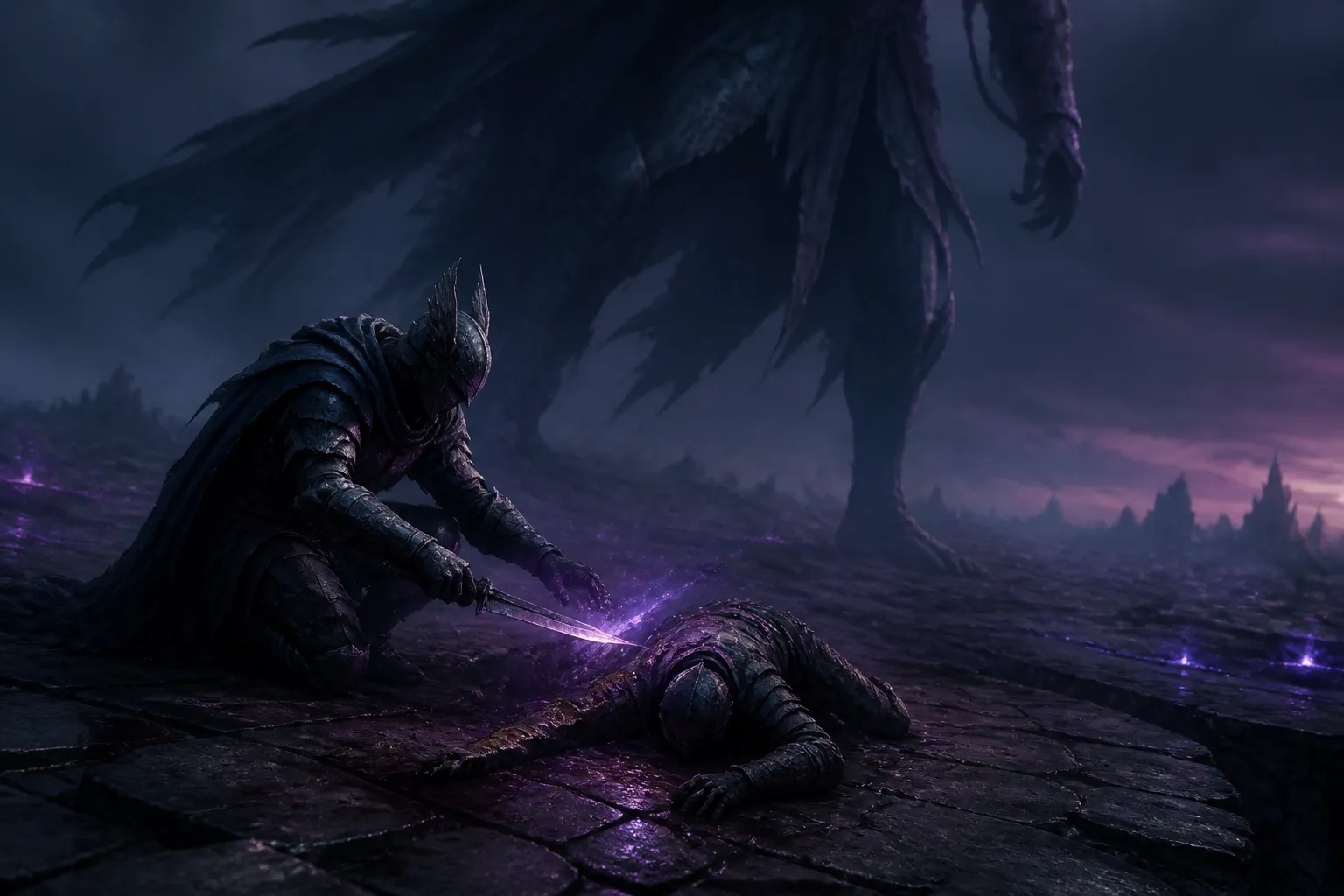
A clean revive depends on what the whole party does during those seconds. One player may be close enough to attack the downed teammate. Another may be better placed to pull the boss's attention away. Who does which job is a call you make on the spot, not a fixed role.
The nearest player might be standing in the path of the next strike. Someone farther back can approach once it passes. Running to a crawling ally only solves the first half of the problem. The second half is landing enough hits to empty the gauge, and a lull that worked earlier may be too short once purple segments have piled up.
Concrete habits help here:
- Let the boss commit to a big attack before you step in.
- Have a second player draw aggro while the rescuer works.
- Back off if the gauge is barely moving and the boss is closing in.
Know what a failed rescue costs
If a teammate is not revived in time, they respawn at the last Site of Grace they visited. The party then has to deal with that separation instead of getting an ally back where they fell. Touching any Site of Grace on the map resets the death gauge, so a trip to one clears the purple segments for later revives.
Death also costs resources. Runes dropped on death appear where the player fell, and certain enemies can pick them up. You may have to defeat the enemy carrying them to get them back. The source also says death causes some experience loss but gives no amount.
Those costs are a reason to make one deliberate rescue attempt. They are not a reason for every survivor to rush the same dangerous patch of floor.
Do not borrow the solo rule for party play
A patch added Automatic Revival Upon Defeat for solo players. It triggers once during each night boss battle. It does not apply to parties. If you are playing with teammates, plan around the death gauge and a friend reaching you, not a safeguard that will not fire.
Beyond that, the sources leave real gaps. They do not give a total number of party revives, and one guide's text is cut off before its section on revive limits. Check current patch notes or test it in game before building a strategy around a precise limit. In the fight itself, the routine is short: read the gauge, wait for space, and keep one eye on the boss while the rescuer works. The rules above come from PCGamesN's revive guide.
Sources

Eliot Reed writes about the intricacies of virtual worlds, blending analysis with storytelling. As a house writer for GoAndGame, he delves deep into game mechanics and narratives, offering thought-provoking insights for players and developers alike.


