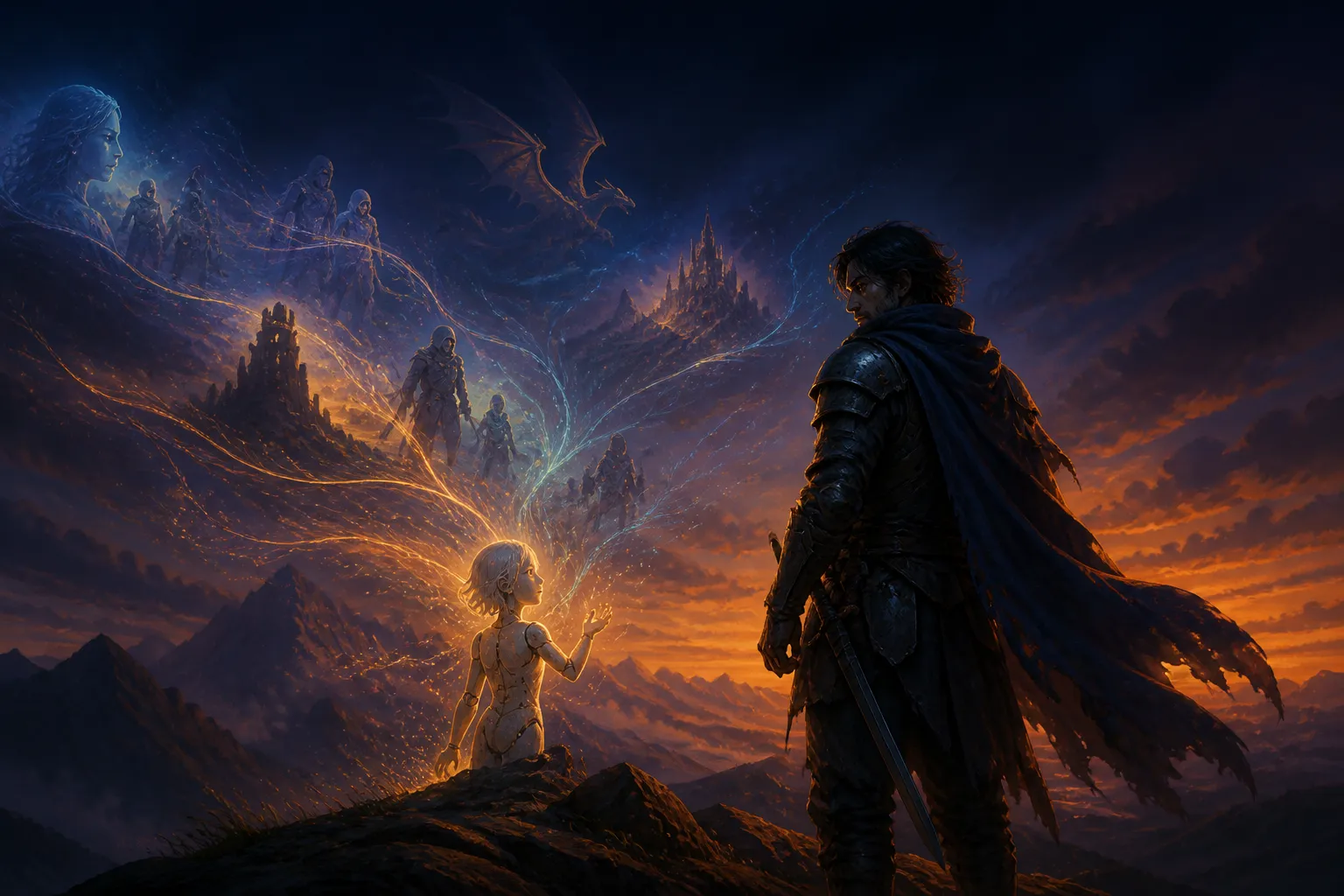
The original Dragon's Dogma, a game often lauded as a cult classic, found its unique identity largely through the distinctive "Pawn" system. This innovative approach to AI companionships, which permitted players to craft, customize, and share artificial intelligence partners, cultivated a dedicated following. It is telling that Dragon's Dogma 2 opts to carry this foundational system forward rather than reinventing it, suggesting its enduring relevance to the game's core philosophy. Director Hideaki Itsuno's description of the original as a "Single-Player Online Party Action Game" captures the inherent duality of Pawns: they are both intimate companions within a player's solitary journey and shared online assets, circulating through a broader network of players. This conceptual framing positions Pawns as more than just battle support; they are conduits for emergent behavior, learning from the myriad experiences encountered across different player worlds and reacting dynamically to the game's unfolding events. Such a system prompts a philosophical inquiry: how does the cumulative knowledge of a player base shape an individual AI's journey, and what does this mean for the concept of digital companionship? (1) (3)
How Your Party is Built
The composition of a player's adventuring party in Dragon's Dogma 2 is structured to emphasize this AI-driven experience. Out of four potential members, three are AI-controlled Pawns, making the player's own character a numerical minority within their own adventuring group. This design choice inherently shifts the dynamic from a singular hero accompanied by sidekicks to a collective undertaking, where the AI forms the bulk of tactical decision-making and world interaction. Players initiate this system by creating their primary Pawn, assigning it a Vocation, and outfitting it with preferred gear. This personal creation then becomes a circulating entity; your custom Pawn is shared online, allowing other players to recruit it into their own parties. Conversely, the player fills the remaining two party slots by hiring other Pawns from what the developers refer to as "The Rift," or a "Pawn Network." Critically, while the notion of Pawns carrying gear and "knowledge" acquired from other players back to their original world is compelling, the initial sources offer scant detail on the practical mechanics of The Rift or the precise process of hiring. This omission leaves a significant void in understanding how players are expected to engage with the system's promised depth beyond simple recruitment. (3)
Personality, Specialization, and the Feel of Pawns
A primary design objective for Pawns in Dragon's Dogma 2 is to imbue them with an organic, lifelike quality, achieved through a system of specializations and inclinations. While this goal is articulated, the exact practical application of these features, and how they tangibly manifest in Pawn behavior, remains largely opaque in the available information. Pawns are also presented as a source of levity and character, frequently interjecting with comments during events or exhibiting battle behaviors that can, at times, appear bewildering to the player. This mix of helpfulness and occasional eccentricity contributes to their unique charm. It is noteworthy that beyond these occasional odd battle behaviors, the sources do not report significant or systemic problems with the Pawn system. This suggests either a remarkably stable design or perhaps a controlled narrative that avoids revealing potential complexities or challenges in their implementation. The absence of reported issues, combined with the lack of detail on core mechanics, leaves the player to speculate on the true extent of Pawn autonomy and the parameters of their "organic" responses. (3)
Travel, Pacing, and the Limits of the Sources
The broader design philosophy of Dragon's Dogma 2 also impacts the player's relationship with their Pawns, particularly concerning travel and pacing. Director Itsuno contends that travel within the game world should be an engaging experience in itself, not merely a hurdle to be overcome, hence the deliberate limitation of fast travel options compared to many contemporary open-world RPGs. This emphasis on traversal means players and their Pawns will spend considerable time together, theoretically fostering a deeper bond and more opportunities for emergent interaction. However, this promising framework is undercut by substantial informational gaps in the available sources. Key questions remain unanswered: how does one specifically cultivate, level, or train a Pawn? What are the various Vocations available, and what particular gear or knowledge best suits each? The practical workings of Specializations and Inclinations are unexplained, as are the rewards or costs associated with sharing and hiring Pawns online. Crucially, the detailed mechanics of the Pawn learning system are presented only in summary, without concrete examples of how it alters a Pawn's behavior or leads to specific emergent stories. Indeed, one source discussing emergent narratives is truncated before it can provide such examples, meaning any claims about profound Pawn-driven storytelling should, at present, be regarded as an unverified aspiration rather than a demonstrated reality. (2) (1) (3)
Aspiration and Reality in Pawn Design
Sources

Julian Thorne is a seasoned house writer for GoAndGame, known for his deep dives into obscure game mechanics and industry trends. He often explores the sociological impact of gaming, blending critical analysis with historical context.


