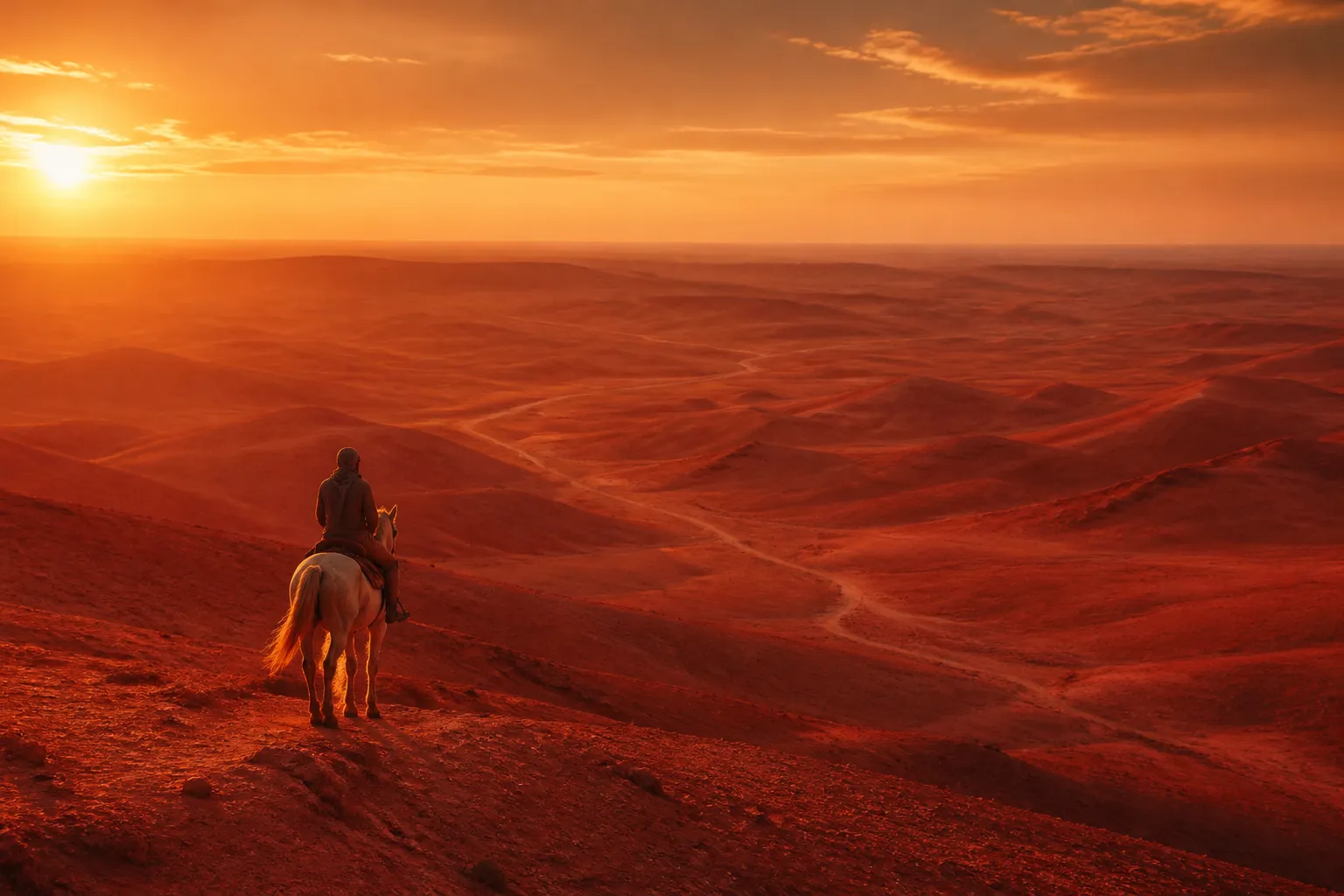
Crimson Desert seems built around a tempting question: what if an open-world adventure let you keep following almost every impulse? Pearl Abyss fills that promise with conversations on horseback, open-ended puzzles, and a world meant to respond to what players choose to do. The scale can sound exhilarating. It also means a rough puzzle or a flat conversation is rarely an isolated interruption. Across a long journey, small frustrations have room to accumulate.
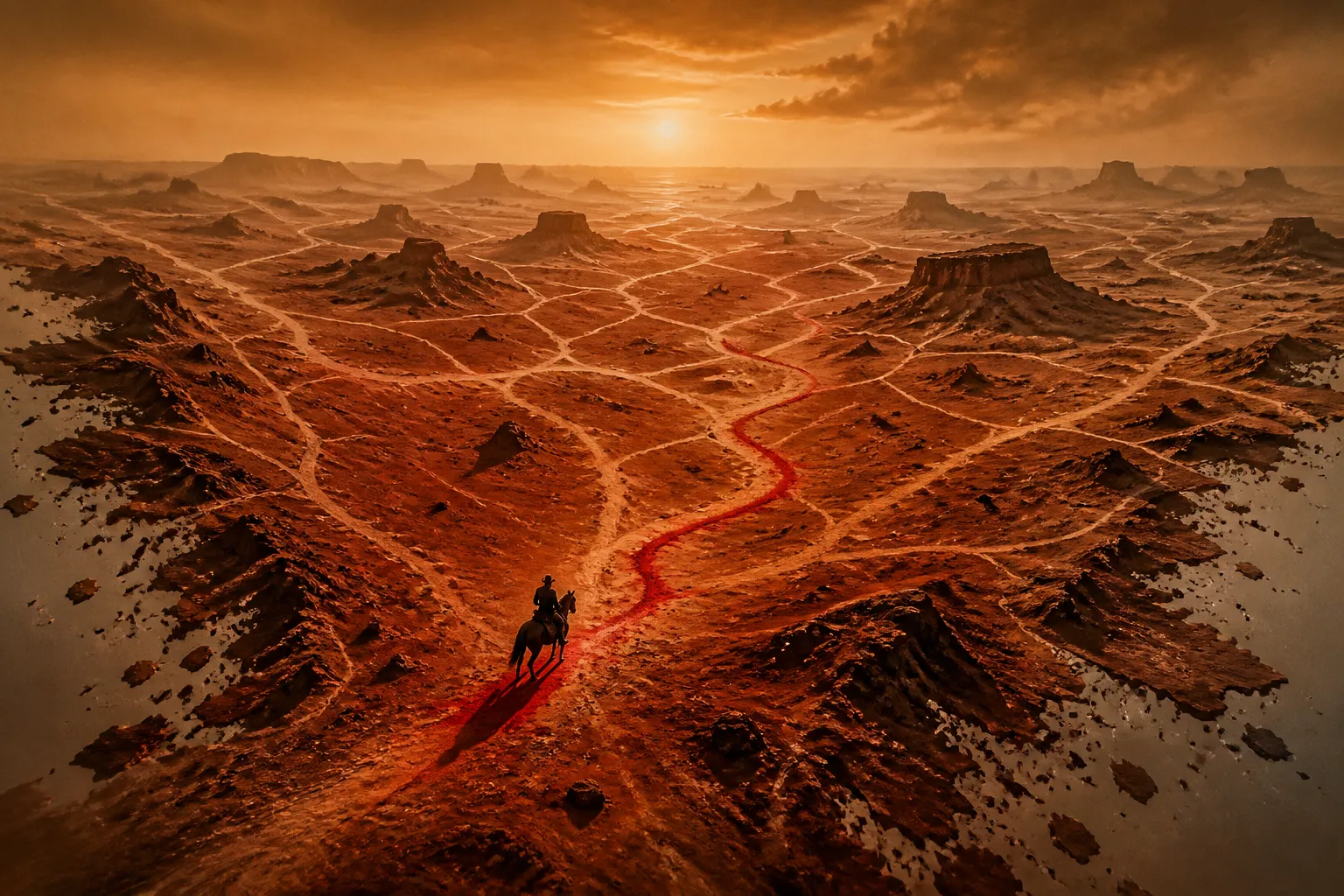
The ambition on display
In IGN’s review, Travis Northup describes a game that swings between “incredibly cool” and “gobsmackingly infuriating.” That range is central to the appeal. Crimson Desert reaches toward the authored adventures of The Witcher 3 and Red Dead Redemption 2, the problem-solving freedom of Tears of the Kingdom, and the broad possibility associated with Skyrim or Grand Theft Auto 5. Any one of those comparisons sets a high bar. Taken together, they describe a game willing to make an enormous number of promises.
Northup calls it a “jack of all trades but a master of none.” That judgment gives the sprawl a shape. A horseback exchange, a puzzle, and a fight can each offer a different reason to stay in this world. They can also expose different weaknesses in quick succession. Ambition keeps opening doors; execution determines how satisfying it feels to walk through them.
What the game asks players to do
The features IGN highlights suggest an adventure that resists a single rhythm. Conversations can happen while riding. Puzzles allow for open-ended solutions. The world is designed to let players decide what to pursue. That variety can create a strong sense of agency: the next interesting thing may be an encounter, a question about the environment, or simply a direction worth taking. It asks players to tolerate frequent changes in pace as well as enjoy them.
A PC Gamer piece about its first six hours calls Crimson Desert one of the most overwhelming, chaotic, madcap games its writer has played, while expressing an appetite for more. Those two reactions belong together. Early chaos can make a world feel full of possibilities, even before its patterns become clear. Six hours cannot show how those patterns hold up across the full adventure, though, and the available material from that piece is limited to its title and navigation text. Its excitement is an early impression, not a full-game verdict.
Where the sprawl costs the game
IGN’s criticisms land in several places a player would visit often. Northup says exploration and combat fall well short of the best open-world adventures. He calls the dialogue, characters, and story “laughably bad,” finds the puzzles unintuitive and janky, and describes the world’s reactivity as underwhelming. These are central parts of the experience. Exploration gives players a reason to travel, combat shapes their encounters, and reactivity helps their choices feel consequential.
That makes breadth a plausible source of the friction, though the review does not establish how Pearl Abyss allocated its development effort. Each additional system needs rules players can grasp and enough polish to make those rules feel dependable. An open-ended puzzle is less inviting when its logic is hard to read. A world promising freedom can feel less convincing when it responds faintly. Crimson Desert’s range may supply its most memorable surprises, but the same range gives its weaker parts nowhere to hide.
The time cost
Northup spent 130 hours completing the main story and a good chunk of side content. That number is a useful measure of the commitment under discussion, not a promise that every player will follow the same route. In an adventure of that size, the occasional excellent moment has time to become a lasting memory. So does a repeated annoyance. The question is not simply how much there is to do, but how often the act of doing it remains rewarding.
Scale can make unevenness easier to forgive when a player is free to leave an activity behind and find another. It can also make unevenness more expensive when a weak system keeps resurfacing. The available sources give no price, platforms, release date, or final review score, so they do not support a calculation of monetary value. They do make the time commitment plain. Anyone drawn to the promise of a huge world should weigh that promise against the possibility of spending many hours with the parts IGN found wanting.
What remains unresolved
The available IGN text cuts off before its full verdict, leaving Northup’s overall recommendation unestablished. A separate PC Gamer review page supplies no review content in the material available here. Nor do these sources cover hardware requirements, performance, or content beyond the main story and the side content IGN’s reviewer played. Those gaps matter for a game whose size is such a large part of its identity.
What emerges is a clear tension rather than a complete buying guide. Crimson Desert reaches for the pleasure of a world that always has another path to offer. IGN’s account suggests that many of those paths carry familiar friction, while PC Gamer’s early reaction captures the thrill of seeing how many there might be. The cost of doing everything is not just 130 hours on one reviewer’s clock. It is asking players to spend that time moving between the game’s flashes of possibility and the systems that do not quite sustain them.
Sources

Eliot Reed writes about the intricacies of virtual worlds, blending analysis with storytelling. As a house writer for GoAndGame, he delves deep into game mechanics and narratives, offering thought-provoking insights for players and developers alike.


