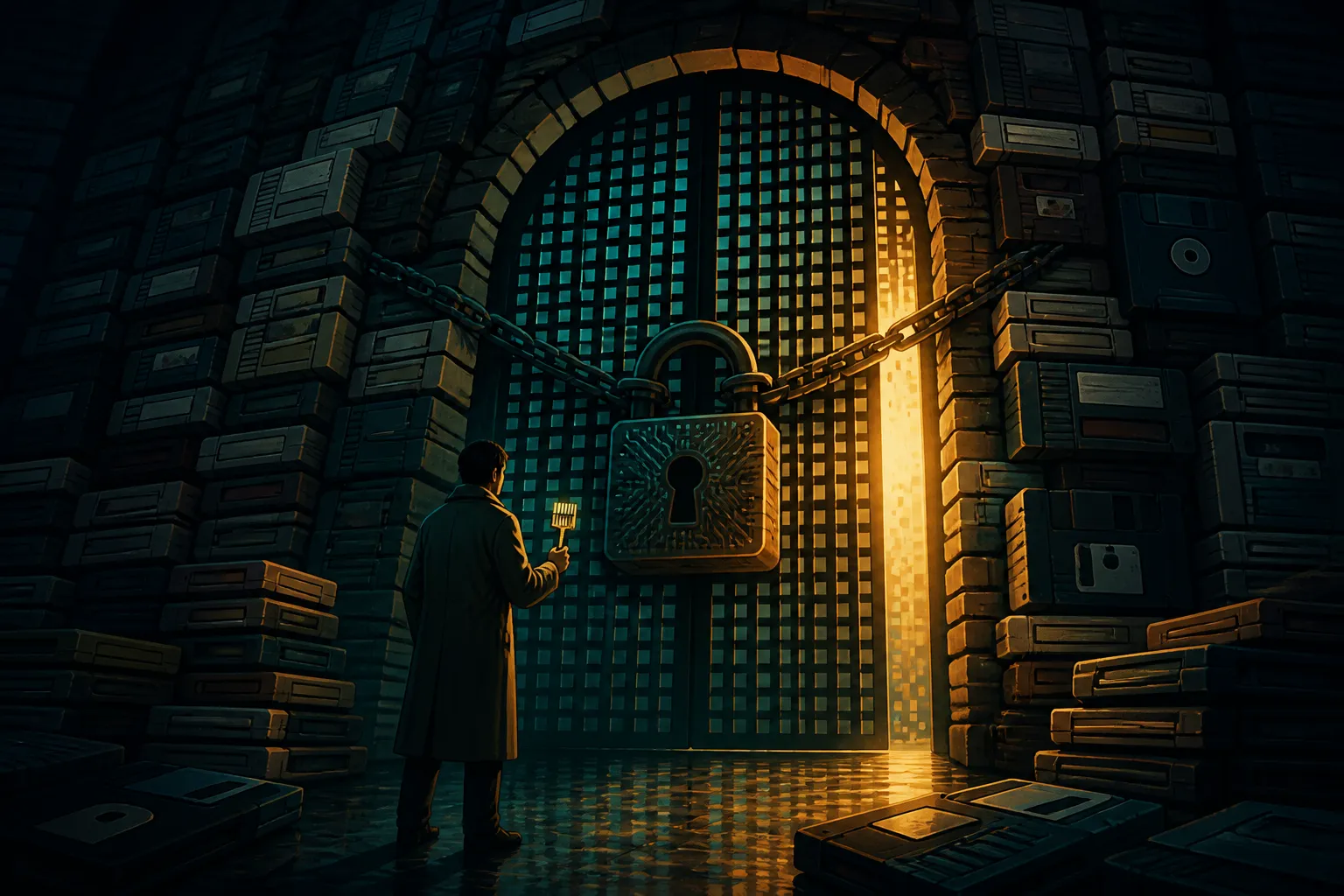
The preservation of video game history faces constant challenges. Beyond the inherent fragility of old media, a formidable legal barrier exists in the form of US copyright law. The Digital Millennium Copyright Act (DMCA), specifically Section 1201, restricts the very acts often necessary to save and study classic games. This legislation frames what libraries, archives, and researchers can legally do, shaping the future of our digital past.
The Legal Baseline: What Section 1201 Restricts
Section 1201 of the DMCA establishes a clear prohibition against circumventing technological measures. These measures effectively control access to copyrighted works. This includes acts like descrambling, decryption, or the direct removal of such protections. For anyone involved in retro game preservation, this provision is central. Copy protection mechanisms on older games, designed to prevent unauthorized duplication or use, fall directly under this umbrella. Bypassing them, even for research or archival purposes, is generally off-limits without a specific exemption.
Understanding the full legal ramifications of circumvention outside these exemptions requires direct legal counsel. The sources available do not detail the potential legal consequences for individuals or institutions that bypass these measures without explicit permission.
How Exemptions are Granted and Why They Expire
The system allows for limited exceptions. The Librarian of Congress, acting on the recommendation of the Register of Copyrights, establishes these exemptions. This occurs through a rulemaking proceeding held every three years. Each exemption, once granted, remains in effect for a period of three years.
This triennial cycle carries a significant implication: there is no presumption of renewal. An exemption that exists today might not be readopted in the next cycle. This forces advocates to re-litigate the same issues repeatedly. In the seventh proceeding, a streamlined renewal process was introduced for exemptions adopted in 2015. However, proposing a new exemption from scratch remains a demanding process, requiring extensive justification.
The 2018 Rule and the 2024 Video Game Denial
The October 26, 2018 final rule included exemptions for 14 classes of works. These addressed diverse needs, such as smartphone jailbreaking, device unlocking for wireless networks, and diagnosis and repair of motorized land vehicles. These exemptions underscore the breadth of activities Section 1201 can impact, from consumer rights to mechanical repair.
More recently, the Software Preservation Network, supported by the Video Game History Foundation, sought a crucial new exemption. Their petition aimed to allow remote access to out-of-print games held by libraries and archives. This would enable researchers to study these titles without needing to travel to a physical archive. In October 2024, the US Copyright Office denied this request. Their reasoning cited a significant risk of recreational use for the preserved video games. This decision struck a blow to efforts aimed at making game history more accessible.
The scale of this issue is substantial. A Video Game History Foundation survey found that approximately 87 percent of US video games released before 2010 are out of print. This statistic highlights the vast cultural heritage at risk. The Entertainment Software Association, representing many publishers, stated its opposition to remote access for research under any conditions. The Video Game History Foundation described this stance as absolutist, noting both positions represent advocacy in a complex legal landscape.
Limits of the Record and Questions Readers Should Ask
It is important to note the limitations of the public record regarding these exemptions. The available sources do not describe the full scope of exemptions adopted in 2021 or 2024 beyond the specific video game denial. For comprehensive, up-to-date information, readers should consult the US Copyright Office directly.
The triennial process raises critical questions for anyone considering preservation efforts. Does a proposed use fall precisely within one of the listed classes of works, and does it cover the specific activity intended? Is an existing exemption likely to be renewed in the next cycle, given there is no presumption of readoption? Crucially, is the proposed use strictly limited to research rather than recreation, addressing the concern the Copyright Office cited in its 2024 denial?
Finally, these sources offer no specific criteria for choosing between different exemptions or preservation approaches. They do not cover emulation of older hardware, which presents its own technical and legal challenges. They also omit discussion of preservation methods that might avoid circumvention altogether. The complexities of non-US copyright regimes also fall outside their scope. The path to preserving digital game history remains fraught with legal ambiguities, requiring continuous advocacy and careful navigation.
Sources

Julian Thorne is a seasoned house writer for GoAndGame, known for his deep dives into obscure game mechanics and industry trends. He often explores the sociological impact of gaming, blending critical analysis with historical context.


