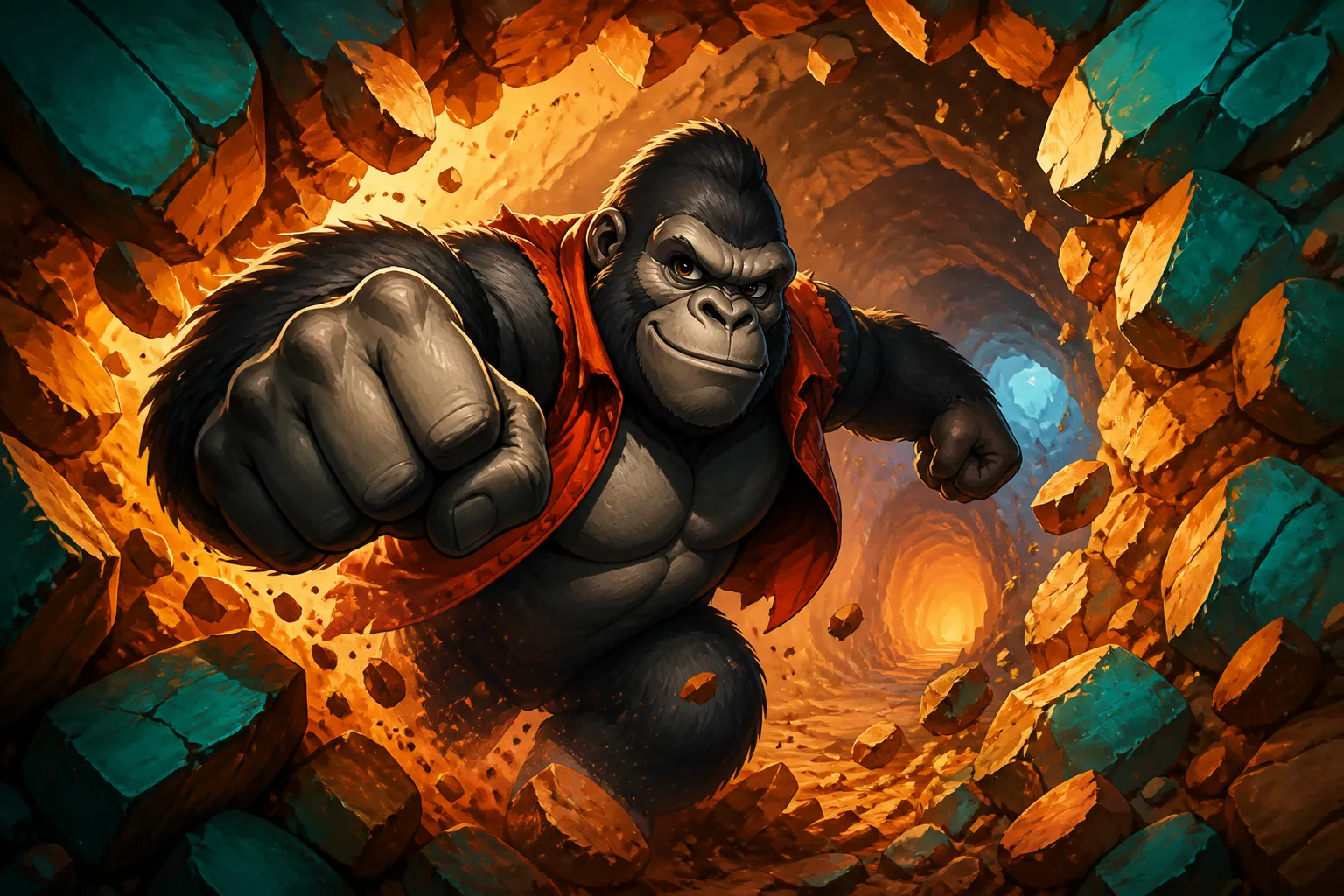
A tunnel through a wall is usually a route someone else designed. In Donkey Kong Bananza, you can make the route yourself. Nintendo EPD's 2025 Switch 2 platform game, released July 17, 2025, lets Donkey Kong destroy most of the terrain on his trip to the planetary core with the teenage Pauline. The hole you leave behind shows what you decided to do.
It began with a Goomba and two enormous arms
The idea started as a prototype that sounds like a joke. A programmer attached Knucklotec's giant arms from Super Mario Odyssey to a Goomba. The creature could smash terrain, tear off pieces to use as weapons, and throw them. Game director Wataru Tanaka said those actions felt surprisingly satisfying, which suggested destruction could carry a whole game. That is according to Eurogamer's account of the experiment.
The sources describe a mechanic that proved itself first. Smashing a surface gives an immediate response. Picking up the remains extends the gesture. Throwing them sends the result somewhere else. Each step gives the player one more reason to look at the material around them.
Donkey Kong suits the finished idea. His strength makes a broken wall feel like part of moving through the world, not an occasional trick. A punch can be a fight move, but it can also be a way to see what is on the other side.
The map becomes something you can question
Bananza lets players destroy most terrain to make paths and uncover items. That changes what a wall means. In many platform games, a wall marks where play stops. Here it may be an obstacle, a shortcut, a hiding place, or raw material.
The principle reaches beyond DK's fists. Eurogamer reports that explosions can fling large objects or make them collapse, and that designers could place many objects to take part in the reaction. A space built this way rewards attention to what is nearby, not only the next objective. Many of its puzzles are physical. What happens if this piece moves, falls, or comes apart?
A Eurogamer reviewer credits the game with design purity, with DK's skill set built around ripping the map apart. That helps explain why destruction here is more than a novelty. Breaking terrain can move you forward, expose a collectible, or change how you read a room.
How far do you want to dig?
The levels are sandbox-style, with objectives, battles, and collecting, similar to Super Mario Odyssey. The reviewer says you can do the bare minimum to progress or dig deep to clear each stage. Nothing in the sources says you must empty every corner before moving on.
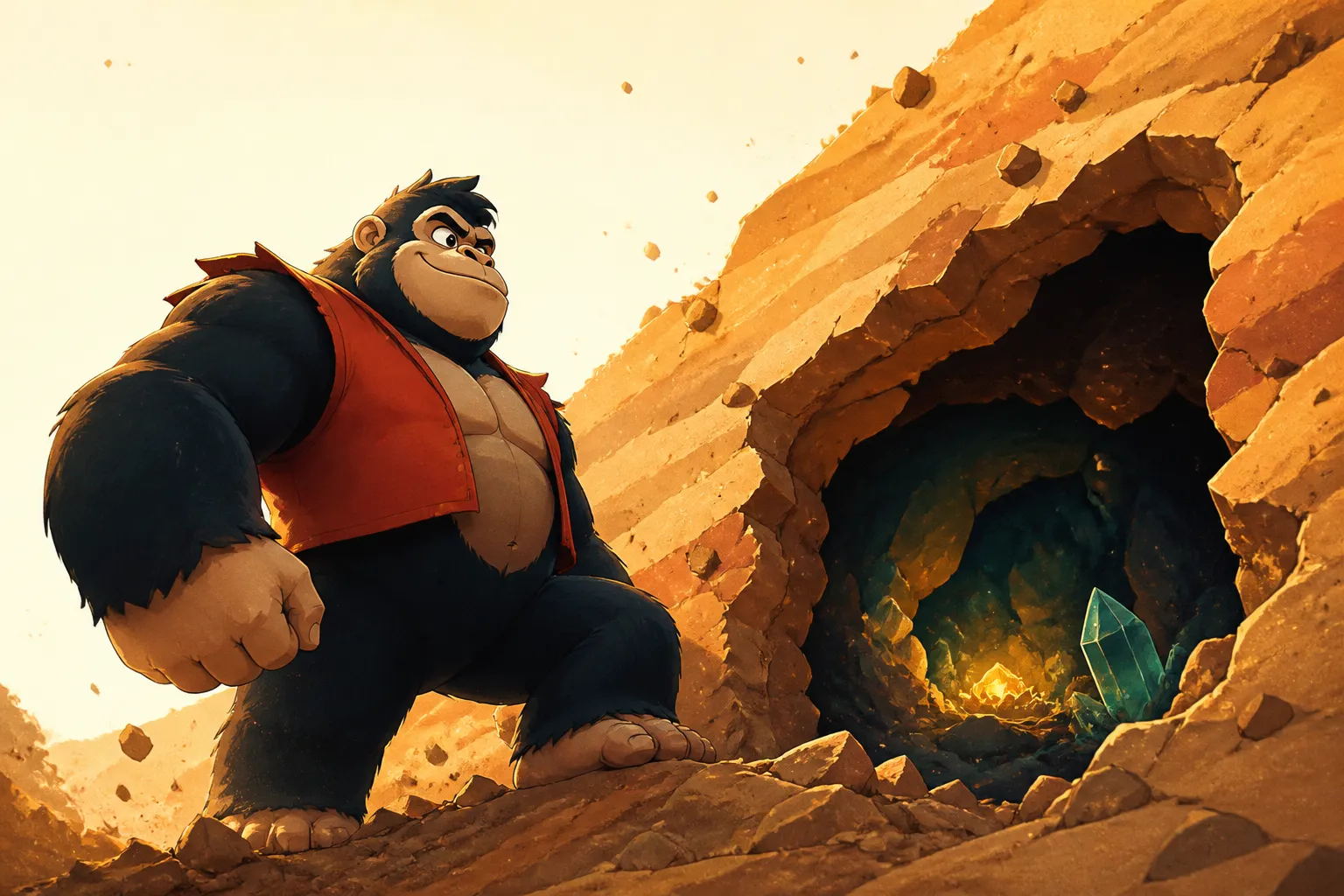
That freedom fits a world you can excavate. Banadium Gems are hidden in every nook and crevice of each map. Banana-shaped diamonds are collectibles used to upgrade DK's abilities, and power-up transformations also upgrade what he can do. A collectible gives you a reason to look closely. Looking closely may lead you to try a new route through the rock.
There is some tension in that setup. If you only want the next objective, a sandbox full of buried rewards could feel like a distraction. If you like testing the edges of a space, the optional depth gives your curiosity somewhere to go. The reviewer calls the game easy to pick up for beginners, with depth for players who want to explore its mechanics.
The cost behind the freedom
A world that tracks so many broken surfaces needs room to do it. Bananza's destructible worlds use voxel technology, which Eurogamer says uses a lot of system memory. Development began on the original Switch and moved to Switch 2 because of technical constraints. The team reported 60 fps on the new hardware. Those details hint at the work behind an action meant to feel effortless.
Before you buy
The sources here do not give a price, a sales figure, review scores, or an estimate of how long the game takes. They also say nothing about accessibility options or system requirements, and they do not describe the multiplayer modes in any detail. They offer no comparison to other games beyond the Super Mario Odyssey resemblance. No red flags are stated, but that is not the same as a clean bill of health. Check the current price and a few full reviews before you commit.
The question worth asking is about taste. Do you enjoy a stage more when most of it can be broken, and when finding everything is optional? If so, Bananza looks built for you. If you prefer a fixed route and a clear finish line, the sandbox structure may feel loose.
Sources

Eliot Reed writes about the intricacies of virtual worlds, blending analysis with storytelling. As a house writer for GoAndGame, he delves deep into game mechanics and narratives, offering thought-provoking insights for players and developers alike.


