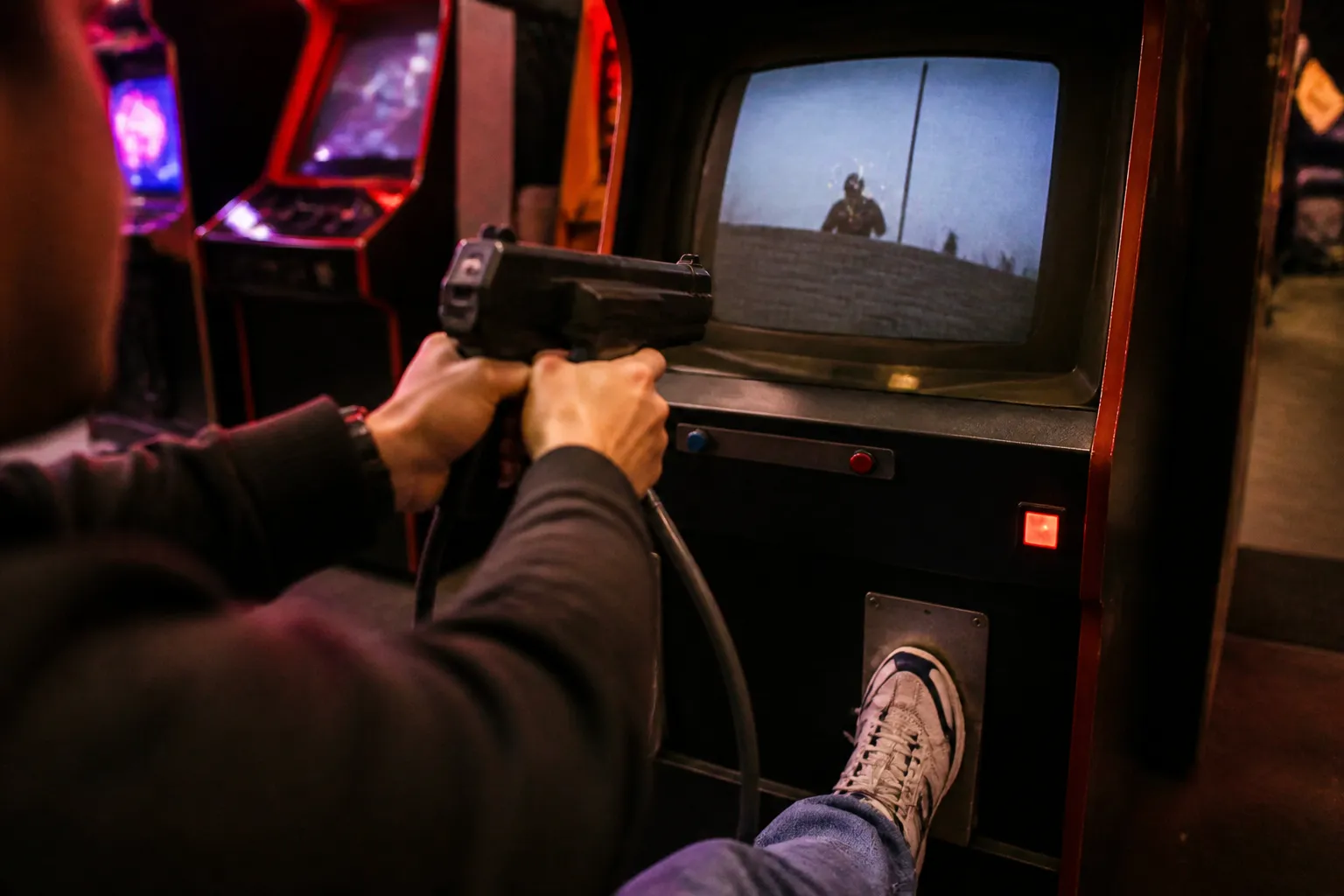
In a 1995 arcade cabinet, Namco gave the player a lightgun and a choice they could make with their foot. Press the pedal to rise from cover and fire. Let it go to duck and reload. Time Crisis made exposure a physical action, something the player had to keep doing for as long as they wanted a clear shot. The gun demanded aim, but the pedal demanded nerve. Between them, the game found a way to make a brief pause behind cover feel as important as a hit.
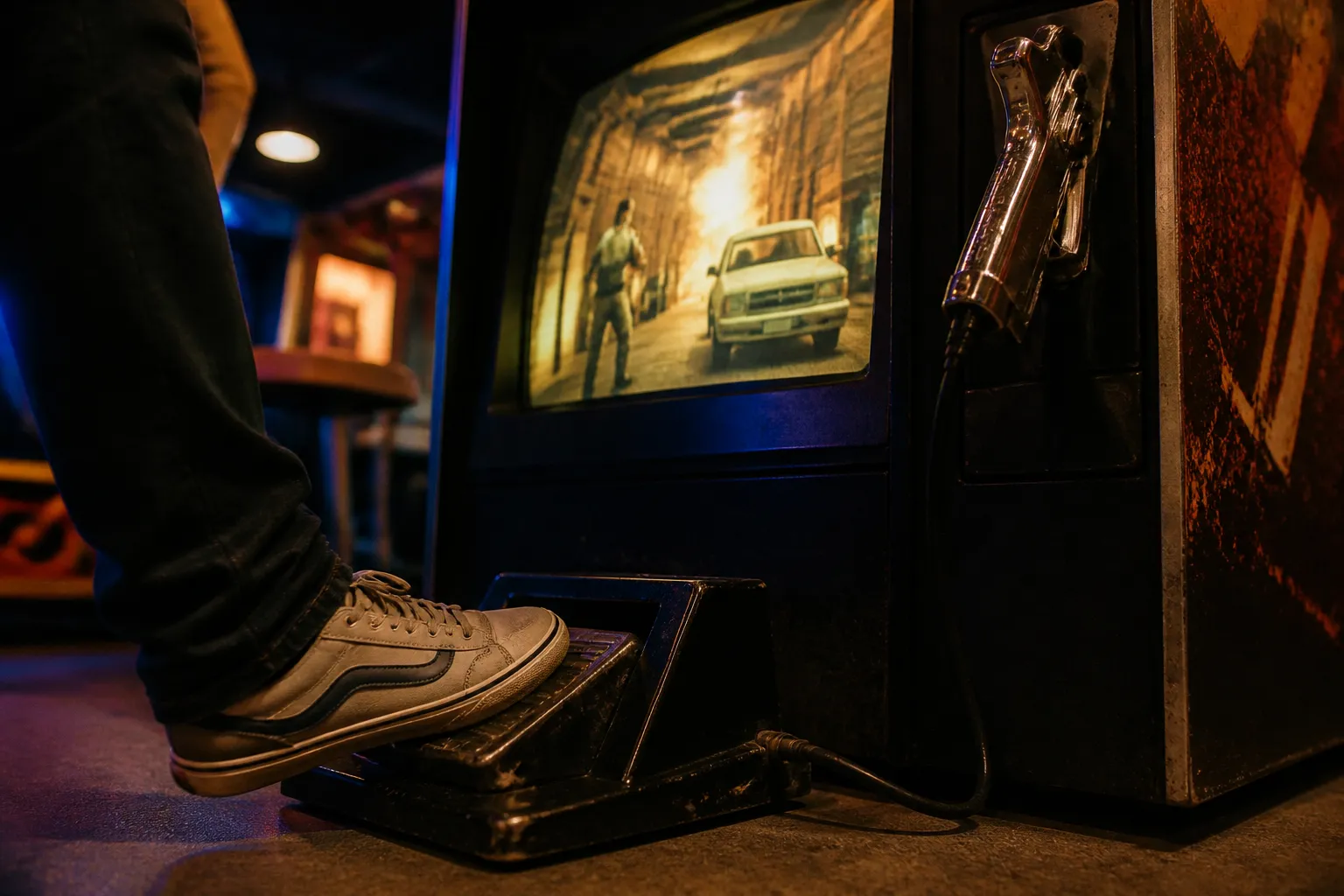
A pedal that put the player in the fight
The pedal sat at the bottom of the cabinet, where a player’s foot could operate it while their hands stayed on the gun. Stepping down raised the on-screen character to shoot. Releasing the pedal sent them back behind cover and automatically reloaded the gun. The arrangement was easy to understand, but it changed the meaning of a shot. To fire, the player first had to give the enemy a chance to fire back.
Keeping the pedal down meant staying exposed to return fire. Ducking was safer, but a player could not clear the screen from behind cover. That made the pedal more than a second button. Its position expressed a decision: how long to remain vulnerable before retreating. As Inverse’s look back at the game notes, this kind of cover system was unprecedented when Time Crisis arrived, years before cover became a familiar feature of console shooters. The unusual part was how little explanation it needed. A foot pressing down and lifting up gave the player a direct way to understand the risk.
The peek, shoot, duck, reload rhythm
A turn in Time Crisis had a compact sequence. Step out, find a target, fire, release the pedal, and begin again. New Player Ready describes it as a peek, shoot, duck, reload rhythm meant to resemble a gunfight. The automatic reload mattered because it made retreat productive. A player ducked to escape incoming fire, but came back ready to shoot.
The lightgun gave the sequence another physical beat. Its blowback and the time spent reloading were designed to evoke a movie gunfight, according to the BFI’s account of the game. The player felt the shot in their hand while controlling exposure with their foot. Those motions did not require the precision of a simulation. They gave each exchange a beginning and an end that the player could feel.
That distinction helps explain why the cover mechanic had such force. A conventional lightgun asks how quickly someone can point and shoot. Time Crisis also asked when they should stop. Releasing the pedal interrupted the attack, yet it was often the move that made another attack possible. For a moment, the player had to accept seeing less of the fight in order to survive it.
Stakes on a ticking clock
Cover would have been an easy refuge if the game had allowed players to wait there indefinitely. Instead, each screen opened with a ticking clock. Letting it reach zero cost health. The BFI notes that shooting, ducking, reloading, and re-aiming extended the clock, tying the sequence of actions to the time available. The player could take shelter, but could not simply stay hidden and expect the situation to resolve itself.
That pressure gave two kinds of danger different shapes. Stay out too long and enemy fire could punish the choice. Stay back too long and the clock could punish that choice instead. A missed shot was therefore more than an error of aim. It might mean another exposure, another retreat to reload, and more time spent trying to finish the screen. The pedal let the player control vulnerability, while the timer kept that control from becoming absolute.
The resulting tension came from small adjustments rather than a complicated set of commands. A player might rise for one shot and duck immediately, or hold the pedal down a little longer to finish a target. Each choice occupied only seconds. Because the clock was visible, those seconds had a cost the player could read while deciding what to do next.
Why the cover design mattered later
Time Crisis was released in Japan in December 1995 and in North America the following month. Its cover system stands out from that period because it put a defensive decision at the center of an arcade shooter’s controls. Later console shooters made cover familiar, but that broader history should not flatten what happened at this cabinet. The distinctive idea was a repeated physical exchange: the player committed to danger by pressing down, then withdrew by lifting a foot.
The series continued across eight games over roughly 20 years, ending with Time Crisis 5 in 2015. That long run suggests there was room to keep returning to the original premise. It does not, on its own, show that later games reproduced the sensation of the pedal, and the available accounts do not establish how faithfully that control has been carried onto home or modern platforms. The claim worth keeping is narrower and more interesting: Time Crisis showed how cover could shape the pace of a firefight, not merely provide a place to wait.
The cabinet made that idea hard to miss. Every time a player lifted their foot, the character disappeared from danger and the gun reloaded. Every time they pressed down again, they chose to be seen. The decision was quick enough to become a rhythm, but never so automatic that the clock and incoming fire stopped mattering.
Sources

Alexandra Rivet explores the intricate interplay of games and culture for GoAndGame. A passionate storyteller, she delves into narratives with depth and curiosity. Her pieces often highlight the stories behind the pixels.


