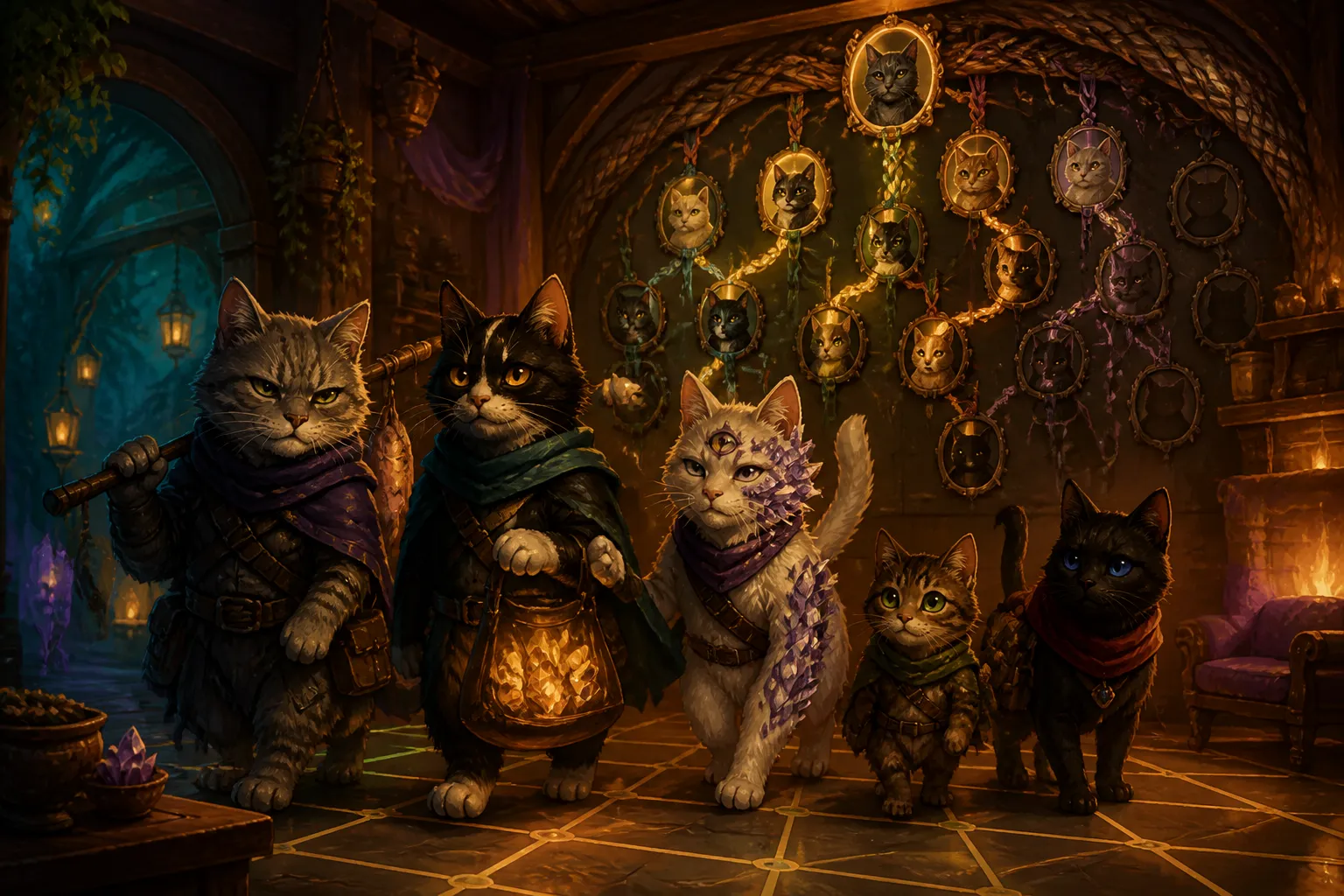
A cat comes home from an expedition carrying items, mutations and the consequences of whatever happened on the road. In Mewgenics, that return matters as much as the fight itself. The cat may join the breeding pool, and the next litter may give the player a different set of possibilities for the next trip. The family tree turns a roguelike run into something with a longer memory.
The run comes home with you
Mewgenics is a turn-based tactical RPG fought on a 10x10 grid. A team can include classes such as Fighter, Mage, Hunter, Tank and Necromancer. It leaves home, levels up, gathers items, defeats bosses and picks up mutations before returning to breed. That final step connects one expedition to the next. A useful cat is valuable not only for what it can do in a fight, but for what it might pass on.
That promise comes with uncertainty. As IGN’s review notes, many skills and attributes are randomized and mostly beyond the player’s control. Breeding therefore asks for a different kind of planning from positioning a fighter on the grid. You can make choices about the household, but you cannot simply order the perfect kitten. The next generation is a wager placed with cats you have already spent time keeping alive.
This gives the end of a run an unusual weight. In many roguelikes, going home means banking a reward and starting again. Here, the returning team also becomes part of the material from which future teams can be made. An expedition’s story can continue through a descendant, even if the precise route from parent to kitten remains uncertain.
A crowded room changes the plan
The house is where that long-term plan takes physical shape. Cats are sorted into breeders, kittens and fighters, while rooms influence breeding and fighting outcomes. The available Breeding Basics guide says the house begins with one room and that donating retired cats to Frank unlocks more. Expansion gives the player space to separate cats by purpose rather than asking one crowded room to serve every need.
Comfort is the clearest example of a household stat with a tactical consequence. According to the guide, cats breed more often at high Comfort and fight more often at low Comfort. Each cat beyond the first four reduces a room’s Comfort by one point, and poop in the room reduces it by another point. Those small penalties make ordinary housekeeping part of the breeding decision. Adding one more cat to a room can change the conditions for everyone already there.
Furniture offers another way to shape those conditions. Pieces bought from Baby Jack or Tracy, or found in Furniture Boxes during runs, raise room stats when placed on floors or walls. An object brought back from an expedition can thus affect the home that prepares the next team. The loop reaches beyond inherited traits: where cats live, how many share a room and what surrounds them all matter to the choices a player can make.
What the family tree leaves uncertain
The phrase “family tree” suggests a tidy record, but the available explanations do not show exactly how Mewgenics tracks relationships. The Breeding Basics guide’s index names family trees and avoiding inbreeding. It also names mutations, disorders, diseases and a Gaydar mechanic. The supplied text does not explain those systems, so the names alone cannot establish their rules or effects.
Stimulation is similarly tantalizing. The guide says it affects the likelihood that kittens inherit their parents’ skills and stats, but the explanation cuts off before describing how. There is no supported inheritance rate to calculate from, or reliable way here to say how much a room change improves a particular kitten’s chances. For now, the useful distinction is between a stated influence and a known formula.
There is also a reason to handle the household advice carefully. The Breeding Basics page displays a notice saying it was removed for violating Steam Community guidelines and is incompatible with the game. Its descriptions of Comfort, rooms and furniture are useful for understanding the proposed loop, but they warrant checking against current play or another complete source before being treated as settled instructions. The PC Gamer breeding guide could have provided that check; the material available from it contains navigation rather than the guide’s advice.
A long game built from short lives
The scale of Mewgenics makes those open questions more than trivia. The IGN game page lists HowLongToBeat estimates of 83 hours for the main story, 134 for story and side content, and 286 for completion. IGN’s reviewer reports playing for more than 150 hours while still finding new enemies, skills, mutations and loot. Those are signals of how much can remain undiscovered, not proof that every breeding rule has been documented.
Even the reception figures need their labels kept intact. IGN’s game page shows an 8.5 rating from 59 ratings, while the review text gives a score of 9. They are different reported figures, not a single consensus number. More important for the family tree is what the available coverage cannot yet answer: the odds of a given inheritance, the relevant stat values and the way relationships are recorded. A PC Gamer preview appears in the source material only as a headline and site navigation, so it cannot fill those gaps.
Two views of the same cycle
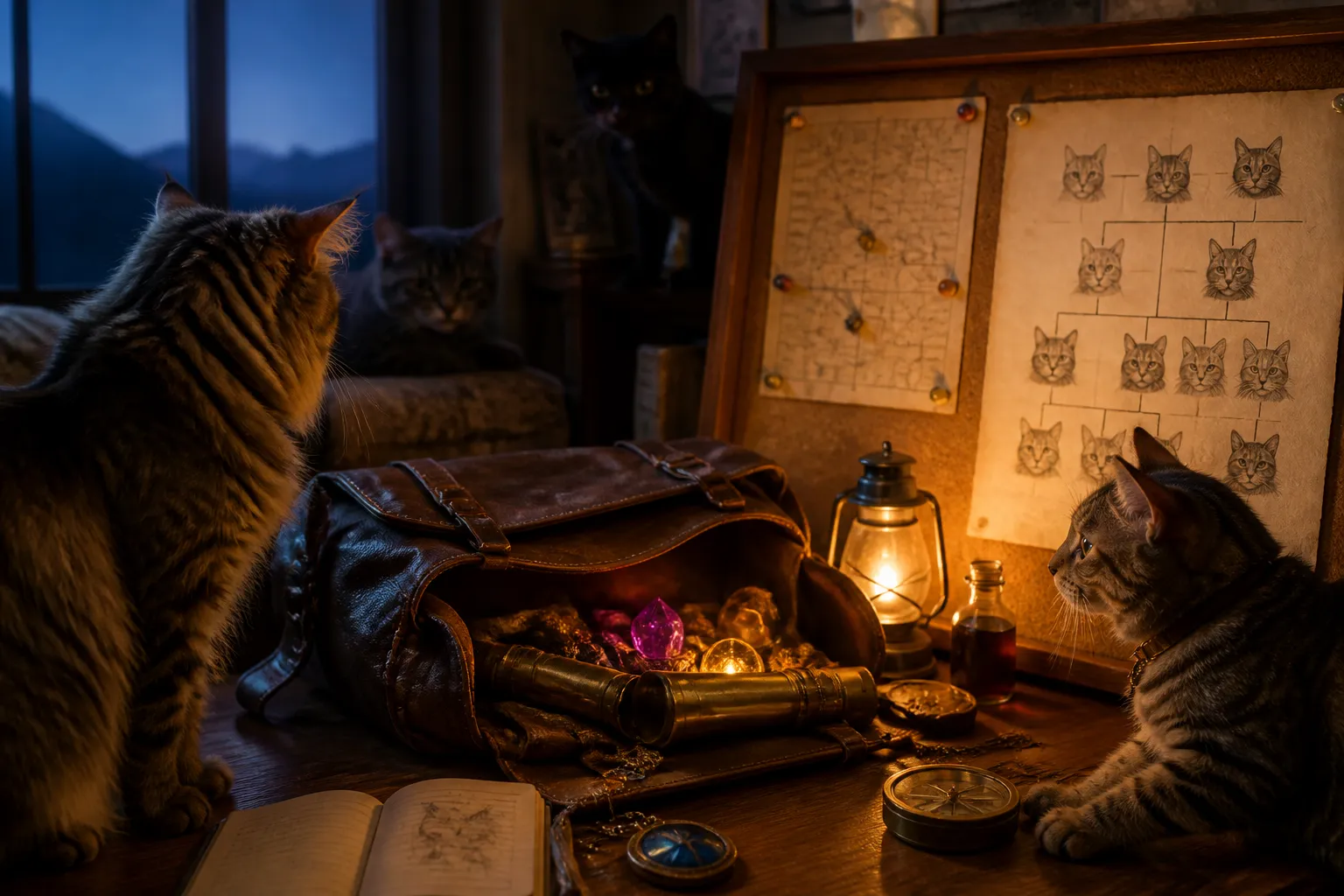
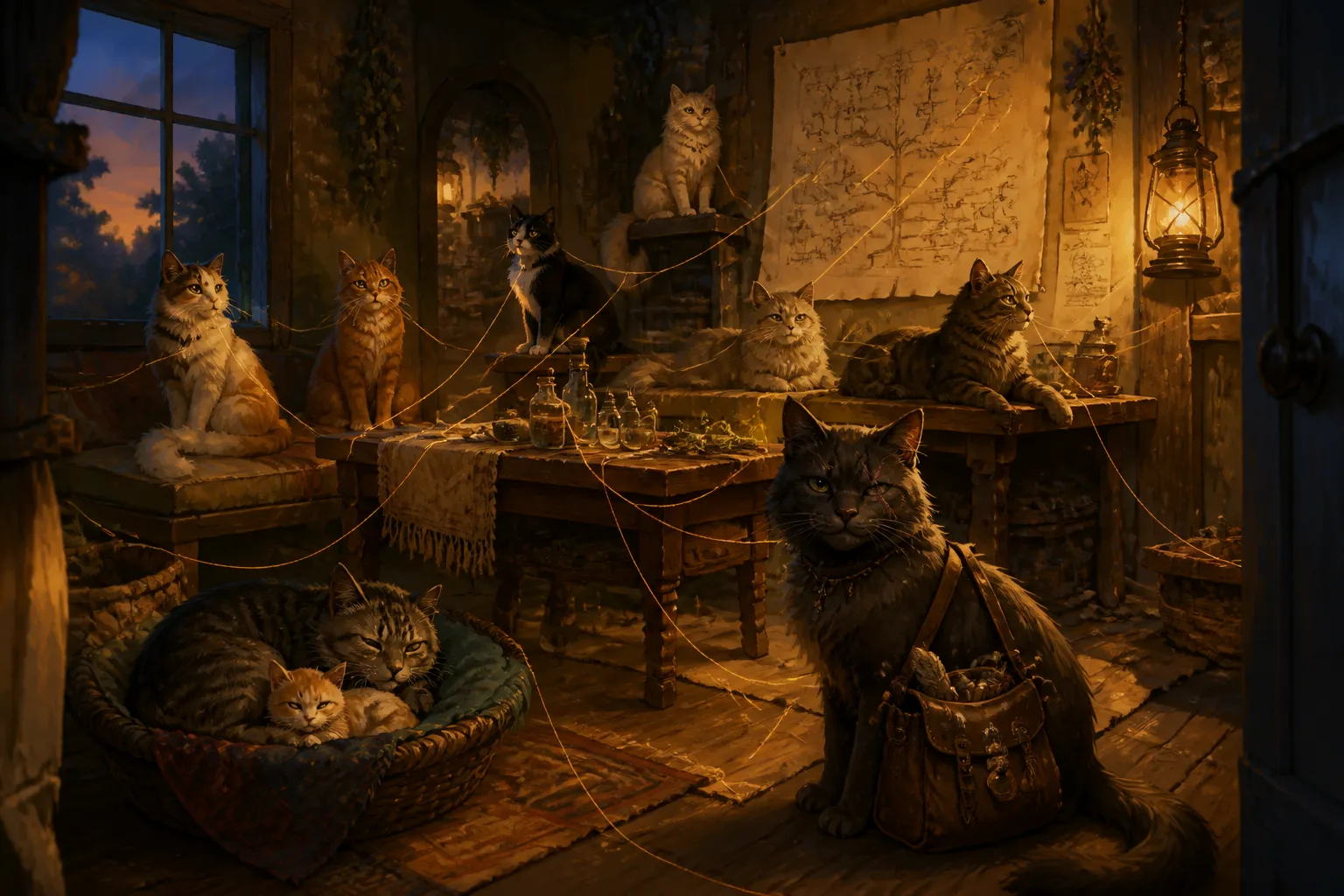
The two views belong together because neither produces the whole story alone. A fight can change which cats return; the household can change which kittens are likely to come next. Mewgenics makes lineage feel consequential by putting it between those moments. The exact inheritance rules still need clearer evidence, but the central pressure is plain: every plan for tomorrow begins with the cats that made it home today.
Sources

Alexandra Rivet explores the intricate interplay of games and culture for GoAndGame. A passionate storyteller, she delves into narratives with depth and curiosity. Her pieces often highlight the stories behind the pixels.


