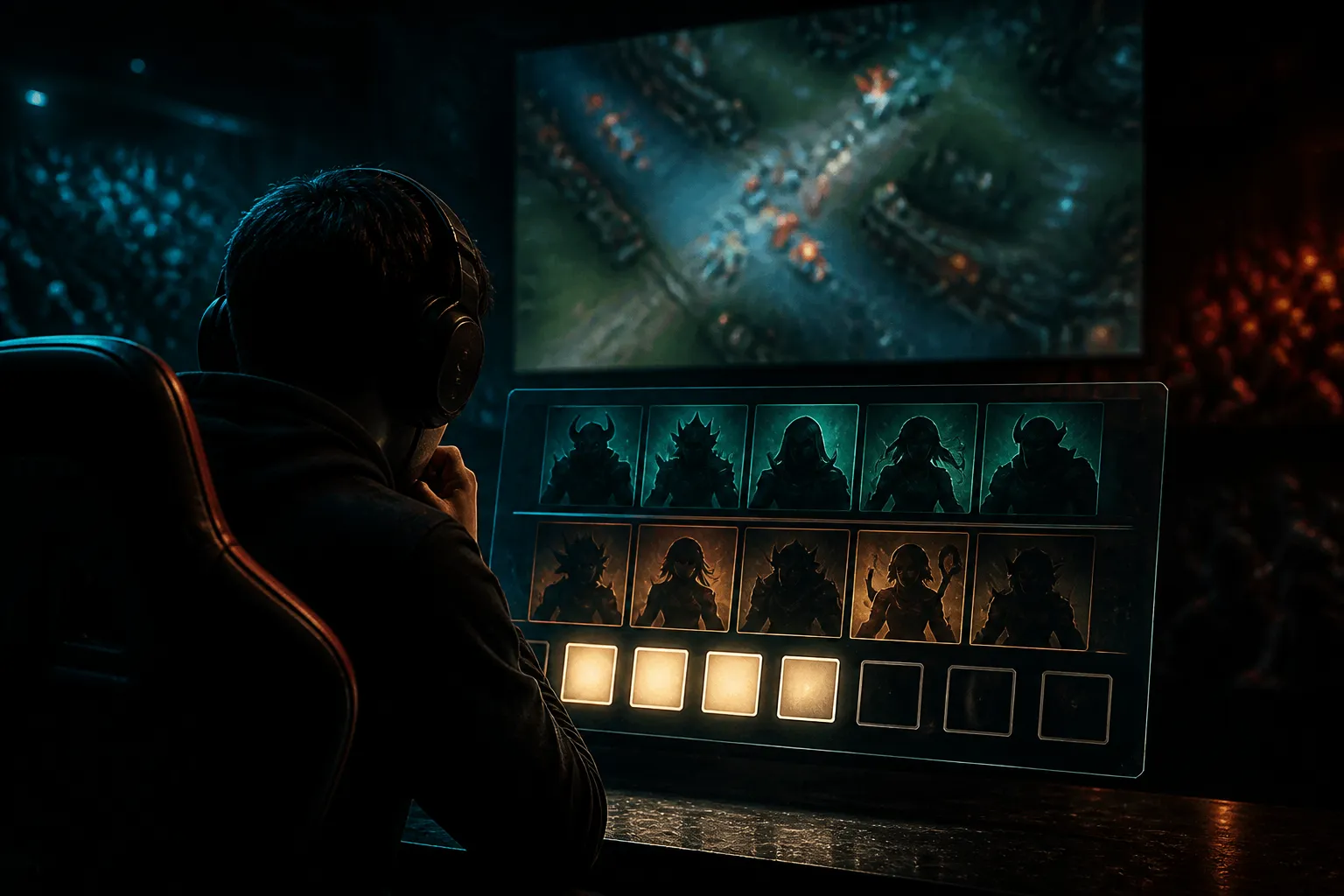
Amateur brackets are won and lost in a ninety-second window most teams treat as a formality. Everyone argues about rotations after a loss. Few look back at the draft screen. That is the wrong order, and the guidance I could find backs it up.
Why the draft sets the tempo before the game starts
One guide frames the draft as the first five minutes of competition. It decides your win condition, your damage profile, how deep your frontline runs, and whether your heroes can work together at all. Another says that when two teams are equal in skill, the better-drafted side wins most of the time in high-rank play. That is a claim about high rank, not about amateur brackets, so read it with some care.
Neither source defines tempo or says how to measure it. So I will use a working definition. Tempo is your ability to start fights, convert them into objectives, and keep towers under pressure. Every draft decision below serves one of those three jobs.
The seven-box checklist
The first guide offers a seven-box checklist. A draft that covers five of the seven is described as ahead of most players. That is a low bar, which is the encouraging part. Here are the boxes, in order, with what breaks when each is empty.
- Frontline. Without a real tank or fighter, good teamfighters get collapsed.
- Engage or Catch. If you cannot initiate, fights happen only when the enemy decides.
- Peel. Assassins and dive comps will farm your gold laner if nobody protects them.
- Mixed Damage. A single damage profile is easy to itemize against.
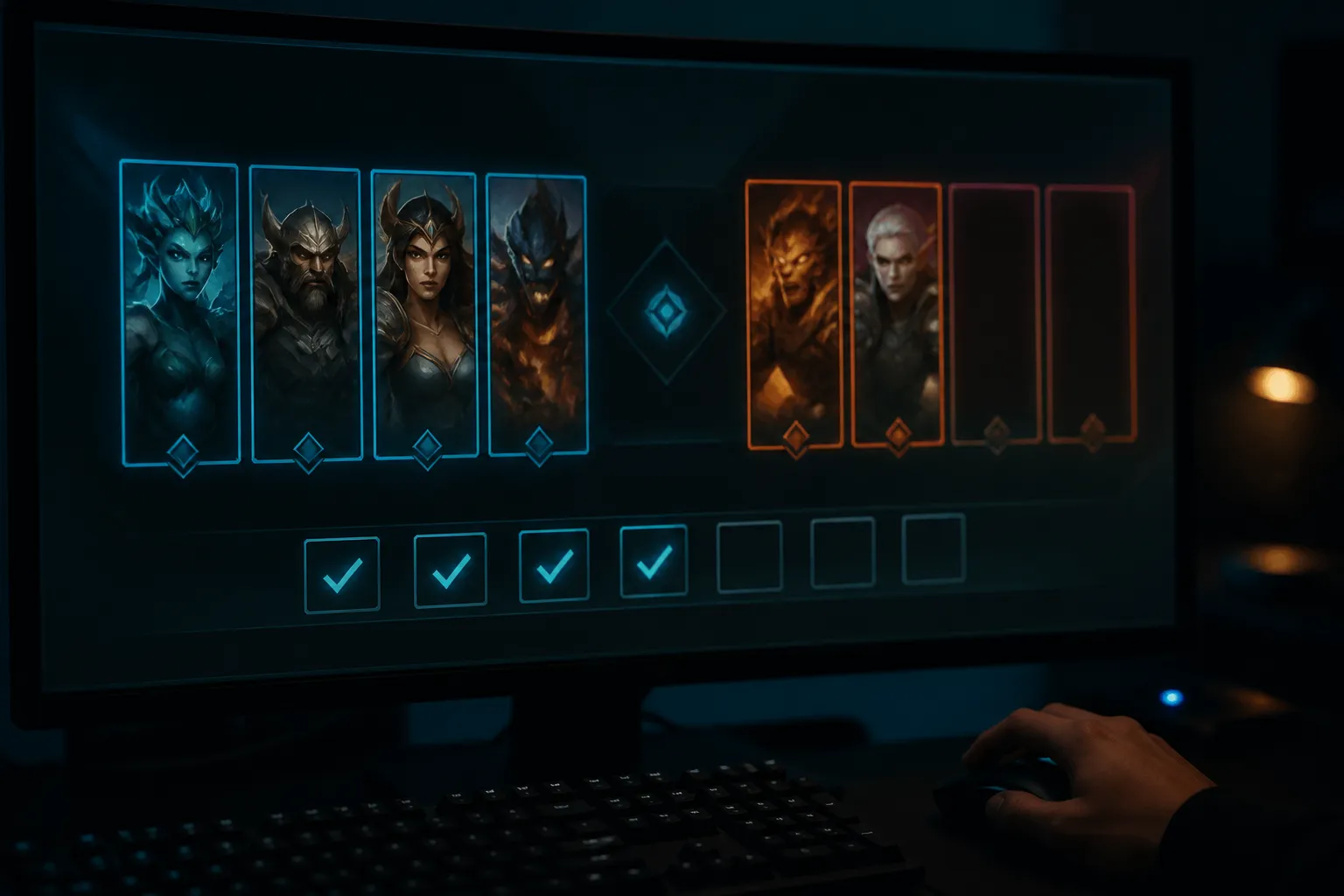
- Wave Clear. This is the anti-throw tool. Without it, one lost teamfight can cost two towers.
- Objective Control. Contest Turtle and Lord with burst, zoning, or a secure threat.
- Tower Pressure. Some comps win fights but cannot turn them into structures.
The last two boxes matter most for tempo. Winning a fight is not the goal. Converting it is. A draft that wins every skirmish and then stares at a standing tower has spent its lead for nothing.
The red flag the guide gives is concrete. Five physical damage heroes get answered by two defensive items. That is a draft the enemy can solve in the shop.
Countering with bans and counter-picks
The second guide gives three ban targets. Take out enemy meta-dominant heroes, heroes that wreck your composition, and heroes you personally struggle against. The third one is the most useful in amateur play. Your own weak spots are known to you and to nobody else in the lobby.
The counter logic is short. Answer mobility with crowd control. Answer sustain with anti-heal. Answer poke with engage. Answer engage with disengage and peel. The guide also says to counter what the enemy has actually revealed, not a generic meta. That keeps you reacting to the draft in front of you.
I am not naming hero matchups here. The sources give the principles but not the full counter-pick text, and inventing pairings would be guesswork.
Pick order and information
First picks are exposed to counters. So first-pick flexible heroes that are hard to counter, and hold situational heroes for later. Pick committal heroes last, once the enemy has shown its hand. Information is the resource you are trading for here.
Before the final pick locks, run three questions. Which of the seven boxes do we cover, and which are missing? Has the enemy shown poke or all-in engage, and what answers do we hold? Does their comp lean on sustain that we can answer with anti-heal?
A balanced draft, per the second guide, wants a reliable engage tank, a primary damage carry (marksman or mage), a frontline fighter, and crowd control. The failure to avoid is greed drafting. Everyone takes a favorite carry, nobody takes the front line, and the team folds the moment a fight starts. Anyone who has played a community cup knows that lobby. A draft with no wave clear has a quieter version of the same problem, because it bleeds towers every time the team dies.
Limits of the available guidance
Be skeptical of how far this goes. The sources give no win rates, pick rates, or ban rates. They name no heroes for the recommended roles. They point to a Draft Simulator and statistics pages, but show no data from them.
They also say nothing about amateur tournament rules, ban and pick format, or timing, so I will not assume a format for your bracket. And they skip practice methods and post-match draft review. I will not invent drills to fill that hole.
What you get is a checklist and a set of principles, not a proven system. Still, a five-of-seven draft costs nothing to try at your next scrim, and the result will tell you more than any list could.
Sources
Priya Nambiar covers competitive gaming and emerging esports ecosystems for GoAndGame, with a particular focus on Southeast Asian scenes and grassroots tournament culture. She came up through community forums before moving into sports journalism, and that background shapes everything she writes.


