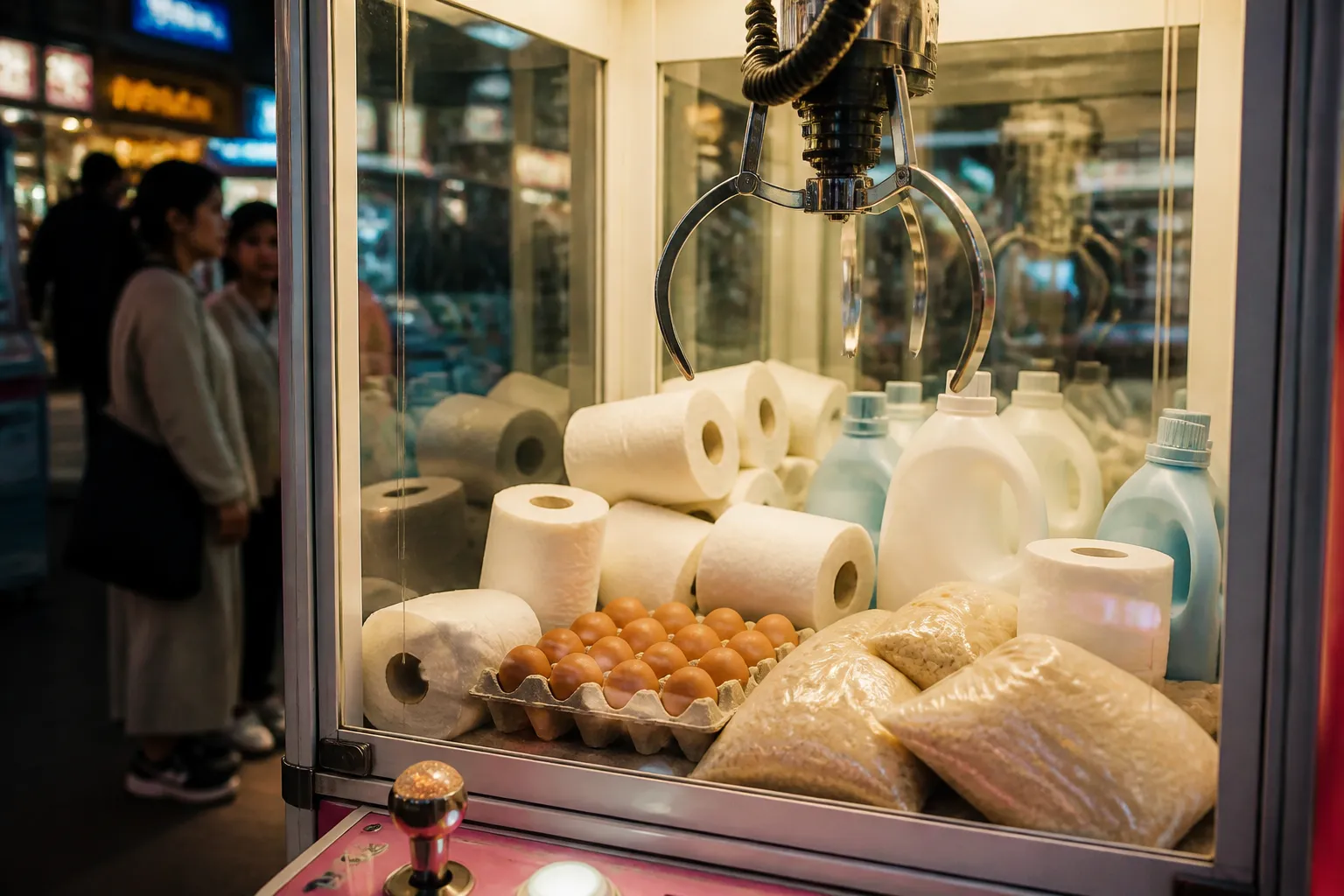
A woman in Kawasaki walks into an arcade and walks out with a pack of paper towels. She did not buy them. She won them with a claw. The Japan Times reported the scene, and it says more about Japanese arcades than a list of cabinet genres could.
The claw machine as a shopping stop
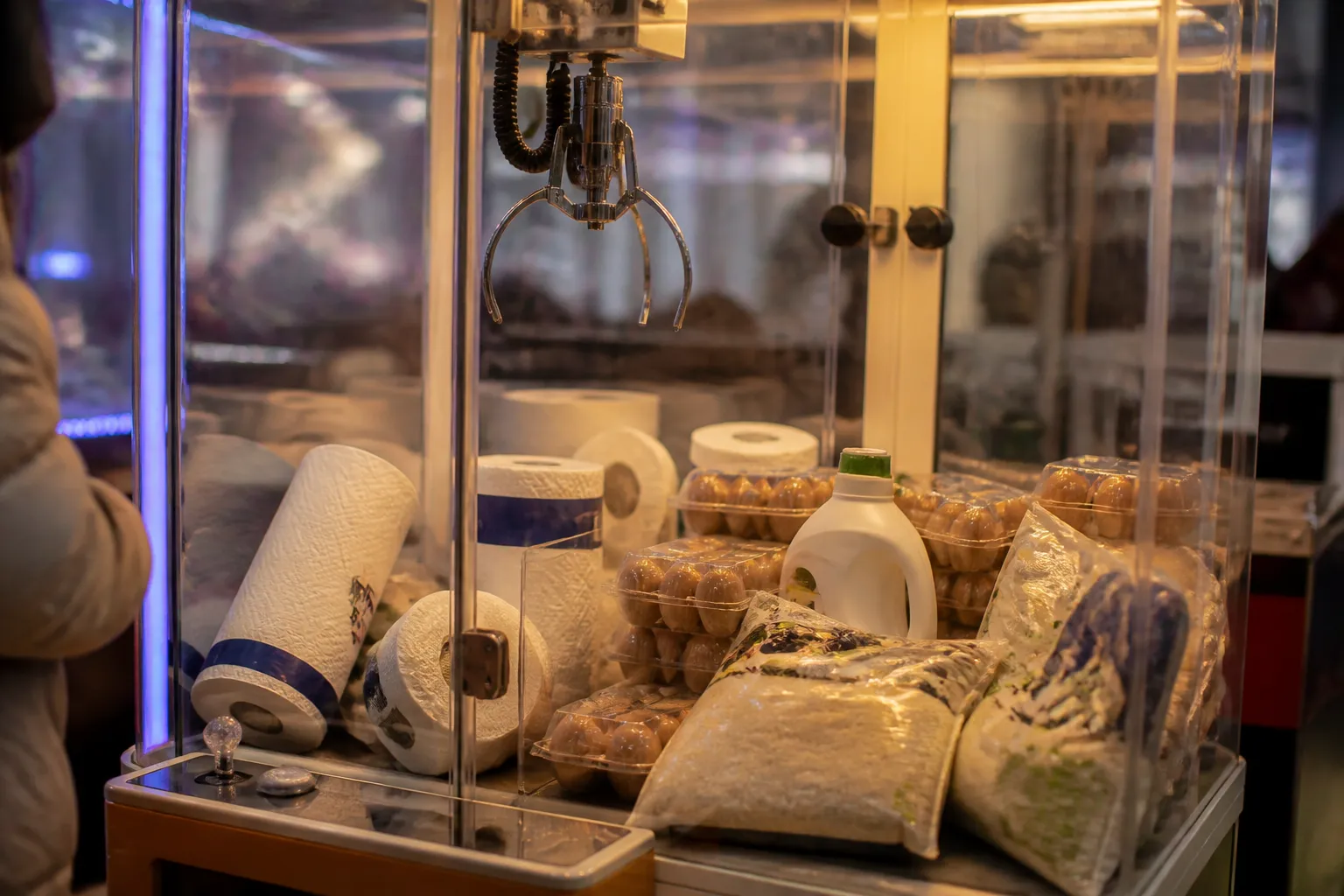
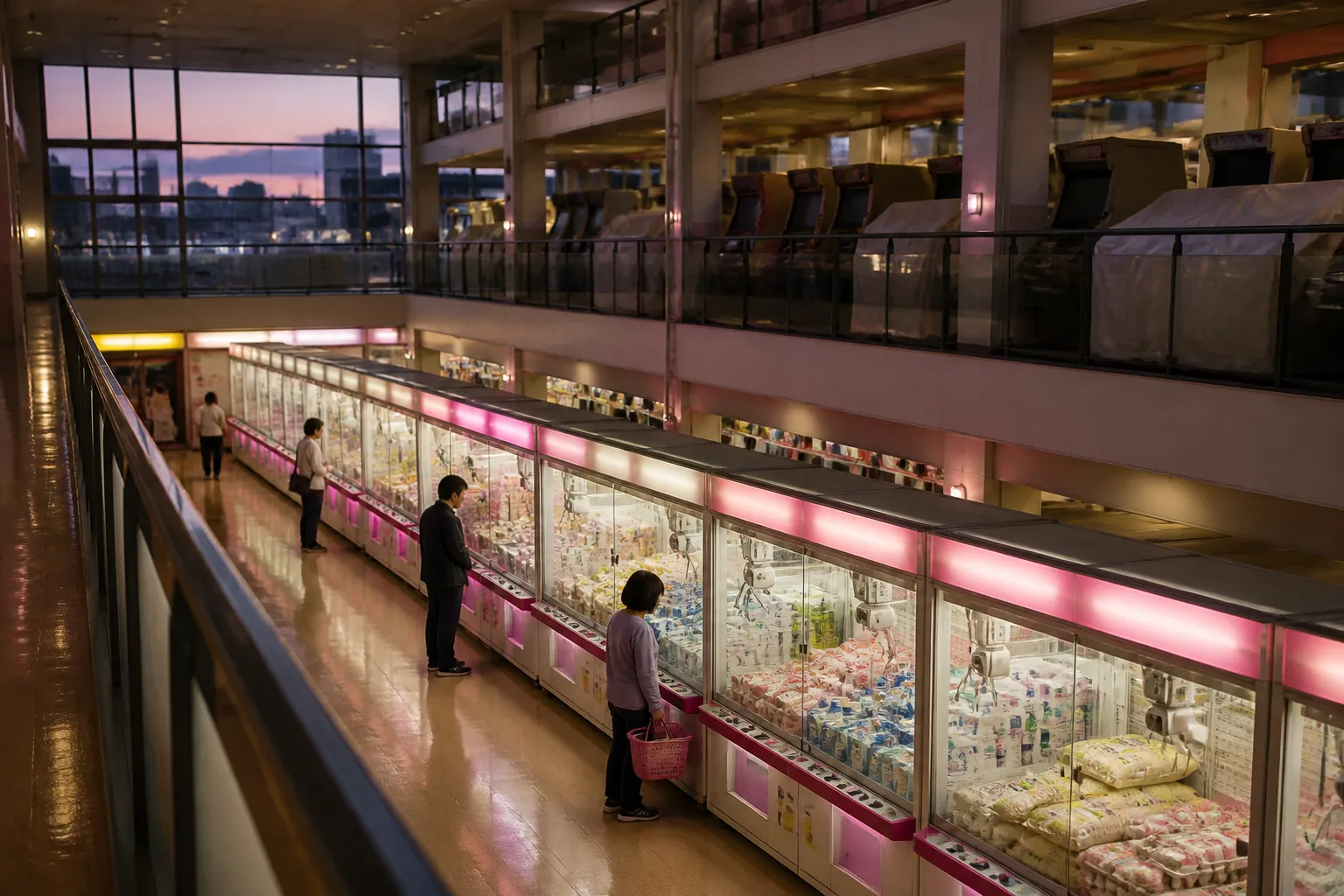
Crane games in Japan are now being filled with eggs, rice, laundry detergent and toilet paper. The reporting ties this to inflation, with households hunting for value wherever they can find it. Huge arcades on the outskirts of major cities are installing the machines. The pitch is simple. These are shop-and-play destinations, where buying basics and a day out sit under one roof. A family does not have to pick one.
The source names one arcade, Benex in Kawasaki. It does not say whether necessity prizes are everywhere or mostly there. It also gives no prices, win rates or per-play costs. So the claim to hold onto is narrow. Some big arcades are stocking groceries in claw machines, and they are doing it in a year when household budgets are tight.
How to read a prize machine's math
Since the numbers are not published, a visitor has to do a little arithmetic on the spot. The method works on any crane game, in any country, and it is more useful than a headline about bargains.
Start with the shelf price of the prize. A carton of eggs or a pack of paper towels has a number you already know from the store. Then look at the cost of one play and ask how many tries you would pay for before the shelf price is behind you. A single win that costs more in coins than the item does at the supermarket is entertainment, not savings. That is fine, as long as you know which one you bought.
Then watch the machine. Spend a few minutes seeing how often other players win, and whether the prize shifts when the claw touches it. These are general habits, not findings from the reporting.
- What does one play cost, and do multiple plays get a discount?
- Is the claw strength fixed, or does the operator adjust it?
- Can staff reposition a prize if it is stuck?
Staff are usually the quickest source for those answers, and asking is normal at most venues.
How Tokyo arcades arrange their floors
Walk into a crowded Tokyo arcade hall and look at what people are actually playing. Often it is a claw machine chasing a plush toy, not a fighting game. In one Ikebukuro arcade described by The Japan Times, crane games fill the first two floors. Video games get the basement and the upper levels.
That layout is a statement. The best-seen floors go to the claw games, and the cabinets that built arcade culture in the West sit further from the street. The reporting does not give floor-space shares or revenue splits, so the signal is the layout itself, not a number. It also does not explain why the operator chose it, so any reason is a guess.
Sega's UFO Catcher and the origins of the form
The form has a clear parent. Sega introduced the UFO Catcher in 1985, and the name stuck so hard that people in Japan now use it for crane games in general. It comes from the look of the thing, a claw descending like a flying saucer to abduct a prize. Walk into almost any Japanese arcade and you meet rows of them.
June 24 is unofficially known as UFO Catcher Day, marking 40 years since the 1985 launch. Forty years is long enough for a gimmick to become furniture. The sources do not trace the steps in between, so the story here stops at the start and the present.
What this means for Western arcades
None of the three sources compares Japan with Western arcades, so the question in the title stays open. What the reporting does show is specific. Japanese operators gave their best floor space to prize games, then widened what a prize can be to include dinner ingredients. Those are choices about space and stock, and they are choices a Western operator could study.
Whether they would work elsewhere depends on things the sources never cover. Prize costs, restocking, machine supply and any legal limits on prize games all shape the answer. A Western venue would need its own numbers before copying the idea. A visitor can still take one habit home. Check the shelf price first, then decide what the play is worth.
Sources

Priya Nambiar covers competitive gaming and emerging esports ecosystems for GoAndGame, with a particular focus on Southeast Asian scenes and grassroots tournament culture. She came up through community forums before moving into sports journalism, and that background shapes everything she writes.


