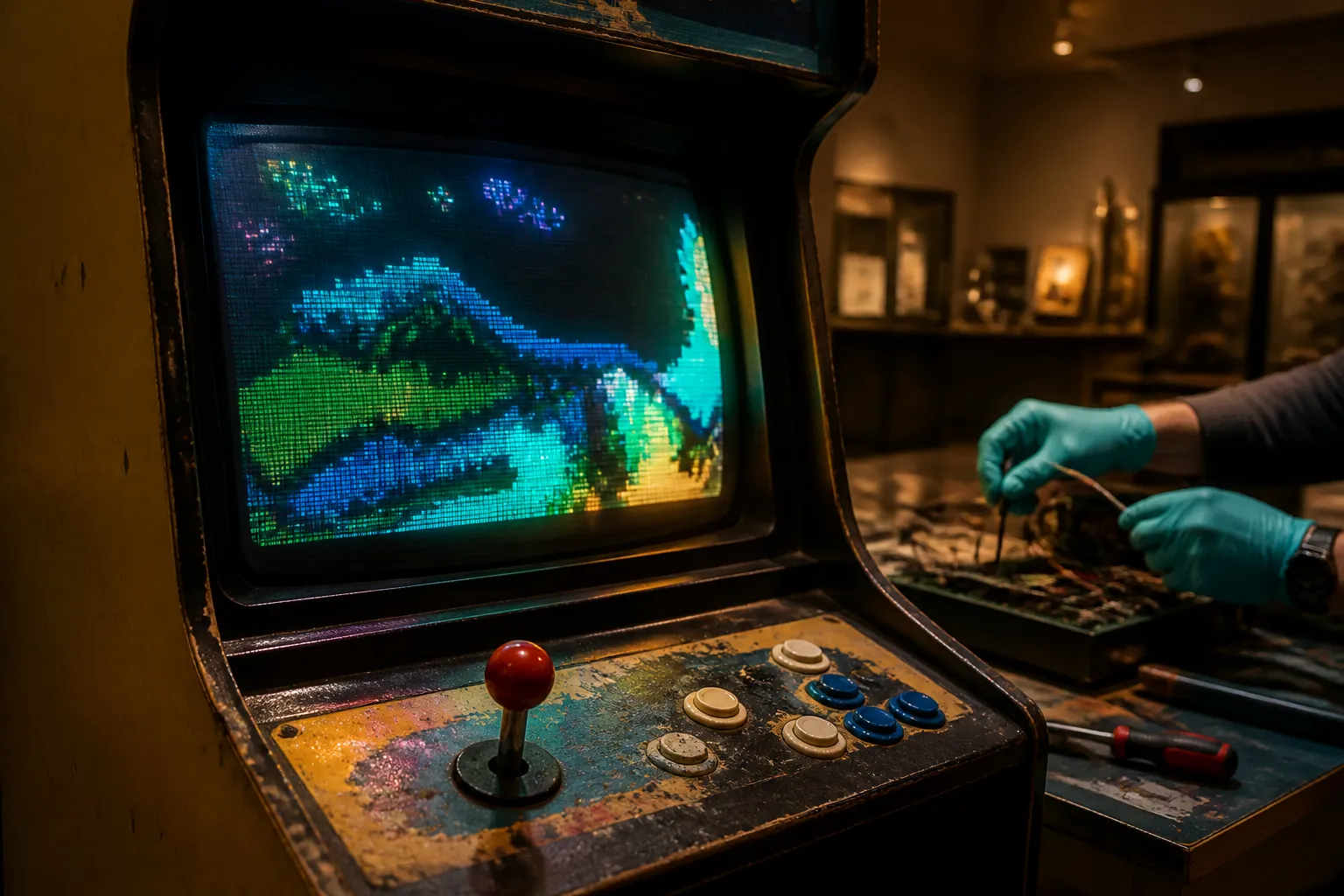
Ask a preservationist why an old arcade cabinet matters and the answer is rarely about nostalgia. It is about the machine in the room. Two organizations, The Strong National Museum of Play and the Game Preservation Society, describe their work in terms that point the same way. The play experience includes the hardware around the code. Neither source compares cabinets with emulation or home consoles, so that comparison is an inference. What follows is their argument, plus the gaps.
What The Strong Chooses to Keep
The Arcade Conservation Lab at The Strong handles the physical conservation of arcade and pinball games. Its stated aim is to preserve the playing experience as it was originally intended. That is a different goal from making a game boot. A game can start perfectly and still be a different thing to play if the screen, the controls and the feedback have changed.
The lab's choices show what it counts as part of the experience. The short list below covers the specifics the museum names. Read together, they say that the museum treats the parts a player touches and looks at as design decisions, not as replaceable fittings.
- Original CRT monitors that came with the cabinets stay in place.
- Pinball machines get period-correct coils.
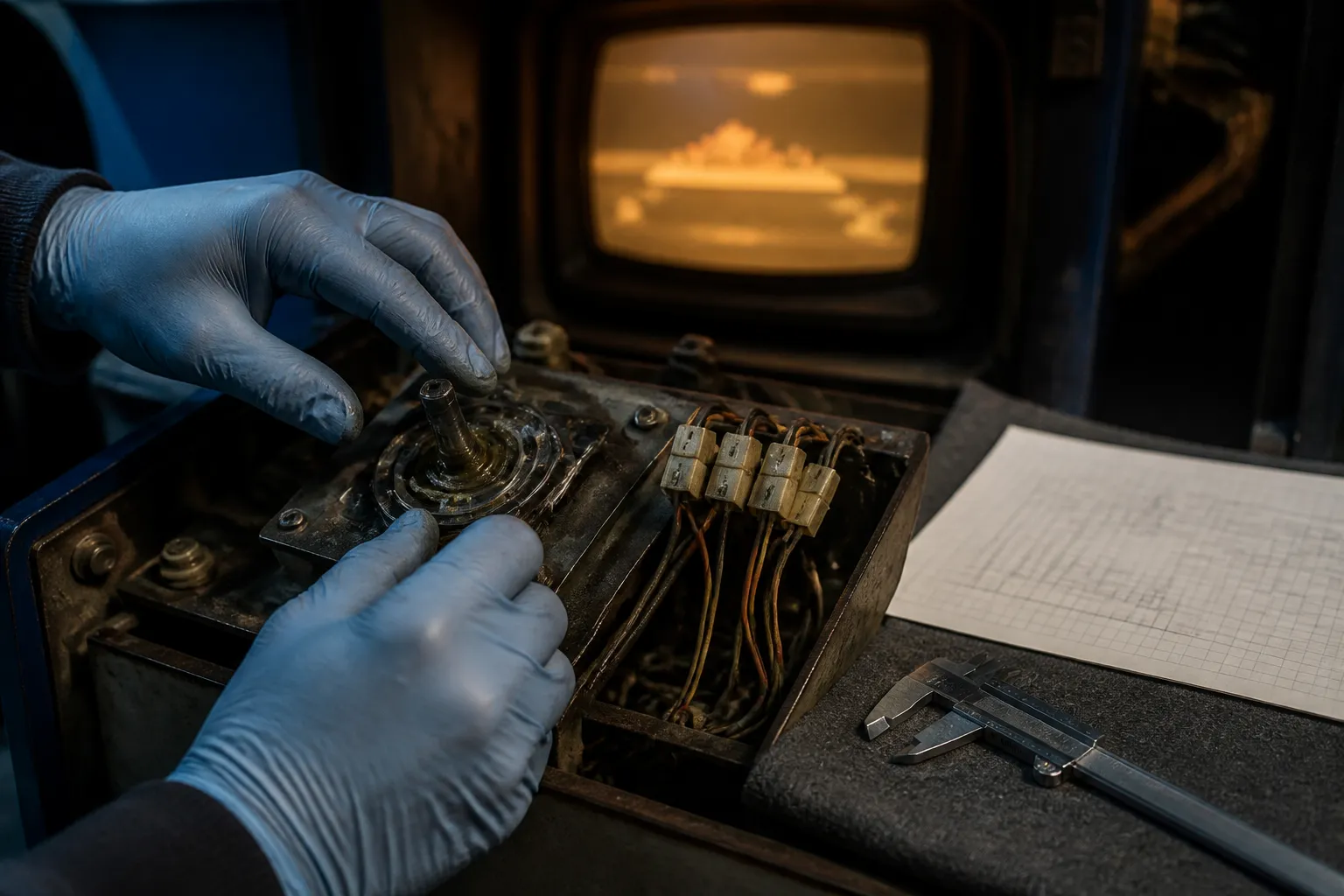
- Replacement buttons are sourced to feel the same as the originals.
The Strong's blog excerpt cuts off before the lab explains its methods in full. Monitors, coils and buttons are what the source names. Anything beyond that would be a guess.
The Phrase "Analog Substrate"
The Game Preservation Society uses more formal language. Its Forensic Preservation Standard says the preservation layer should capture enough information that, if the original were lost, the record could still support future research. It also requires capturing all information recorded in the original material's analog substrate, not only what users can directly perceive.
That wording is about recording, not about play. The Society does not say a joystick's weight or a CRT's hum counts as substrate information. Connecting the two is a reasonable reading, but it is a reading. The cautious version is this: both organizations act as if physical detail can carry information that a quick copy might miss. Whether players feel the difference is something the sources never test.
One concrete detail helps here. The Society cites two applications of its standard: Kyoto Nishijin-ori jacquard pattern data preservation work from 2011, and commissioned work for the National Diet Library from 2021 to 2023. Neither involves arcade games. The standard is general, and arcades are one case it could cover.
Two Layers: Raw Record and Curated Access
The Society splits its work into two layers. The preservation layer is raw data recording. The access layer is curated output, the version people can actually use. The split matters for anyone hoping to walk up and play.
A raw record is not a playable machine. Something has to turn it into an experience, and the sources do not say how the Society or The Strong makes that step. They do not say how closely the curated version matches the original, either. It would be easy to assume the answer is "perfectly." The excerpts give no basis for that. They describe a goal, not a measured result.
The Strong's approach is simpler to state. It centers on keeping period hardware and parts so that the play experience matches the original design. In that model the access layer is the cabinet itself, repaired rather than reinterpreted.
Stewardship and What the Sources Leave Out
The Society frames its holdings as cultural heritage. That covers physical materials, digitized information, and the knowledge and records attached to them. It holds them as a temporary steward for future generations. Its policy runs to 15 chapters with an executive summary, and section 1.1 sets out seven operating principles. They include independence from commercial interests, transparency, accountability and institutional continuity.
Materials enter the catalog by one of four paths: donation, stewardship with HQ custody, stewardship with external custody, and a fourth that the excerpt cuts off. The custody rules are not spelled out either.
The bigger omissions are practical. Neither source gives a cost for acquiring, restoring or maintaining cabinets, CRTs or pinball parts. Neither says how long period-correct replacement parts will stay available, or how wear is handled over time. A reader who wants to know whether this approach can scale has nothing to work with.
There is also nothing for the curious visitor. The sources give no information on public access, hours for playable machines, or how a reader could try authentic arcade play. Anyone planning a trip should check with the museum directly.
The honest summary is narrow. Two serious institutions keep original hardware and record physical detail because they treat it as part of the work. Whether that makes a cabinet more immersive than any alternative is a claim the sources never make, and this article does not make it for them.
Sources

Julian Thorne is a seasoned house writer for GoAndGame, known for his deep dives into obscure game mechanics and industry trends. He often explores the sociological impact of gaming, blending critical analysis with historical context.


