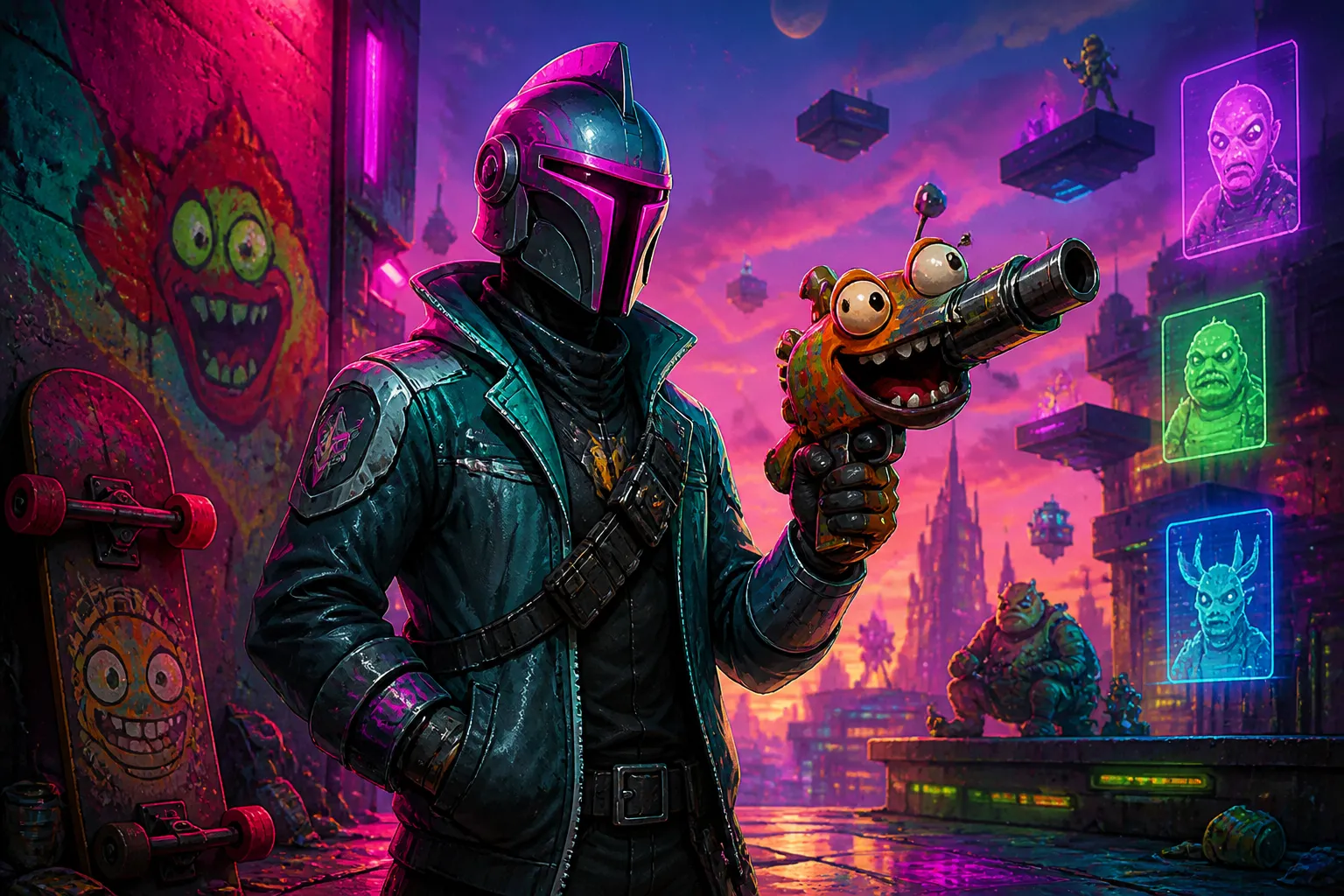
In High on Life 2, the person holding the gun has little to say. The gun has plenty. Squanch Games builds its first-person shooter around that exchange, then asks its combat and puzzles to keep the player engaged between punchlines. The reviews suggest an uneven answer: the voices often land, but the action gives them less support than they deserve.
A bounty with a lot to say
The sequel begins after the bounty hunter has taken down an intergalactic cartel and settled into an easier life. That peace ends when someone from the hunter’s past puts a price on their sister’s head. It is a direct reason to pick up the arsenal again, though the arsenal hardly needs an invitation to speak. The protagonist stays mute while the guns comment during play, making their personalities a constant presence rather than a reward saved for cutscenes.
That design gives the comedy unusual reach. A joke can follow the player into a firefight or fill a quiet stretch of travel. It also raises the stakes for the writing: if a particular voice wears thin, there is no easy retreat into silence. Released on February 13, 2026, and rated M for Mature, High on Life 2 makes its tone part of the basic experience, not an optional layer over the shooting.
When the guns stop talking and start working
The combat has a readable rhythm. Players swap between firearms with distinct abilities, moving from short-range shotgun bursts to longer-range shots. One ability freezes enemies in place for easy hits, so changing weapons can serve a practical purpose beyond hearing a different voice. A single-tap dodge gives the player a quick way out of danger. On paper, those pieces should make each exchange feel like a small improvisation.
The concern is how much that improvisation asks of the player. Video Chums describes the gunfights as simple, even while noting the value of switching weapons to use their abilities more often. Simplicity can make room for banter, but it can also leave the player waiting for the next line rather than anticipating the next encounter. GamesRadar+ puts the tension plainly in its review headline: “I smiled, I laughed, I sorely wished the combat was a lot better.” The smile matters. So does the wish.
The skateboard finds momentum, then the puzzles interrupt it
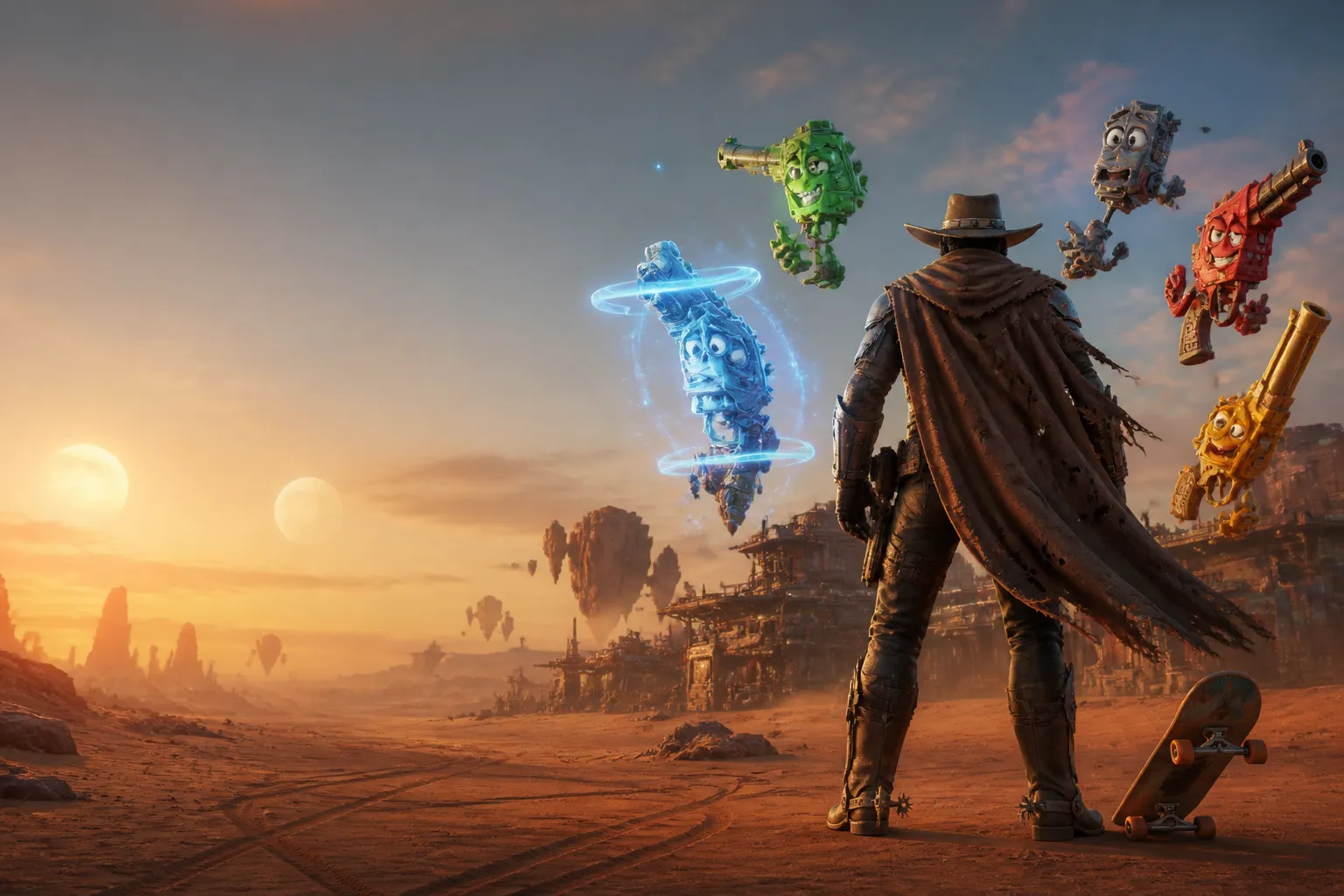
Outside fights, movement appears to offer a stronger counterweight to the dialogue. The player can grind rails, zip along walls, and swing toward distant platforms using a grappling line on a skateboard. Those actions give the environments a sense of pace that straightforward shooting may lack. A DualShockers review excerpt collected by Metacritic calls the skateboard a game changer and says the sequel improves nearly every aspect of the original.
The puzzle complaints point in the opposite direction. Video Chums describes repeatedly picking up blob creatures and placing them where they need to go, a task its reviewer found tedious and disruptive to the action. That is a particular kind of friction. A puzzle need not be difficult to stall a game; it can simply require the player to stop moving, carry something across a space, and wait for the next chance to skate or shoot. The reviewer found many of these interruptions forced and wished they could be skipped.
That contrast helps explain why traversal praise does not settle the broader question of pacing. A skateboard can make the route between encounters exciting. It cannot make a placement task feel quicker once the player has to step off it. The sequel seems most at ease when movement, gun abilities, and chatter happen together, and least at ease when one activity holds the others up.
Can the jokes carry the shooting?
The voice performances give the answer its strongest argument in favor. Video Chums praises a cast that includes Betsy Sodaro, J.B. Smoove, and Richard Kind. Because the guns speak while the player acts, delivery can change the feel of an ordinary encounter. A well-timed line may make a routine fight memorable even when the targets and tactics do not.
Still, that is a difficult burden to place on dialogue across an entire shooter. The critical split reflects the tension without resolving it. Metacritic lists a 72 Metascore from 30 reviews, with 15 positive and 15 mixed, alongside a 6.4 user score from 211 ratings. Those numbers show that enthusiasm for the sequel is far from unanimous. They do not tell us that every mixed reviewer disliked the same mechanic, but the specific complaints about combat and puzzles give the divide a plausible shape.
My verdict from the available reviews is qualified: the jokes appear to be High on Life 2’s best reason to play, and the skateboard gives them a lively route through the world. Neither fully answers the criticism that the shooting feels slight and the puzzles break the flow. Players drawn chiefly to the cast may find enough to enjoy. Anyone looking for a shooter that stays compelling when its characters fall quiet has more reason to hesitate.
What the reviews leave open
There are limits to that judgment. The cited sources do not establish the campaign’s length or how much time players spend fighting compared with listening, travelling, or solving puzzles. They also do not address performance, bugs, or meaningful differences between the Xbox Series X, PS5, and Nintendo Switch 2 versions. The Video Chums reviewer played on Xbox Series X, so that account cannot stand in for every platform.
Nor do these accounts establish how the jokes hold up late in the game or on a second playthrough, when surprise has worn off. The Video Chums reviewer had not played the original, but that alone cannot tell us how much a new player might miss in returning references. The clearest conclusion is narrower and more useful: High on Life 2 has enough personality to make critics laugh, yet the reported weak points lie in the activities players must keep doing after each laugh ends.
Sources

Eliot Reed writes about the intricacies of virtual worlds, blending analysis with storytelling. As a house writer for GoAndGame, he delves deep into game mechanics and narratives, offering thought-provoking insights for players and developers alike.


