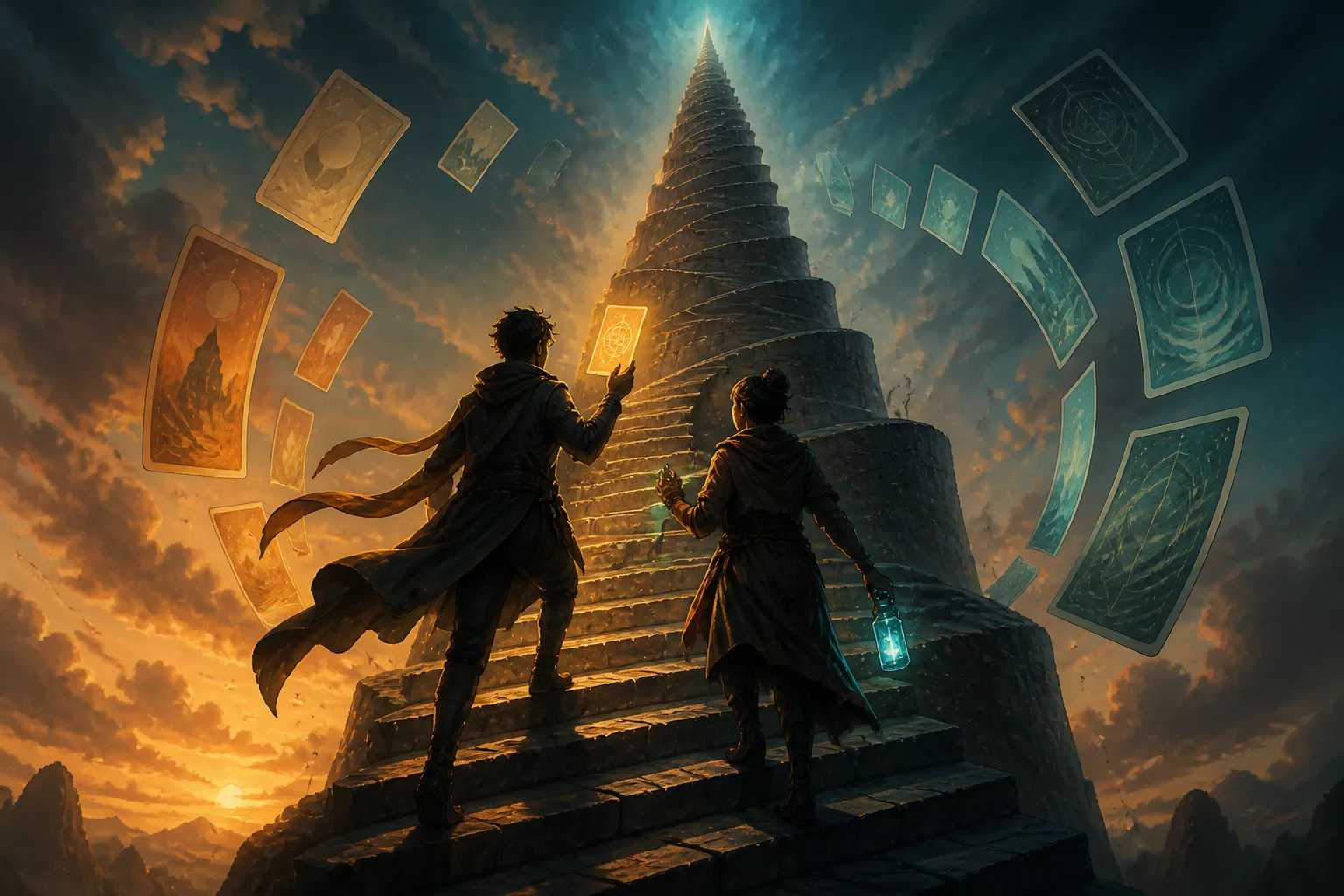
A weak opening hand can make a room feel much larger than it looks. You take a hit to save a potion, then find a card that makes the next fight easier but pulls your deck in a new direction. Slay the Spire 2 keeps that familiar chain of small bets. Its new co-op mode adds the prospect of making a climb together, though the available reviews leave an important question unanswered: what, exactly, do players share besides the attempt?
The climb still begins with a bad deck
The sequel follows the original’s central loop. You start underpowered, move through battles and events, and collect cards, relics, and potions that might turn a shaky run into a winning one. A reward can solve the problem in front of you while making later hands less predictable. That tension remains the reason to inspect every offer rather than simply take the strongest-looking card.
Death still sends you back to the bottom of the spire. There is no room-by-room save to soften a failed run, a feature that Macworld’s review identifies as frustrating. Macworld also describes a sequel that stays close to its predecessor, adding variety rather than replacing the formula. For someone who loved rebuilding a strategy after each loss, that continuity is the attraction. For someone who wanted a gentler climb, it may be the first warning.
Co-op changes the question, even before the rules are clear
Co-op is one of the sequel’s headline additions. In a game built around choosing when to spend resources and when to endure damage, another player’s presence suggests a different kind of conversation. A risky choice can become something to discuss instead of a private calculation. That is the promise behind a shared gamble, not a confirmed description of how the mode works.
The reviews available so far do not establish player count, matchmaking, shared decks, or how card drafting works with others. They do not say how a bad outcome is divided between players, either. Those gaps matter because co-op could alter the game’s most intimate moment: the pause before choosing a reward. Until the rules are clearer, the safest claim is also the most interesting one. The mode invites company into a game whose decisions have usually felt solitary.
Two newcomers ask for patience
The new characters give that familiar climb different rhythms. The Regent builds around Stars, a resource used for powerful cards that require setup. Forge cards strengthen the Sovereign Blade, giving careful sequencing a visible payoff. The Necrobinder works with Osty, a summon that can be bolstered during combat to block attacks and deal heavy damage. Each asks the player to look past the immediate value of a card and imagine the turn it might enable later.
That imagination takes practice. The PCGamesN reviewer says learning each newcomer took several hours, despite extensive experience with the first game. The review also finds them less refined than the original trio at this stage. Those observations fit the Early Access setting: an unusual character can be exciting to study while still needing adjustments. A rough first run with either newcomer may say as much about the learning curve as it does about the character.
When a loss feels less like bad luck
The returning three characters have changed, too. Their card rewards have been rebalanced so deck archetypes are more well-rounded and winning decks are easier to assemble, according to PCGamesN. That does not remove the uncertainty of a draw or the cost of an awkward reward. It may, however, give players more useful paths through the choices they receive.
The PCGamesN reviewer argues that the balancing makes it harder to blame randomness for a poor result. It is a pointed judgment in a roguelike, where a death can feel unfair even after a string of deliberate choices. The sources do not measure how much any given run depends on luck rather than decisions, so that argument is best read as one experienced player’s response. What is clearer is the effect a better-balanced reward pool could have: fewer moments when every offered card seems to belong to somebody else’s deck.
Buying into an unfinished climb
Slay the Spire 2 is still in Early Access, and reviewers suggest its full launch could be years away. Macworld calls attention to its beta status and recommends it to fans of the original, while advising people who have not played the first game to wait. PCGamesN is more enthusiastic, calling the game an all-time classic in its current state. Both positions can make sense when the present game is already compelling but its final shape remains unknown.
Macworld lists the Steam price at $24.99 / £19.99 and says the game runs on Intel and Apple Silicon Macs. Those details do not settle questions about performance on other hardware or the eventual full-release price. Nor is there a firm account of what will change before launch. Metacritic’s listing shows eight critic reviews but no Metascore or user score yet, another reason to treat early verdicts as snapshots rather than a settled consensus.
Two snapshots to carry into the next run
The sequel’s appeal rests on two scales of choice. In a single fight, The Regent may need time to build a blade, while The Necrobinder may need Osty to absorb the next attack. Across a purchase, the choice is how comfortable you are paying for a game still being tested. Co-op makes the first scale potentially social. Early Access keeps the second one personal.
Sources

Alexandra Rivet explores the intricate interplay of games and culture for GoAndGame. A passionate storyteller, she delves into narratives with depth and curiosity. Her pieces often highlight the stories behind the pixels.


