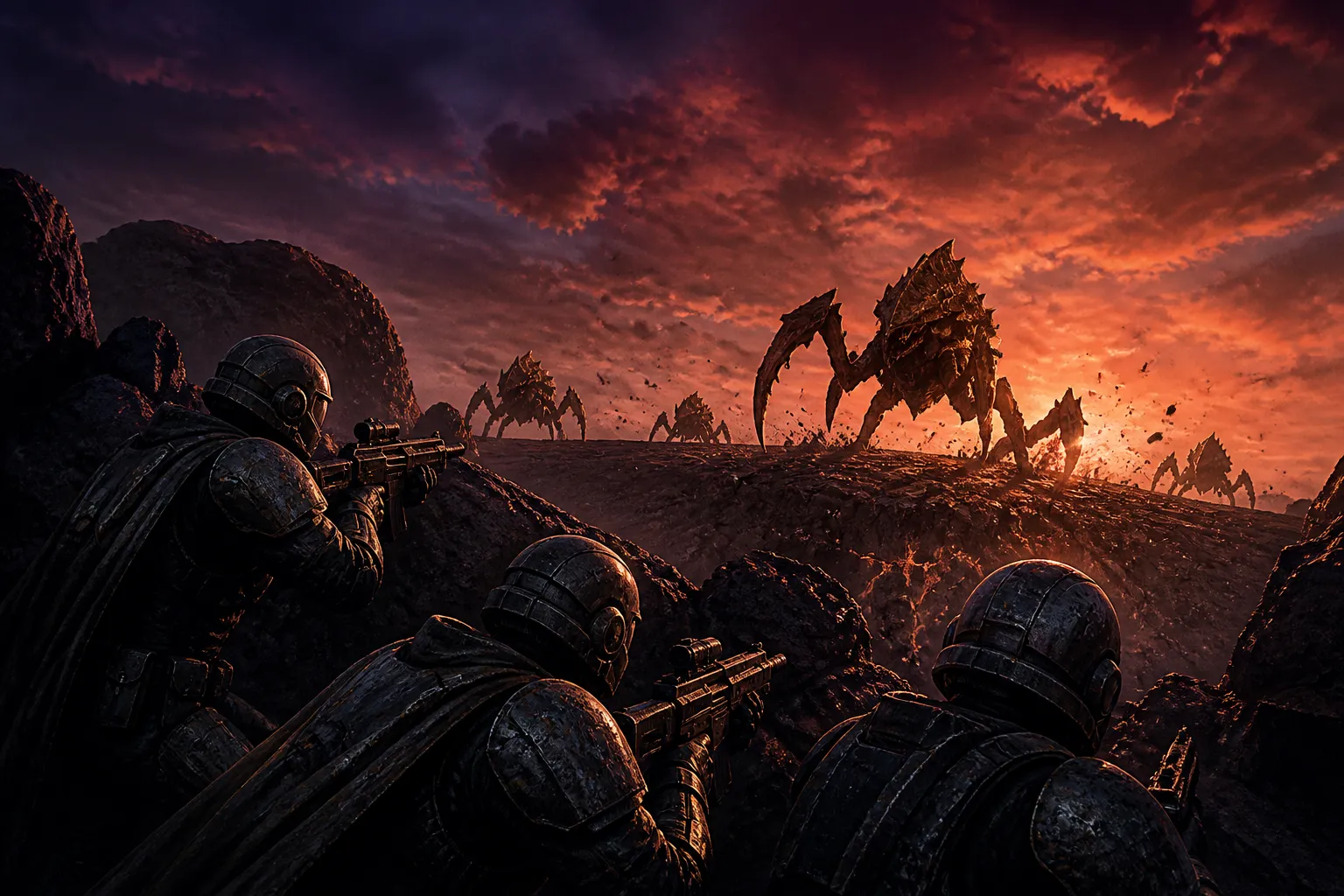
A Terminid patrol crosses the road ahead. One bug pauses, your squad opens fire, and a breach still erupts from the ground. In Helldivers 2, that sequence can make the obvious advice, shoot the caller, feel useless. Players report calls succeeding even when they shoot the apparent caller immediately. The practical answer is to give the patrol fewer chances to call at all, and to treat a call already in progress as a race you may have lost.
- Best odds: Spot the patrol and route around it before anyone fires.
- If you engage: Coordinate a quick hit on the group rather than starting a prolonged fight with one bug.
- If a breach begins: Stop spending the whole squad’s attention on a caller you may no longer be able to interrupt.
- Reported possibility: One player says killing the alarm bug before its pheromone cloud appears prevents a breach.
- Competing account: Another says the safer window is before the call animation begins.
- Unknown: Neither account establishes a reliable, tested way to cancel a call after the cloud appears.
Read the patrol before you challenge it
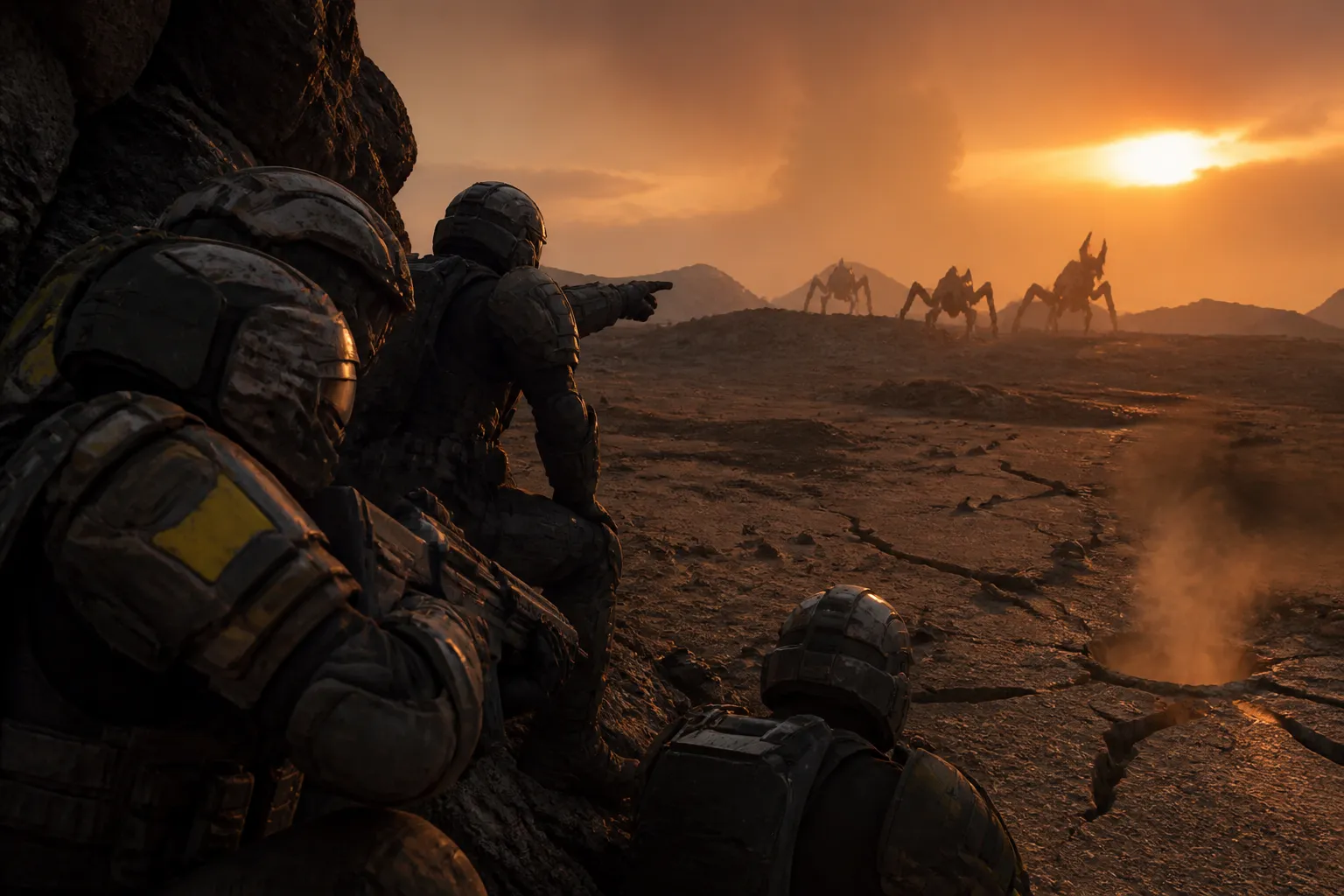
The most dependable way to stop a patrol from calling reinforcements is to avoid giving it a fight. A player in the bug-breach discussion recommends using recon or a map marker to find patrols, planning a route around them, and deciding with the team before engaging. That advice is less dramatic than a last-second shot, but it changes the problem. You no longer need to identify one small caller while the rest of the patrol closes in.
If the patrol blocks your route, agree on the first move before someone fires. Players suggest an Eagle strike or cluster bomb against a grouped patrol, while another offers a cooked grenade as a fast way to clear it. Those are attempts to shorten the encounter, not guarantees that no surviving bug will call. Check where your squad is standing, then commit together. A scattered opening gives the patrol time to spread out and forces each diver to guess which target matters most.
What a call gives you time to do
The player reports about bug signals point toward an animation and a pheromone cloud, but they do not settle the exact trigger. One commenter says a kill before the cloud prevents the breach. Another player reports seeing the cloud only when it was already too late. In a separate discussion of breach timing, a commenter argues that the bug must spend some time in its call animation and advises killing it before that begins. These are observations and interpretations from players, not a developer-confirmed timing chart.
That uncertainty matters in the middle of a fight. If you see a bug begin an apparent call, shooting it promptly is a reasonable attempt. Do not assume that a corpse proves you prevented anything. One player reports a headless Brood Commander calling a breach, which makes decapitation a poor test of success. Players also contrast bug calls with Automatons’ visible support flares. The bug signal can be harder to read at a glance, particularly when several bodies overlap.
Change plans when the ground opens
Once a breach appears, the patrol is no longer the only threat on the screen. Reassess the objective and your squad’s position instead of continuing to hunt for the original caller. A player discussing repeated breaches suggests that, on higher difficulties, one diver can draw attention while the others work on objectives. Another suggests disengaging and running for roughly a minute to see if the bugs lose track. Both are situational player tactics, not promises about how long pursuit lasts.
There is also a limit to what patrol tactics can explain. Players describe frequent breaches during extract citizen missions, including a report of breaches when no bug was nearby. That does not establish a hidden caller or a rule for defend-type missions. It does mean you should not spend an entire objective searching for a patrol you cannot see. Keep moving the task forward while the squad handles the threats that are actually present.
Know what remains unproven
No official developer explanation in these sources identifies every unit that can call a breach or fixes the moment when a call becomes unstoppable. The forum accounts also disagree about whether a quick kill can prevent one reliably. A suggestion that flamethrowers might burn pheromones comes from a player who explicitly says they have not tested it. It is an experiment to try, not a tactic to build a mission around.
The useful question before each encounter is simpler: can the squad pass without starting it? If not, can everyone hit the grouped patrol at once? Those decisions happen while you still have room to act. After the first signal, shoot if you have a clear chance, but watch the ground and be ready to move. The breach itself, rather than the fate of the bug you targeted, tells you what your squad must deal with next.
Sources

Eliot Reed writes about the intricacies of virtual worlds, blending analysis with storytelling. As a house writer for GoAndGame, he delves deep into game mechanics and narratives, offering thought-provoking insights for players and developers alike.


