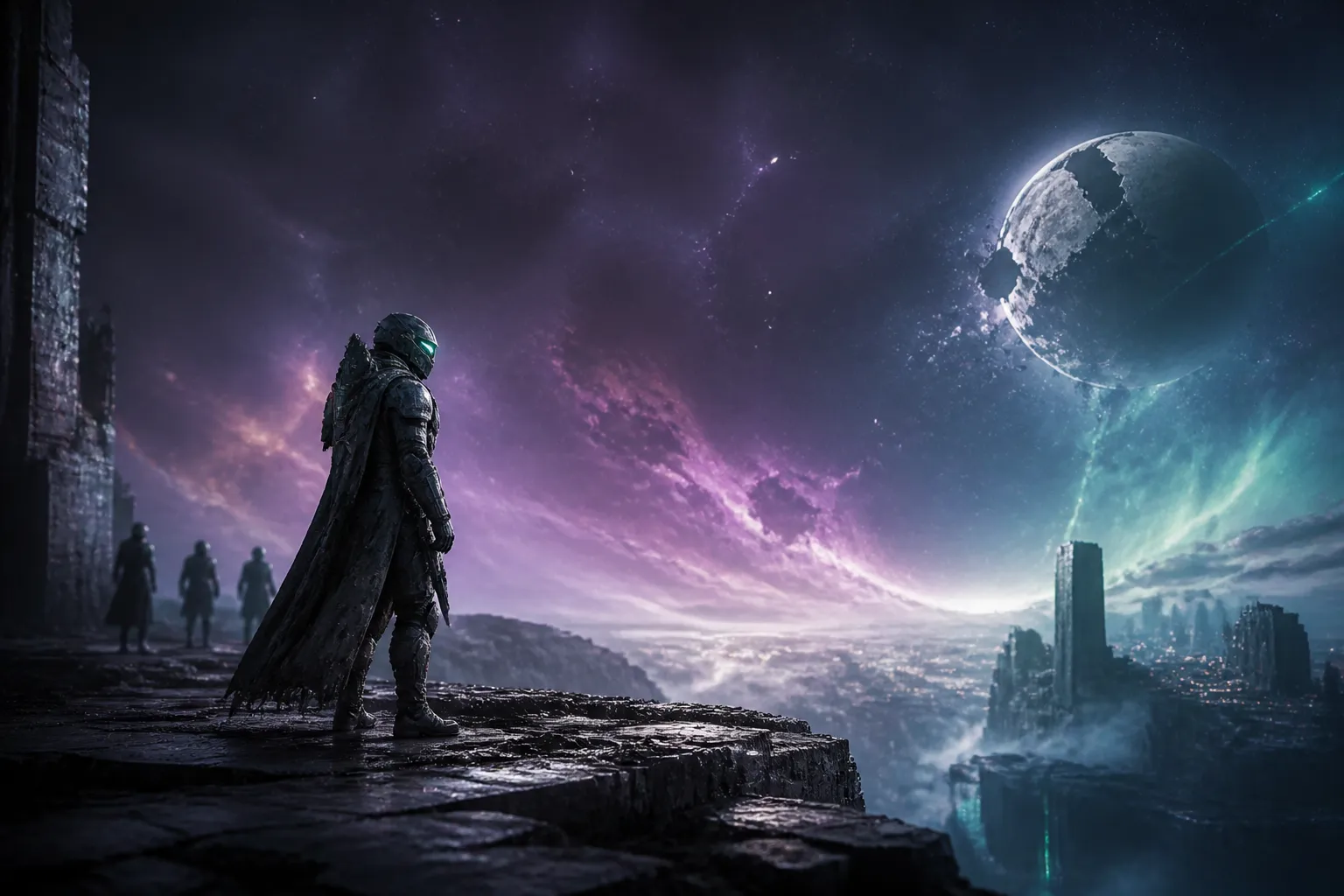
Housemarque’s Saros arrived on PlayStation 5 on April 30, 2026. Five days later, an Insider Gaming review gave it 9/10, calling it an excellent spiritual successor to Returnal. The score is clear. The more interesting question is how a game built around repetition makes room for people whose troubles we want to follow.
- The promise: Cosmic horror and an addictive roguelite loop give Housemarque another way to make uncertainty compelling.
- The test: A larger cast asks the player to care about more than the person caught in the cycle.
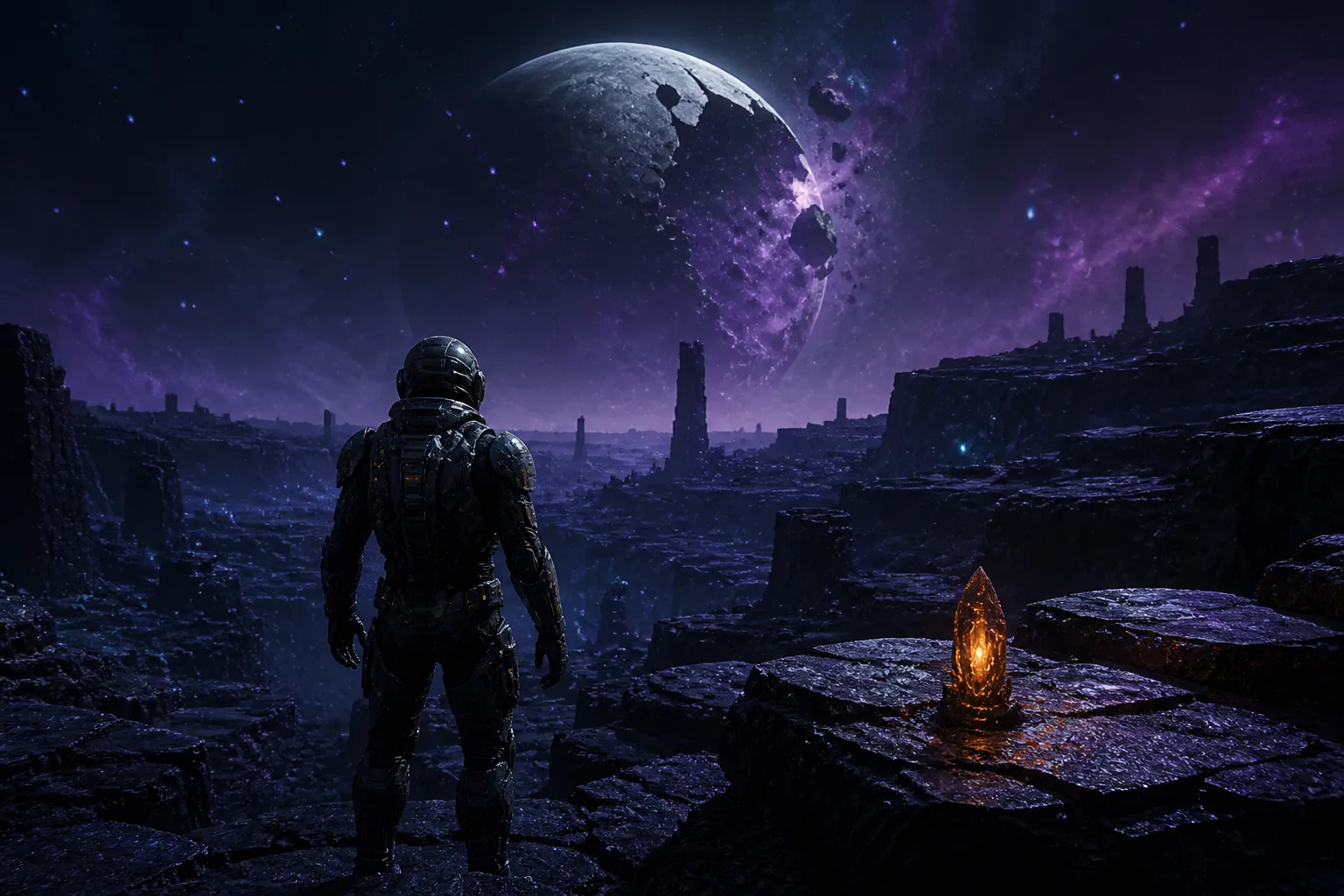
- The turn: The reviewer says the story becomes more engaging midway through Act 2 and holds attention through the finale.
- The limit: That praise comes from one review whose available text cuts off before its full verdict.
A successor with another person at its centre
Returnal followed Selene through a lonely ordeal. Saros is a new IP, but the review sees it building on the foundation of that earlier game, released exactly five years before it. Housemarque brings back text and audio logs, which add context to events on Carcosa. That is a familiar way to tell a story in fragments: the player gathers pieces while moving through a place that resists easy explanation.
The change is the number of people present to explain themselves. Arjun Devraj, played by Rahul Kohli, is an Executor of Echelon IV. He belongs to an expedition investigating disappearances on Carcosa. Where Selene’s isolation could leave a great deal unsaid, Arjun has colleagues to speak with and, eventually, people from other expeditions to encounter. Their presence gives the mystery more human points of contact. It also means the writing has to do more work in the open.
Carcosa has a price tag
The expedition is led by the Soltari corporation, and Carcosa contains Lucenite, a compound the review describes as having immense energy potential and the prospect of trillions in revenue. Those details give the disappearances a sharp context. People have gone missing, yet a company still has reason to send more people in. Arjun’s assignment begins at the meeting point of a search and a commercial interest.
The reviewer identifies H.P. Lovecraft and Solaris among the story’s influences, along with direct references to Robert W. Chambers’ The King in Yellow. Each points toward a mystery that may be difficult to understand, even for those standing inside it. Soltari’s interest in Lucenite provides a useful contrast: the corporation can put a prospective value on Carcosa while its crews are still trying to understand what has happened there. That tension gives the planet a purpose beyond atmosphere, even if the available review does not fully explain where its cosmic horror leads.
When the crew begins to matter
The review describes a three-act story that gathers force from the midpoint of Act 2 onward. Before then, the reviewer struggled to invest in Arjun’s personal dilemmas or the fate of his colleagues. That is a substantial reservation for a game with a larger cast and frequent conversations. If the people around Arjun are meant to make this journey feel less solitary than Returnal, their early scenes need to give the player a reason to remember them between encounters.
The reviewer also argues that the expanded cast exposes continuing weaknesses in Housemarque’s dialogue and character development. More characters create more chances for an exchange to feel revealing, but they also make a thin exchange harder to miss. Still, the reported change in Act 2 matters. The reviewer says the story holds attention from that point through the finale, suggesting that its people become more effective as the three-act structure develops. The available text does not give enough of the ending to say precisely how that happens.
What the 9/10 can tell us
According to the review, Saros brings together Housemarque’s arcade roots and the cinematic storytelling associated with PlayStation first-party games. Its praise for an addictive roguelite loop suggests that repetition remains a strong reason to play. The account available here offers no fuller explanation of that loop, though, so it cannot show which moment-to-moment decisions make another run appealing.
Nor does this one review settle the practical questions a score might raise. It gives no price, play time or difficulty assessment, and it discusses only the PlayStation 5 release. The source is truncated before its full verdict, and there are no other critical views or player responses here to weigh against it. What remains is one reviewer’s 9/10 assessment, with a telling qualification: Saros appears to find its strongest human story after asking for patience with its cast. On a planet where people keep disappearing, the reviewer’s account suggests that the game takes a while to make their presence count.
Sources
- Saros Review—Housemarque Refines Its Formula - Insider Gaming
- 'Saros' PS5 Review: Housemarque Delivers a Stellar Successor to 'Returnal' | Blogcritics
- Saros Review – Housemarque Comes Back Stronger Than Ever | The Outerhaven
- SAROS review: Housemarque comes back stronger with PS5’s most striking game yet - Dexerto
- Saros (video game) - Wikipedia
- SAROS Review - A Bullet-Hell Ballet Fueled By Housemarque’s Signature Style
- Saros Review — Housemarque at the Peak of Its Powers Review — The Gamer Scene
- Housemarque's next game is Saros, launching on PS5 and PS5 Pro in 2026 | TechRadar

Alexandra Rivet explores the intricate interplay of games and culture for GoAndGame. A passionate storyteller, she delves into narratives with depth and curiosity. Her pieces often highlight the stories behind the pixels.


