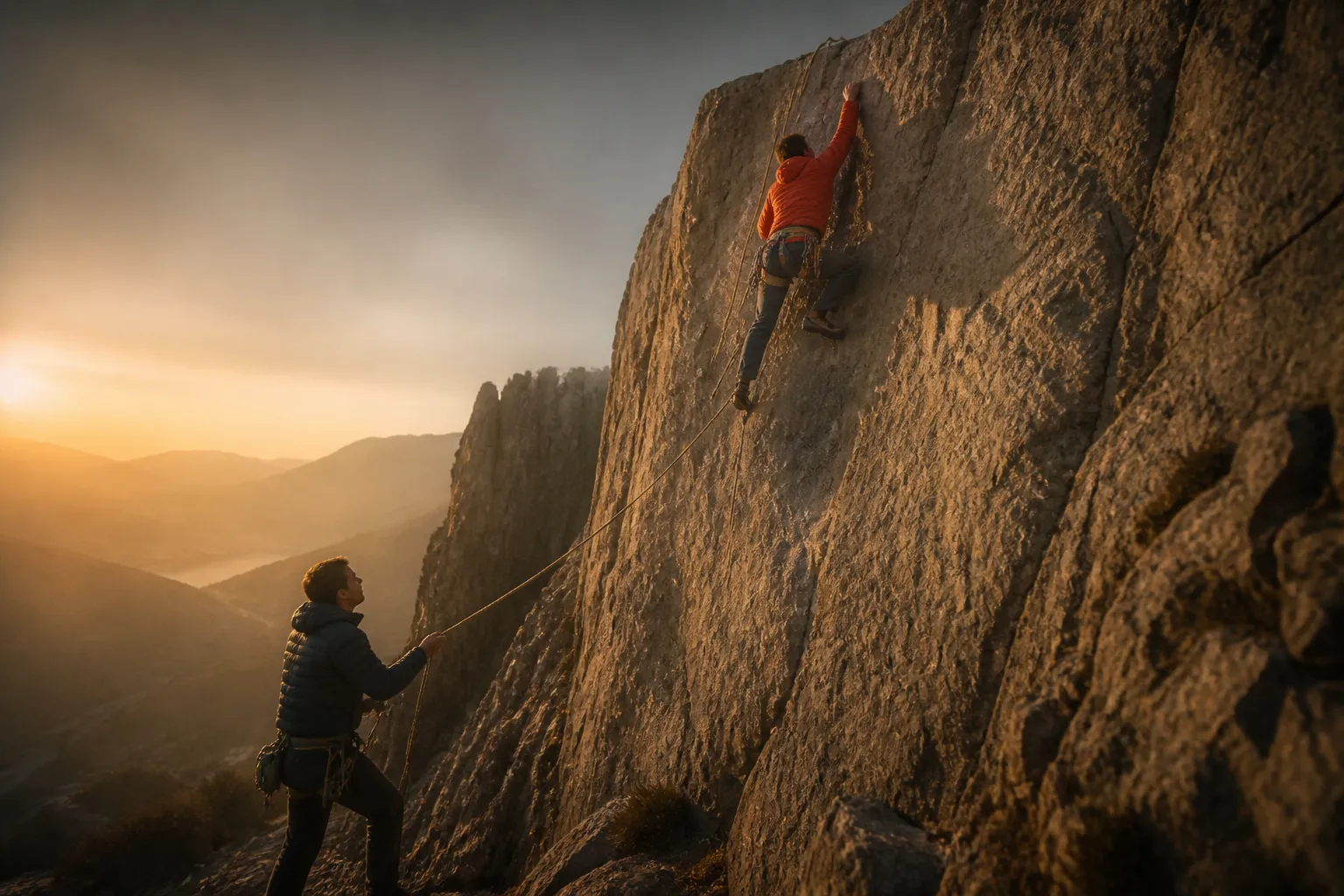
In PEAK, the question can arrive at an awkward moment: try the climb again, or use a rope? The temptation is to turn that choice into a simple rule. Yet the climbing material available for this guide describes real-world top roping, not PEAK’s rope mechanics. It can explain what protection from above does for a climber. It cannot tell us exactly when the game rewards using a rope, or what a failed move will cost. That distinction matters before anyone treats a familiar climbing term as an in-game safety guarantee.
What a top rope actually does
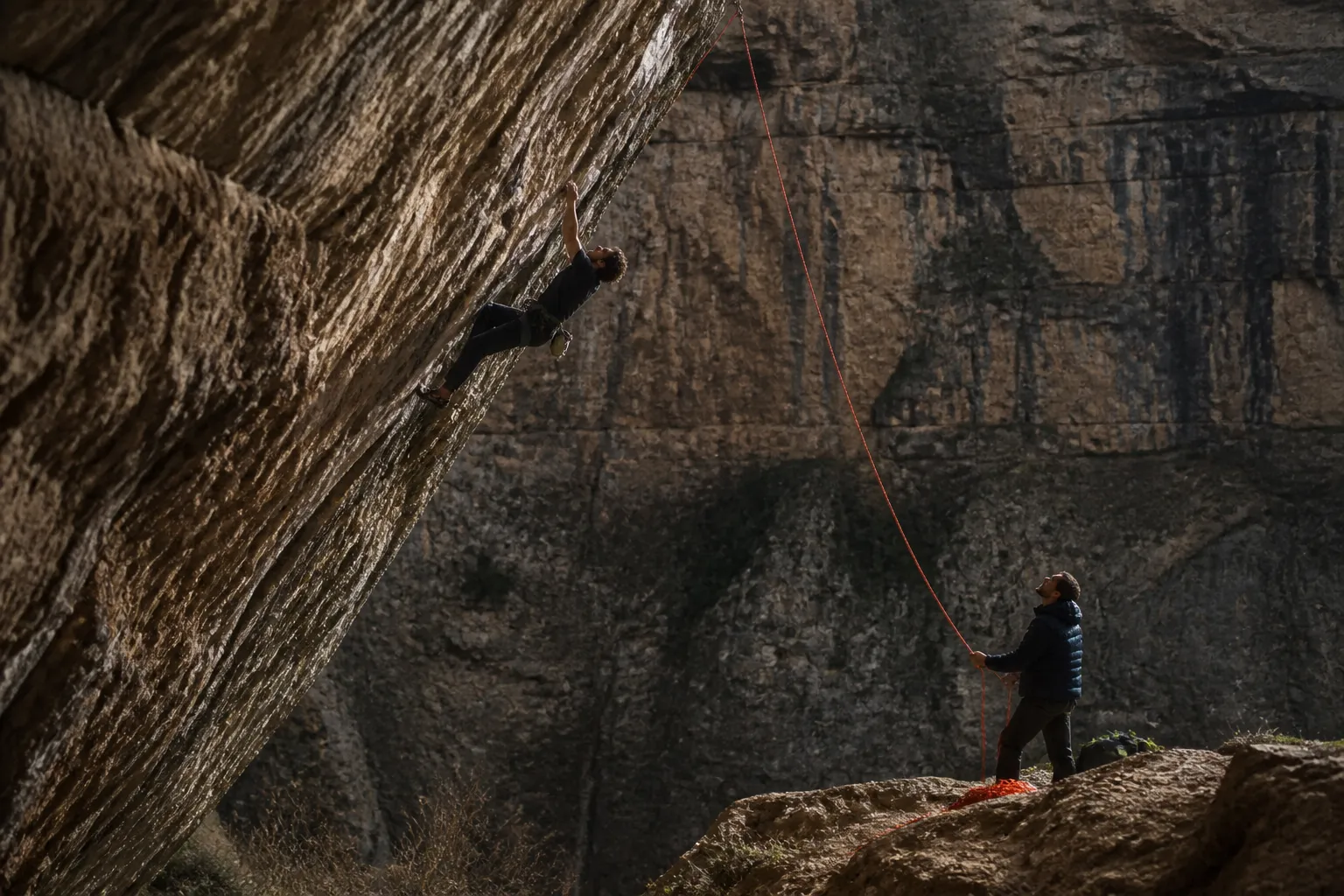
Imagine a climber partway up a wall, with the rope rising from their harness rather than trailing below. In top rope climbing, that rope passes through a fixed anchor at the top of the route and returns to a belayer at the base. The belayer controls the rope while the climber moves. Because protection comes from above, a fall can be caught where it happens. The climber may then resume climbing or be lowered to the ground under the belayer’s control.
That arrangement helps explain why top roping is widely described as one of the safest forms of rock climbing and why many beginners start there. The description is useful, but it is not an injury statistic or a promise that every setup is safe. A fixed anchor, a rope and a person managing it each have to be suitable for the route. The available source names those parts without teaching a reader how to build an anchor or belay. Those are skills to learn through instruction, not from a short account of how the system works.
Route length changes the answer
A rope can look reassuring from the ground and still be too short for the route. With a belayer stationed at the base, the rope must travel up to the anchor and back down to the climber. That is why a typical ground-belay top rope setup is used on single-pitch routes shorter than half the length of a typical climbing rope. The source gives a rough range below 25 to 35 metres, or 82 to 115 feet. Those figures describe common setups, not a universal clearance for every route under a particular height.
The belayer’s position changes the calculation. On a multi-pitch route, a belayer may be above the climber, so the ground-belay half-length restriction does not apply in the same way. Before assuming a rope will reach, climbers need to know the actual rope length, the route height and where the belayer will stand. This is a more concrete question than asking if the wall merely looks climbable. It also shows why a rule borrowed from outdoor climbing cannot simply be pasted onto PEAK without verified information about how its rope works.
When to stop treating another try as the default
The appealing story is that confidence earns one more move. Sometimes it does. Sometimes a climber is repeating a move without having learned anything new about it. A rope can give a real-world climber a controlled way to keep going or come down, provided a suitable top rope setup is already in place. If someone is unsure about a move, that protection is a reason to consider the roped option rather than treating an unprotected attempt as obligatory.
There is no sourced threshold for that decision here. The available climbing account does not say how tired is too tired, how uncertain is too uncertain, or when conditions should end an attempt. It also does not establish an equivalent threshold inside PEAK. A personal rule such as pausing after repeated failed moves may be a useful way to check your own judgment, but it remains your rule. In real climbing, make that judgment with qualified instruction and the conditions in front of you. In PEAK, check what the game actually allows before relying on a real-world analogy.
When nobody is holding the other end
Indoor climbing walls add another version of the choice. A mechanical auto belay can let a climber top rope without a second person stationed at the base. The rope still offers protection from above, but a device takes the place of the human belayer in that part of the setup. That difference can make a roped climb available when a partner is not. It does not mean a climber should skip the facility’s required checks or instructions.
Top rope techniques also appear beyond ordinary rock walls. The source briefly mentions ice climbing, mixed climbing and dry-tooling, along with auto belays in competition speed climbing and competition ice climbing. Those settings share a broad idea, protection from above, while presenting very different surfaces and routines. The source does not explain how an auto belay is inspected or maintained. Follow the climbing facility’s procedures rather than assuming that the presence of a device settles every safety question.
The limit of the rope analogy
One source underpins the real-world climbing details in this guide. It offers a clear outline of the rope’s path and the ground-belay length limit, but no equipment specifications, anchor-building guidance or detailed belay technique. It provides no injury data with which to compare top roping against other choices. Its supplied text also ends before the history section, leaving the technique’s history and its relationship to sport climbing outside what can be checked here.
That leaves the PEAK decision narrower than its title might suggest. The source supports an explanation of why a properly arranged top rope can protect a real climber during a fall. It does not verify PEAK-specific rope behavior or supply a rule for choosing one over another attempt. When a climb starts to feel like a gamble, pause and distinguish the thing you know from the thing you hope the rope will do. In real climbing, confirm the setup with someone qualified. In the game, let observed mechanics guide the next move rather than borrowing certainty from the sport’s vocabulary.
Sources
- Top rope climbing - Wikipedia
- is regular rope useful in offline? :: PEAK PEAK Discussions
- List of Mount Everest guides - Wikipedia
- Rope solo climbing - Wikipedia
- Belaying - Wikipedia
- Best Beginner Tips & Tricks For PEAK
- When To Use The Anti-Rope Spool in PEAK?
- How to Use Rope Spool, Rope Cannon, and Piton in PEAK

Alexandra Rivet explores the intricate interplay of games and culture for GoAndGame. A passionate storyteller, she delves into narratives with depth and curiosity. Her pieces often highlight the stories behind the pixels.


