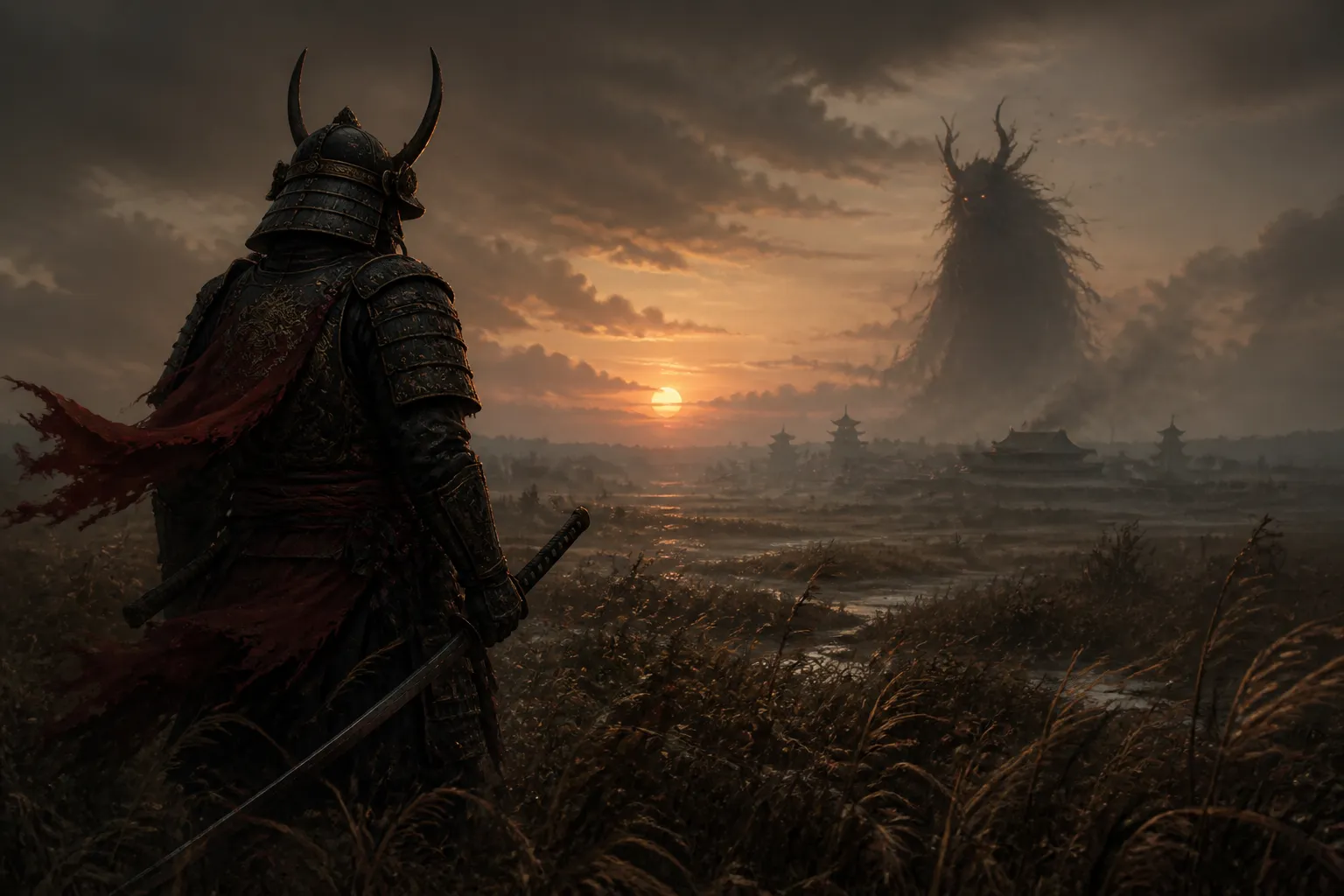
A wider field can change a fight before anyone swings. It can change which threat you notice first, how much ground you have to cross, and whether you arrive ready or already uneasy. Nioh 3 invites that question by moving into an open field while retaining the tension associated with the series. But an invitation is not an answer. The available reviews make a strong case that critics like the game. They give a much thinner account of what the new space does to combat.
Act I: A wider route into danger
The Metacritic summary describes a field players can freely explore. Its named attractions have a useful sense of range: powerful yokai to confront, villages where suspicious beings lurk, and a challenge called The Crucible. Together they suggest that danger can sit along the route as well as at its end. A village might draw your attention for a different reason than a formidable encounter. That variety matters to the rhythm of an action RPG, even before we know what happens once a fight begins.
The distinction is between the approach to combat and combat itself. Free exploration could give players more control over when they meet a threat. It could also lengthen the stretches between demanding encounters. Neither effect is established by the summary, and neither tells us how a weapon feels in hand. The claim the source does make is narrower: Nioh 3 opens its space without giving up the tension associated with Nioh. That is a promising design aim, but it leaves the most interesting part of this review question unresolved.
Critical praise, with a missing mechanism
The reception is hard to dismiss. Metacritic lists an 86 Metascore from 102 critic reviews, with 96 positive, six mixed, and none negative. One excerpt calls Nioh 3 a “new high bar” for the series and among the most engaging Soulslikes its reviewer has played. Another says Team Ninja “excels in all aspects of game development.” These are emphatic endorsements. They indicate that the move to an open field has not prevented a broadly favorable response.
They do not, on their own, explain that response. A short excerpt cannot show how an encounter begins, how space affects a decision under pressure, or what a player learns after losing. The first reviewer adds that Nioh 3 may not replace Elden Ring for them. That reservation is worth keeping beside the praise, although it speaks to personal standing among Soulslikes rather than to the open field’s effect on a particular fight. The scores and quotations tell us where critics landed. To understand how they got there, we need the full reviews.
Act II: What the evidence cannot settle
The supplied accounts do not describe changes to weapons, stances, or yokai behavior. They do not say whether a broader area alters enemy placement or gives a player more useful choices during an encounter. Without those details, calling the open field a combat improvement would be guesswork. The same restraint applies in the other direction. Nothing here establishes that the new structure weakens the fights, either.
There is also no direct comparison with Nioh 1 or Nioh 2. That absence matters because the question is about a change in structure, not simply the quality of Nioh 3 in isolation. To judge what the field adds, we would want to know what its routes and pauses do differently from the earlier games’ more linear progression. The available material offers no account of that trade. It names The Crucible but gives no detail about its place in the endgame or the length of the campaign. It also provides no basis for assessing performance or bugs.
A retrieved PC Gamer review page supplied navigation and membership text rather than the review itself. Its judgment on the open field is therefore unknown here. Treating a missing review as agreement with either side would make the evidence look fuller than it is.
How to read the verdict
Start with the point the summary supports most clearly: Nioh 3 aims to preserve the series’ Soulslike tension while giving players room to explore. If that tension is what you come to Nioh for, the broad critical approval is encouraging. Metacritic’s 86 from critics can be weighed against its displayed user score of 85 from 526 ratings. Those numbers show a favorable reception from both groups, but neither score isolates the open field or explains the experience of a single encounter.
For a decision about the combat, seek out full reviews that follow a fight from approach to outcome. Look for concrete accounts of how an encounter uses the surrounding space, then compare those accounts with descriptions of the earlier games’ tighter routes. That reading will do more work than another superlative in an excerpt. For now, the most defensible verdict is limited but useful: Nioh 3’s open field sits within a widely praised game, and the available evidence does not show whether it sharpens moment-to-moment combat or chiefly gives that combat more room to happen.

Eliot Reed writes about the intricacies of virtual worlds, blending analysis with storytelling. As a house writer for GoAndGame, he delves deep into game mechanics and narratives, offering thought-provoking insights for players and developers alike.


