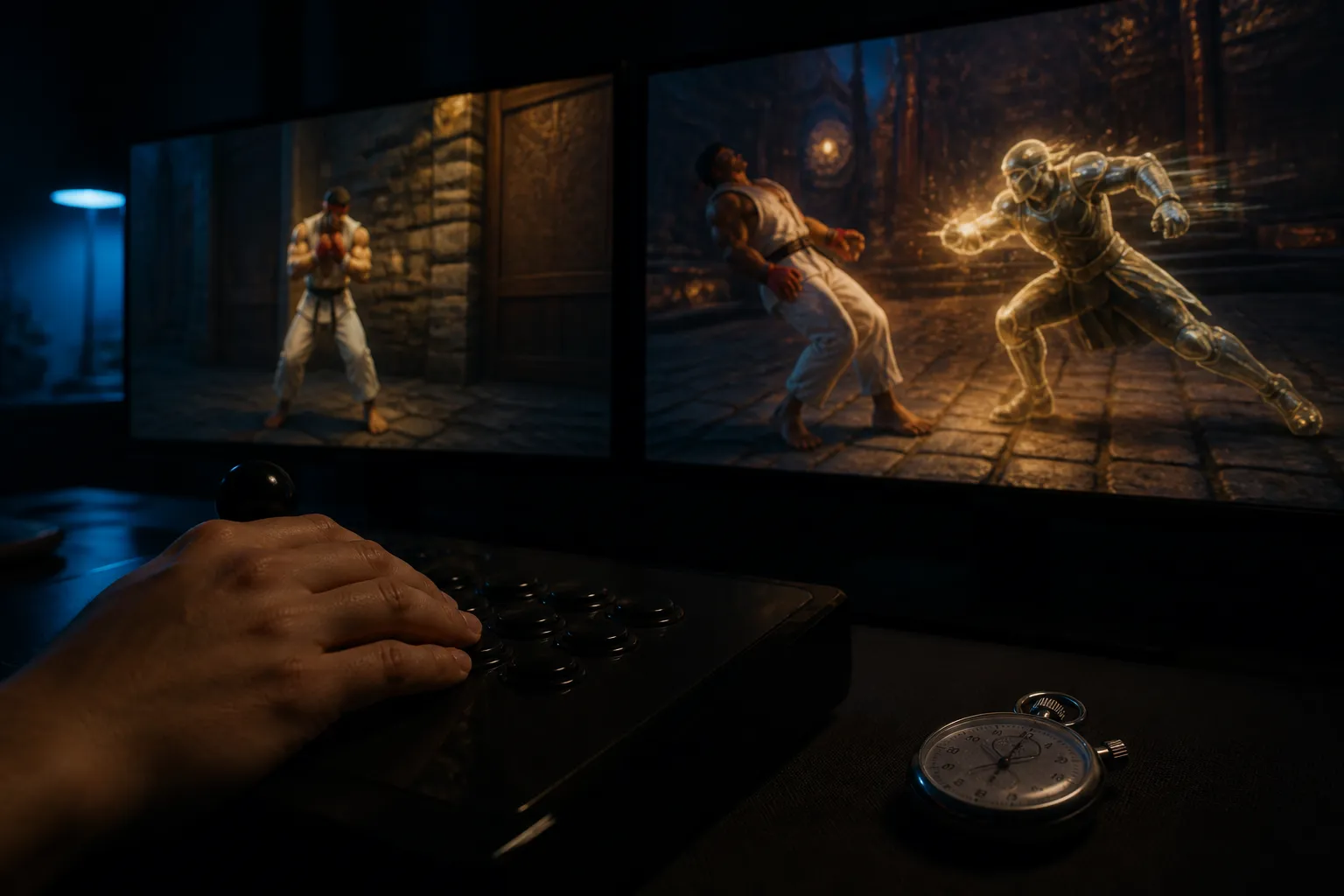
Near the corner, Drive Impact can make a small decision feel suddenly expensive. You press a button to keep the attacker out, see the armored rush begin, and realize your move has not recovered. A useful defense starts before that flash: know how close you are to the wall, and leave yourself enough freedom to respond. The available excerpt of IGN’s Drive System guide contains navigation rather than the guide’s mechanics, so it cannot establish exact timings or outcomes. Treat the choices below as a practice plan, not a frame-data chart.
The corner makes every commitment louder. Before asking how to answer Drive Impact, ask what you were doing when it began.
Locate the wall before you choose a response
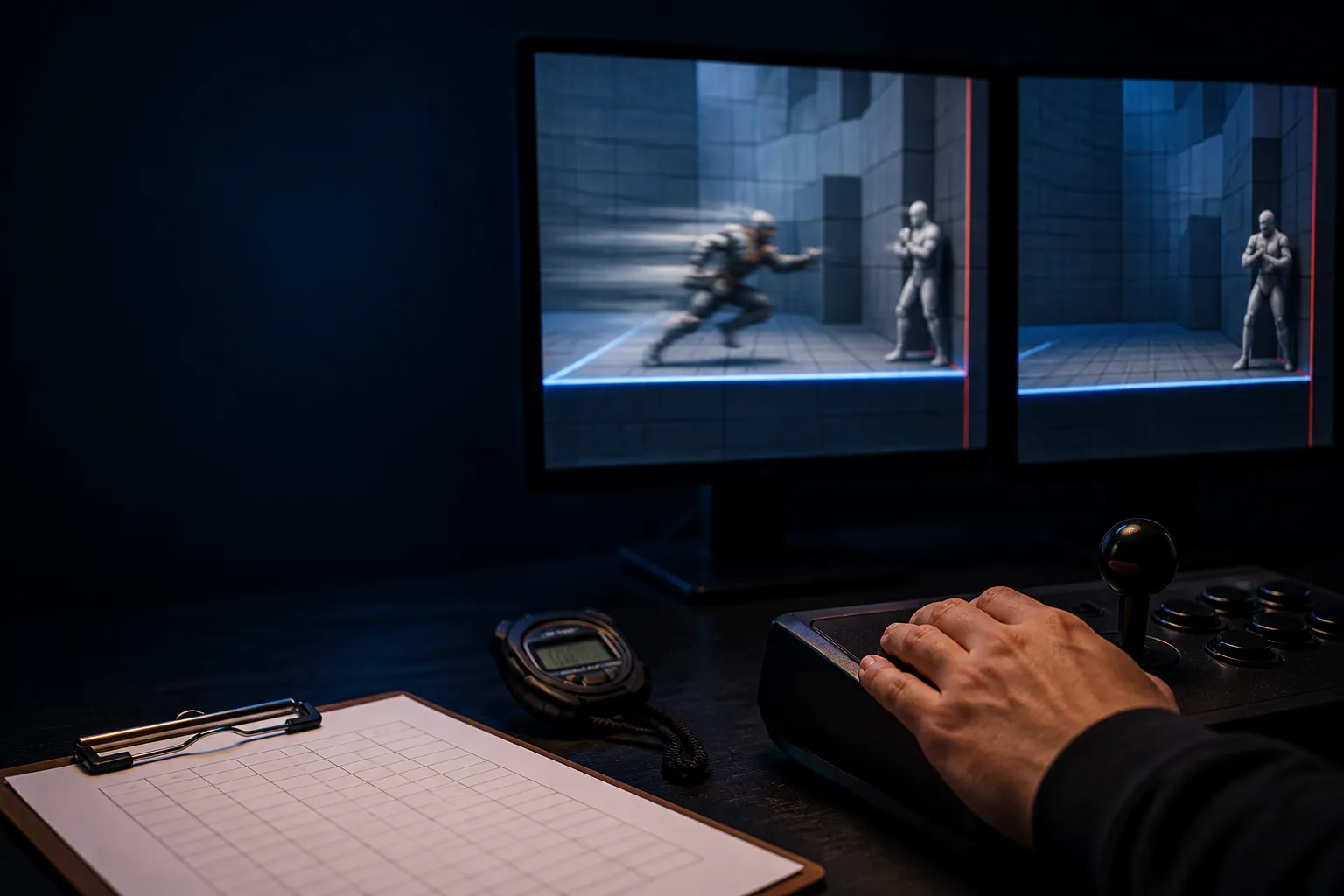
“Near the corner” is more useful as a question than a fixed distance. Can you still walk out and put the attacker between you and the wall? If you give ground to block the next attack, will you end up at the screen edge? Those positions call for different decisions. In the first, movement may solve a problem that would otherwise demand a risky reaction. In the second, you need to be ready to defend from where you stand.
Watch the attacker’s position as carefully as your own. If they must step forward before threatening you, that step gives you information and perhaps space to move. If they are already close, a slow, committed attack can leave you watching Drive Impact arrive with no action available. The practical adjustment is modest: use fewer buttons whose recovery you have not accounted for. You do not have to stop contesting space. You do have to know when a poke hands the next decision to your opponent.
Make counter Drive Impact a deliberate test
Countering with your own Drive Impact is the most direct response to rehearse. Begin in training mode with both characters standing still near the corner. Record the attacker using Drive Impact, then practice recognizing its animation and sound before you press your answer. Once that feels consistent, repeat the recording after a quick attack of your own. Finally, try it after a slower attack. The point is to discover when you are free to react, not merely to prove that you know the input.
Pay attention to failures. If your counter never appears, you may still have been recovering. If it comes out but does not save you, review the recording rather than guessing at a timing rule. Change one variable at a time: your starting distance, the button you pressed, or when the attacker began their approach. A corner defense built from these observations is more reliable than trying to react faster to every situation.
Give your other options their own drills
Drive Parry, a jump, a throw, and character-specific reversals are all worth testing, but they should not be treated as interchangeable escapes. Each asks something different of your timing and position. Set the attacker to repeat the same Drive Impact and try one response at a time. Check what happens when you act early, when you act late, and when you begin from slightly farther away. Keep an eye on your Drive Gauge while you practice Drive-based answers.
Blocking deserves a separate test, especially when your back is close to the wall. Do not assume that surviving the immediate contact means you have defended the whole sequence. Let the recording play through and note the position and situation you face afterward. Then move the defender a short distance from the corner and repeat it. That comparison shows why distance to the wall matters without requiring you to memorize a number that the available source does not provide.
A reversal may look tempting when the attacker repeats a predictable rhythm. Test it against that rhythm, then test it again after the attacker delays Drive Impact or does nothing. This second recording matters: an answer that works against one repeated attack can become an invitation to be punished when the attacker waits. The same caution applies to jumping and throwing. Practice the conditions in which they help, rather than filing them away as universal answers.
Defend the moment before the impact
The strongest corner habit may be noticing when you have made yourself unable to respond. Suppose the attacker has shown Drive Impact after you press a long-reaching button. The next time you reach that position, pause for a beat, use a less committal action, or look for a route out of the corner. If the attacker waits for your hesitation instead, you have gained new information about their plan. Corner defense is an exchange of observations, not a single reaction test.
This is also why one successful counter should not end the drill. Record the attacker approaching without Drive Impact, approaching and stopping, and using Drive Impact immediately. Shuffle those recordings if your training setup permits it. Your goal is to identify the attack rather than press a rehearsed answer whenever the attacker moves. That distinction becomes visible when the corner is close and there is little room to correct a mistaken read.
Verify the details before trusting a rule
The provided source excerpt does not establish Drive Impact’s timing, its interaction with blocking or Parry, Drive costs, or character-specific reversal options. The full IGN guide may contain relevant material, but its body was not included here. For a firm matchup rule, check the in-game tutorial, official Capcom material, or a current frame-data reference, then reproduce the situation in training mode with your character.
Start with one repeatable scene: your character near the wall, an attacker at a recorded distance, and one attack you commonly press under pressure. Find out when you can answer Drive Impact and when that attack leaves you committed. The useful lesson is precise and personal. You will know which decision put you in danger, and which decision still left you a way to defend.
Sources

Eliot Reed writes about the intricacies of virtual worlds, blending analysis with storytelling. As a house writer for GoAndGame, he delves deep into game mechanics and narratives, offering thought-provoking insights for players and developers alike.


