
Some games ask you to read a manual. Others ask you to look for thirty seconds. Segment Storm sits in the second camp, at least by the way GoAndGame's own writing describes it. It is free, it runs in the browser, and a first look costs a few minutes and no download.
I want to be careful here. The sources say little about rules. They say a lot about how to look. That turns out to be the interesting part.
What the sources actually establish
Not much, and the best of it is honest about that. A 2026 article on the site (the date is given only as the year) describes the game as chaining directional segments while the screen closes in, and calls it reflex-heavy. The site's homepage confirms it is a free browser arcade game.
The playfield article goes further on method than on facts. It calls itself an observation routine, not a verified map. I like that. It does not pretend to know where you start, what hurts you or how you win. Neither will I.
A first session as a set of tests
The routine is five attempts, each asking one question. Do nothing and watch. Make one input. Repeat the input at a different moment. Touch a boundary on purpose. Then combine what worked.
After every attempt you log three things: what moved without input, what changed after input, and what stayed fixed. It sounds fussy. It works like a scouting report you write yourself.
The neat trick is the comparison. A repeating motion looks identical each attempt. A reaction to your input does not. Put those side by side and you learn whether the field repeats at all.
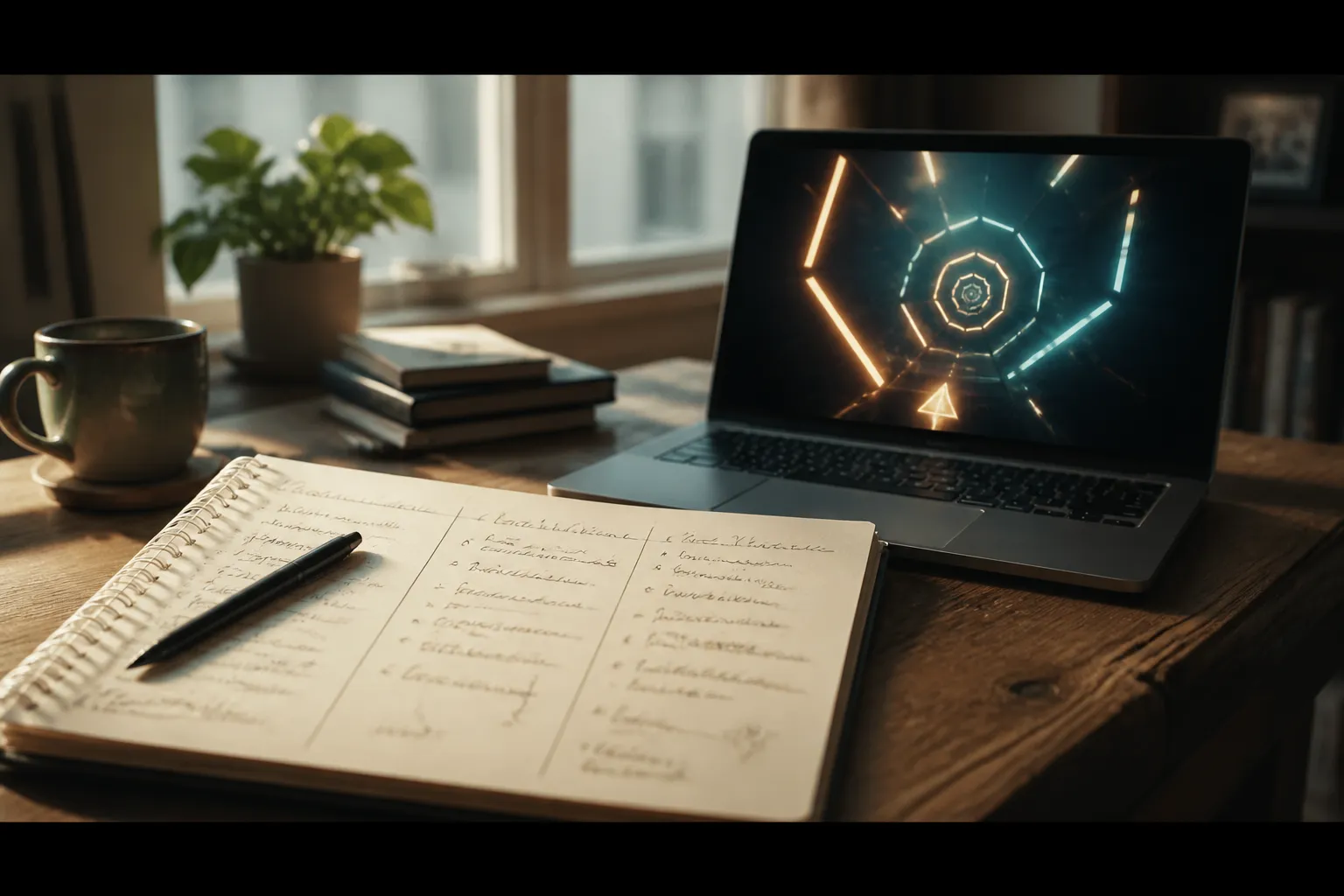
A worked example of the log
The sources give the method, not sample entries, so the entries below are my own illustration of how a log might read. They are not findings about the game.
Attempt one, hands off. In the first column I might write: pieces drift inward. Second column: blank, since I did nothing. Third column: the border stays put. Attempt two, one input. Second column now has an entry, say, a segment shifted after my key press.
Attempt three is where the comparison pays off. I press the same input later. If the segment shifts the same way, the reaction is consistent. If the result differs, timing matters, and that answers one of the plain questions below. Attempt four, touching a boundary on purpose, tells me whether an edge ends the attempt, continues it or changes state. Attempt five combines whatever held up.
Notice what the log never asks for: a name for the goal. It only asks what you saw.
- Hands off: what moves alone?
- One input: what changed?
- Same input, later: did timing matter?
- Boundary touch: what happened?
- Combine: what held up?
Why the daily seed changes how you read the field
The Daily Challenge gives everyone one shared seeded run per 24 hours. No retries. The leaderboard resets each day.
That is where reading beats memorizing. If the layout changes with the seed, a route learned yesterday is just a story. You have to look, judge and adapt as the screen closes in.
A caution: the sources never explain how the seed is generated. Tying the daily layout to reading skill is my inference. It fits the facts, but test it yourself before trusting it. Since you get one attempt on the daily run, the five-attempt routine is best done outside it, in ordinary play, if ordinary play is available to you.
Two short descriptions of one game can disagree on the objective.
Guarding against false goals
The playfield article warns about a classic trap. An object near an edge, or a gap across the field, looks like a start or an exit. Those are guesses until play confirms them.
It also notes that two short accounts of Storm disagree on what the player moves. Check the sources before you name an objective. Then ask a few plain questions each attempt:
- Does a moving piece reaching an edge end the attempt, continue it or change state?
- Did the timing of the same input change the result?
- Does a touched boundary or piece end, continue or shift things?
If you like this kind of look-first play, Asteroids Remake is a handy neighbor to try the same routine on. Both slugs here come from the Catalog list I was given.
What remains unknown
Quite a lot. No source confirms the start point, hazards, controls or win condition. None gives scoring rules, tie handling on the daily board or player counts. Nothing states a price beyond free in the browser.
And no source speaks directly to the idea in my title, that these games have a quiet appeal because you can read them at a glance. That is my read, built from the method, not a finding. Run your five attempts and see if it holds for you.
Sources

Mara Solis is a staff writer at GoAndGame covering board games, tabletop strategy, and the culture around competitive play. She has spent years logging hours at game tables from local hobby shops to international conventions. Her writing blends practical insight with a genuine enthusiasm for the communities games create.


