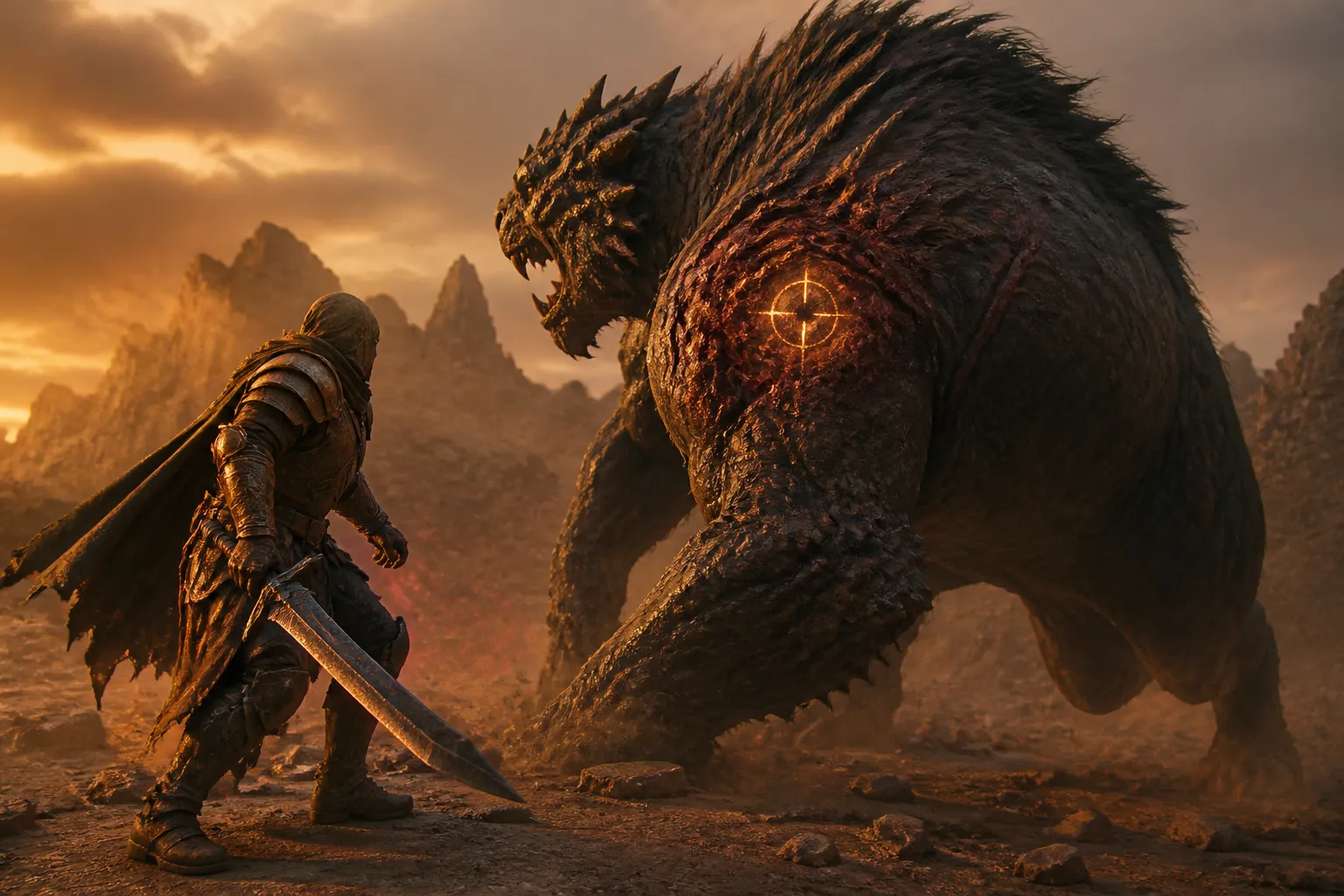
A wound on a monster’s shoulder can look like an invitation. You see the torn hide, bring up Focus Mode, and line up a Focus Strike. Then the monster turns. The useful question is not just where the wound is, but whether you can reach it and finish your attack before the monster moves again. Run four checks before you commit.
- Reach: Can your intended attack connect with the wounded spot from where you stand? A visible marker may still be too far away or about to move out of range.
- Angle: Is the route clear? A wound behind an active limb, or one that requires crossing in front of the head, may cost more than it gives.
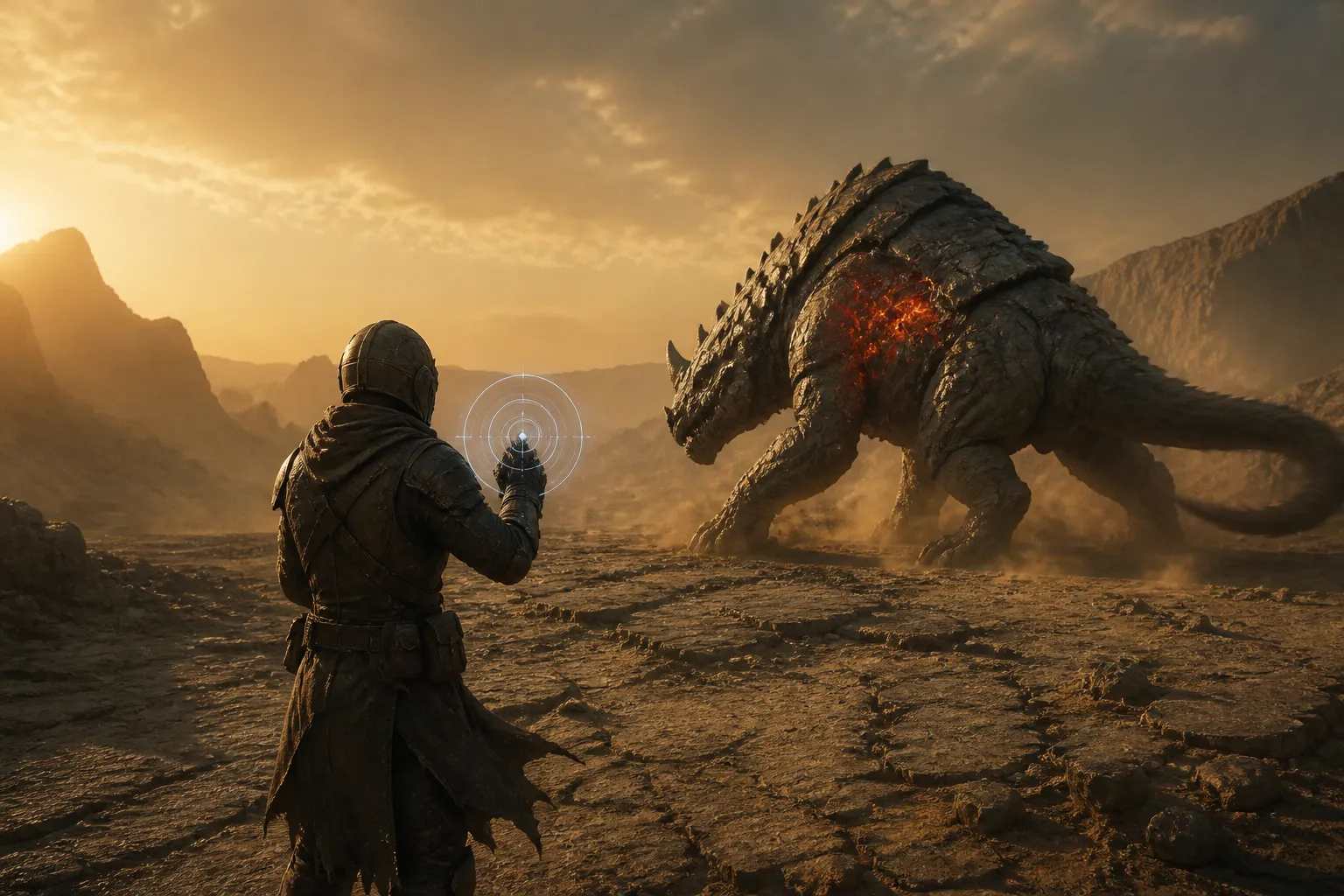
- Recovery: Has the monster’s current sequence actually ended? A pause between attacks is not necessarily an opening.
- Commitment: Can you finish the Focus Strike and recover before the next action? If not, keep your position and use a shorter punish.
Build the wound with a purpose
A wound is a temporary weak spot made by repeatedly attacking the same body part. Watch the part rather than waiting for an abstract damage threshold: gashes, exposed hide, or a change in color tell you that your pressure has taken effect. Focus Mode helps you keep that pressure directed. It tightens the camera and helps aim attacks, guards, and movement toward the part you have chosen. It does not give you a permanent damage buff simply for switching it on.
That distinction changes how you approach a moving monster. If you want a wound on its head, landing scattered hits across the body will not serve the same plan as repeatedly finding the head after safe recoveries. You also cannot assume that every patch of hide can be wounded. Wounds form at specific locations, and many monsters have a limited set of woundable areas. As the Focus Mode and wounds guide notes, a natural weak point and a wound are not always the same thing. When you can wound a part that is already a strong target, your ordinary attacks and your planned Focus Strike share a destination.
Turn the mark into an opening
A Focus Strike is a heavy attack launched from Focus Mode and directed at a targeted area. On a wounded part, it can turn the work of concentrating attacks into a burst of damage. Reported payoffs also include greater stagger build-up and a better chance of a topple or long flinch. Those are reasons to look for the strike, not promises that every wounded hit will knock a monster down. The available guides give no damage or stagger figures to calculate around.
The follow-up matters as much as the hit. A successful strike on a wound can extend the damage window for the whole party, giving other hunters time to attack while the monster is disrupted. But the wound is temporary. You want to use it before it fades or scars over, without treating that deadline as permission to attack through an incoming swing. IGN’s wound explainer describes the value of targeting and punishing specific regions. The practical skill is recognizing when that region is available, not merely knowing that it has been marked.
Respect the body around the wound
Consider a wound on the far side of a monster’s face. Your attack may reach it once you move closer, yet the path takes you past the head during an active sequence. That fails the angle check. A wound near a forelimb may be easy to see but unsafe while that limb is striking. If reach, angle, recovery, or commitment fails, maintain ordinary pressure from a safer position. You can keep attacking without forcing the Focus Strike that particular second.
This is where watching the monster pays off more than watching the marker. Notice which body part has just acted, where the monster is turning, and how long your chosen attack leaves you committed. The Wilds Field Guide frames the choice around those four checks. They make a visible wound a decision rather than a command. Repeatedly forcing the strike through bad angles turns an opening you created into a predictable source of damage taken.
Let the team change your target
Solo play gives you more control over timing. If the wound is exposed during a dangerous action, you can wait for a cleaner recovery and keep the part in view. In multiplayer, the monster may turn toward another hunter, shifting both your reach and your route. A teammate may also commit to the wound before you do. Rushing into the same space, especially directly in front of the monster, can put several hunters at risk for one contested opening.
When someone else has the wounded spot covered, pressure a nearby safe part or position yourself for the flinch that may follow. You still contribute damage, and you keep a route out if the monster resumes attacking. If the Focus Strike creates a longer opening, you are ready to use it. Coordinated restraint can do more for the hunt than four hunters chasing the same mark from poor angles.
Practice the decision before the strike
Try one hunt in which Focus Mode has a single job: keep your ordinary attacks directed at a chosen body part. Track that part as the monster moves, rather than fixing your eyes on the reticle. In the next hunt, add Focus Strikes only after a clearly finished monster action. Before each attempt, confirm that the attack will reach, the route is clear, and you have somewhere to move afterward. If the angle deteriorates, take a short punish instead.
This drill does not depend on an exact wound timer or damage multiplier. The cited sources do not supply those figures, a per-monster list of woundable parts, weapon-specific Focus Strike timings, or a verified set of supporting gear and skills. They also do not establish how these details may differ between game versions. Your weapon’s commitment and the monster’s next action still need to be learned in the hunt. The goal is simple and demanding: create a wound on purpose, then wait until the opening is real.
Sources

Eliot Reed writes about the intricacies of virtual worlds, blending analysis with storytelling. As a house writer for GoAndGame, he delves deep into game mechanics and narratives, offering thought-provoking insights for players and developers alike.


