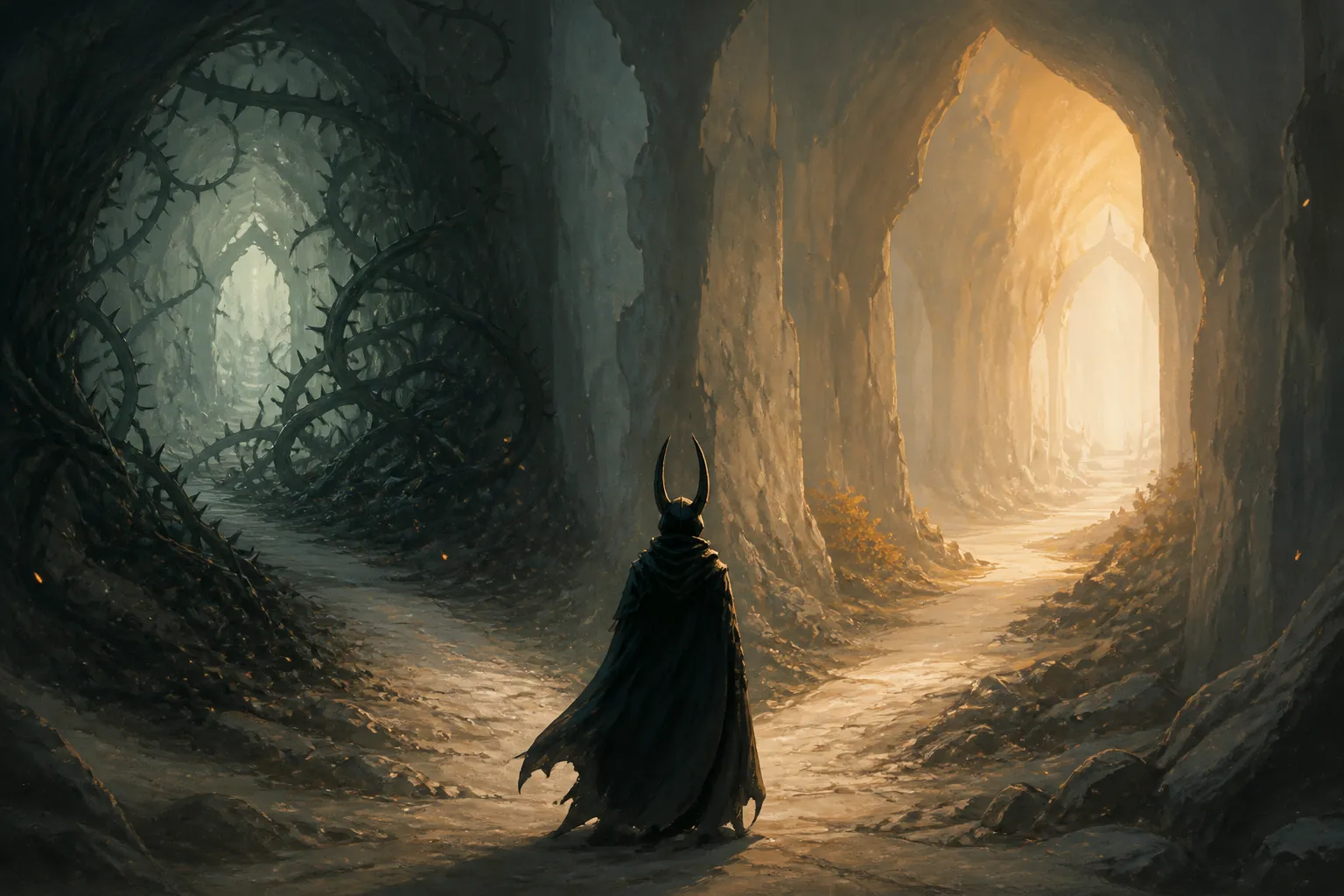
A locked route can be a useful piece of information. In Hollow Knight: Silksong, Hornet may reach a boss she cannot yet beat, turn toward another passage, and find that danger closes it too. The question becomes less about which direction is correct and more about what this cluster of obstacles is asking her to learn. For players willing to sit with that uncertainty, getting lost is part of the game’s appeal.
Getting lost on purpose
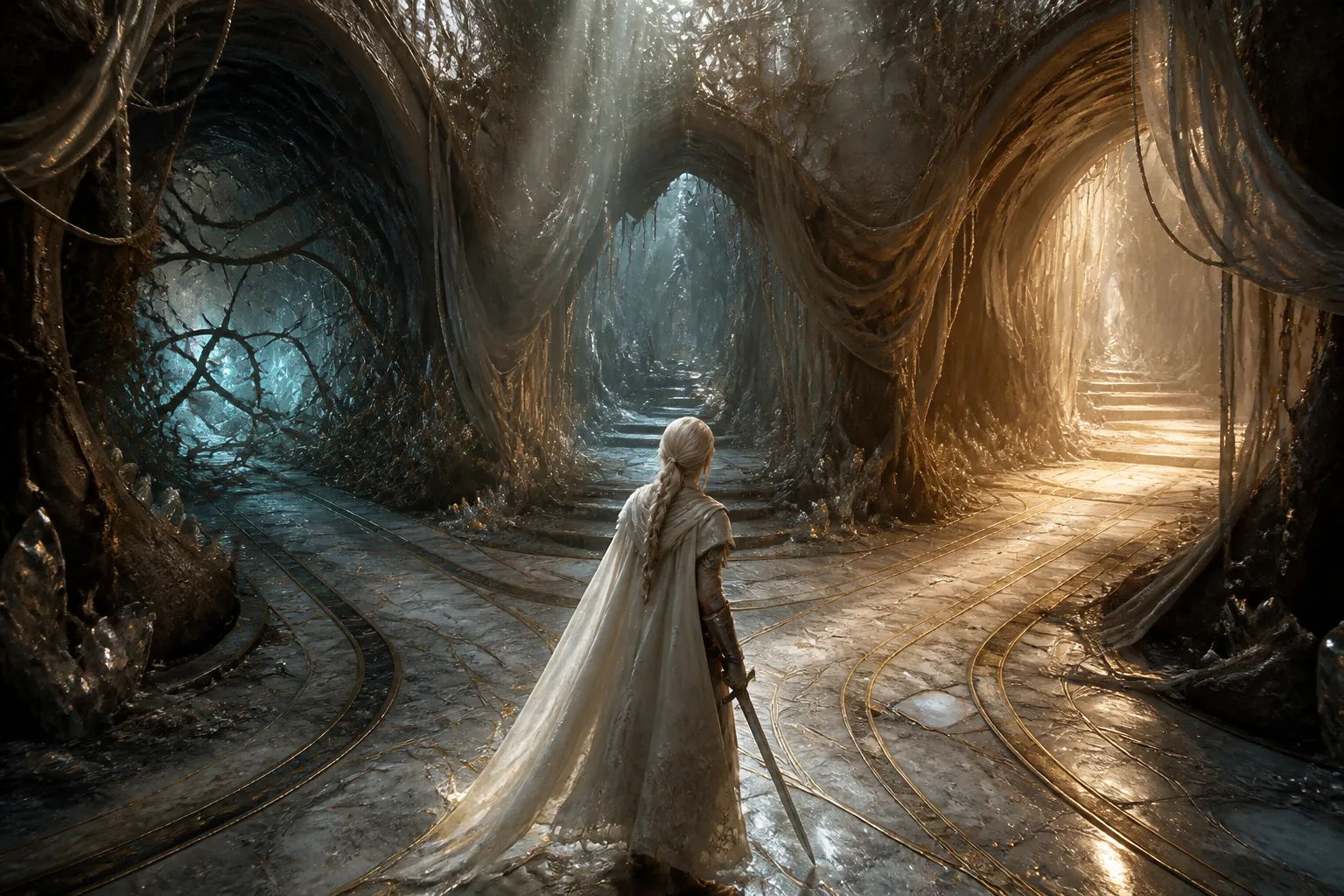
Eurogamer reviewer Christian Donlan describes being blocked in several directions at once: a boss in one place, hazards and dead ends elsewhere. He treats that predicament as a defining Metroidvania moment. The player has explored enough to know where the obstacles are, but not enough to pass them. Progress depends on finding a tool, a route, or a better understanding of the world.
That changes the meaning of a dead end. It may be a place worth remembering rather than a sign that the search has failed. Silksong asks players to build a mental map of unfinished business, then revise it as Hornet gains new abilities. The pleasure lies partly in returning to a familiar obstruction and discovering that it no longer controls the journey. Until then, the game leaves the player with a demanding task: stay curious while the way forward remains unclear.
A clearer journey for a more active hero
Silksong gives that uncertainty a different shape from Hollow Knight. Destructoid’s review finds the sequel easier to map and its objective clearer. Hornet, kidnapped and trying to make her way through a hand-drawn world, is an active presence in both the story and the controls. Her purpose gives the player a thread to hold, even when the next reachable room is in doubt.
These changes matter because Silksong still expects some patience with the unknown. A clearer goal does not remove the need to explore, double back, or accept that a promising passage is inaccessible for now. Instead, it gives those detours a stronger sense of direction. The review also notes that Silksong began as planned downloadable content for Hollow Knight and reads as a sequel aimed at people who finished the original. Its improved readability may help others find their footing, but it does not make the world gentle.
Control arrives one tool at a time
Hornet’s movement gives persistence a physical reward. She can chain attacks, dash, and strike with her Needle, while further movement tools arrive gradually. An early obstacle can feel severe when her options are limited. Later, the same kind of space may invite a quicker response because the player has more ways to move through it. The growing pace makes each new power feel useful beyond the doorway it opens.
The world gives players reasons to keep looking, too. Shopkeepers, cartographers, and explorers make the journey feel inhabited rather than arranged as a bare sequence of tests. Its areas have distinct art styles while remaining part of a coherent whole, according to Donlan’s review. Those details help exploration hold attention when progress stalls. A player might set out to solve one blocked route and come away with a better sense of another corner of the map. That knowledge has value, even before it produces a breakthrough.
How much frustration do you want?
Silksong is a strong prospect for someone who enjoys difficult 2D platforming, demanding fights, and the work of finding a route without constant reassurance. It also asks for tolerance of repeated failure. The reviews describe environments that kill on contact and bosses that may be beyond the player early on. If being stopped on several fronts sounds intriguing, the game has a way to turn that pressure into momentum. If it sounds exhausting, its clearer objective may not be enough to change the experience.
There is room between those reactions. Someone who bounced off Hollow Knight’s obscurity may appreciate Silksong’s easier mapping and more direct sense of purpose, as the Destructoid review suggests. Someone who disliked its punishing challenges should be more cautious. A recent patch is also noted in the reviews, but the supplied accounts do not specify what it changed. Their impressions of difficulty are useful guides, not a guarantee of how every fight will feel now.
What remains uncertain
The available reviews leave several practical questions open. They identify Team Cherry’s game as available on PC, PS4, PS5, Switch, Switch 2, Xbox One, Xbox Series X/S, and Game Pass, but give no price, completion time, or system requirements. They do not describe accessibility options or difficulty settings, and the excerpts provide no formal score. Players who need those details before committing will have to look beyond these accounts.
There is a more personal unknown as well. Neither reviewer can establish that purposeful disorientation will suit everyone. A blocked path can feel like an invitation to remember, experiment, and return. It can also feel like an evening spent making no headway. Silksong’s clearer map helps a player understand where they have been; it cannot decide for them how much uncertainty they want on the way to somewhere new.
The best reason to keep going is often modest: you remember one passage that might be different now. Silksong gives that memory weight. After enough wrong turns, finding the way through can feel less like receiving an answer and more like recognizing a place you have learned.
Sources

Eliot Reed writes about the intricacies of virtual worlds, blending analysis with storytelling. As a house writer for GoAndGame, he delves deep into game mechanics and narratives, offering thought-provoking insights for players and developers alike.


