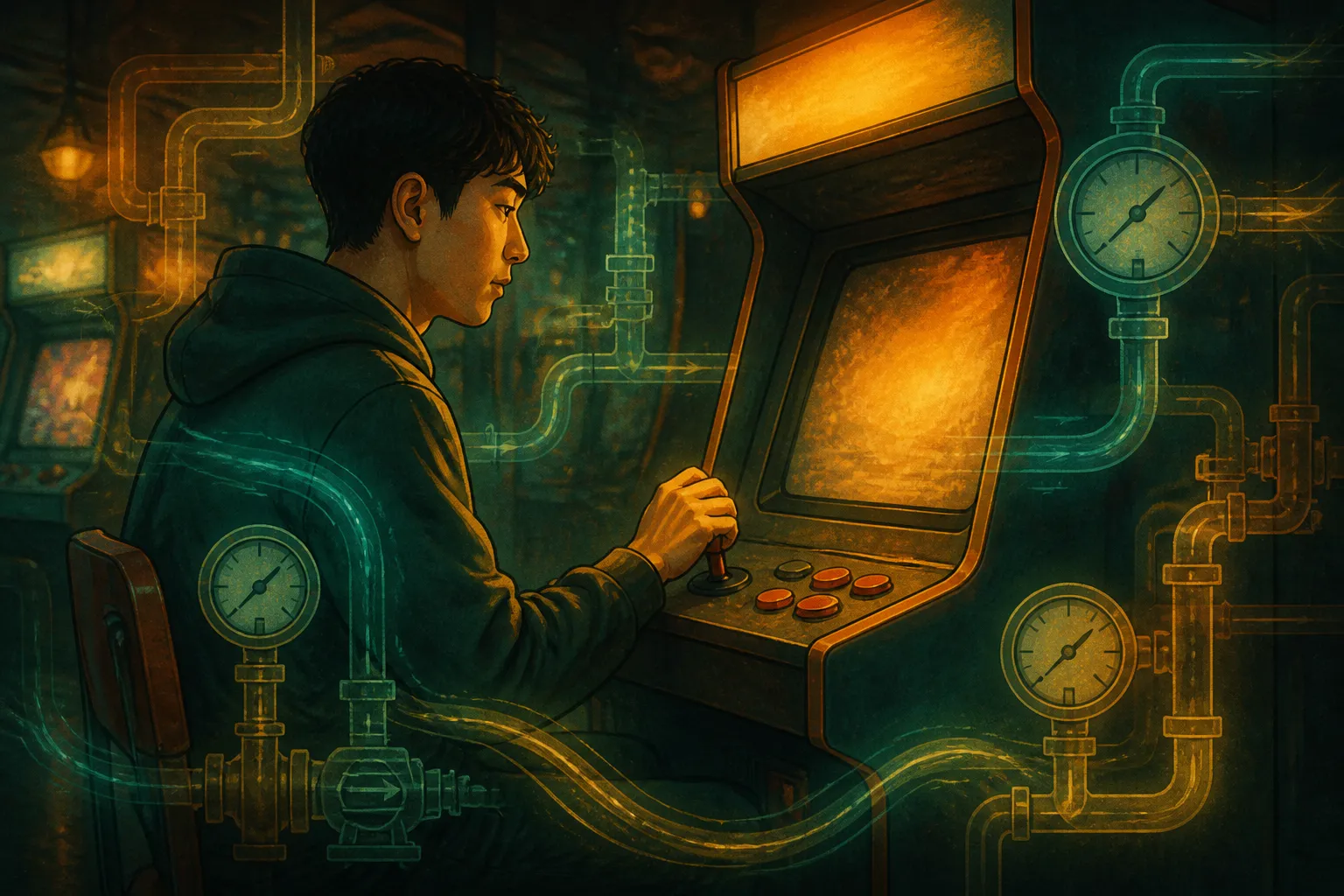
Score chasing means playing past survival. You are not trying to reach the next screen. You are trying to squeeze more points out of the one you are on. That changes your choices in small, nagging ways, and it makes pressure the real opponent.
The word "pressure" gets used for a lot of things. Engineers use it for slurry pipelines. Pool owners use it for pump settings. Mountain bikers use it on pump tracks. A few of those ideas carry over to a long arcade run better than you might expect. This piece borrows them, and it keeps the borrowing clearly labeled. The game advice that follows is my own opinion, not sourced fact.
Steady pressure beats spikes
One source on slurry pipelines says consistent pressure helps prevent blockages. It also says those pipelines use monitoring systems that track pressure levels, flow rates, and potential blockages. The pipeline idea is simple. Pressure and flow are balanced against friction so the particles stay suspended and the mixture keeps moving.
A long run works the same way. Your friction is fatigue, boredom, and fear of losing what you have built. Your flow is the steady stream of decisions. Spikes cause the trouble. A sudden greedy grab, or a sudden retreat into hiding, clogs the line.
So aim for an even rhythm. Pick a risk level before you start and hold it. If you play loose in minute two and frantic in minute twelve, the run is already leaking.
Monitor your own gauges
Pipelines do not wait for a blockage to look at the dials. They watch continuously. You can do a crude version of that with yourself.
Choose two or three moments in a run to check in. Maybe after your first big payoff, or when the screen gets busy. Ask three quick questions. Are my hands tight? Am I rushing? Am I playing the pattern or just reacting? One slow breath and a shoulder drop is enough.

The check-in should take a second or two. If it takes longer, you are overthinking, and that is its own kind of pressure.
Pump the bumps: heavy, then light
The pump track idea is my favorite. One cycling guide defines pumping as managing pressure to minimize impacts and generate propulsion. You get heavy on the backs of bumps and light on the fronts. The rider makes speed by shifting weight through the terrain instead of pedaling.
Translate that to a run. The hard stretches are your bumps. Press into them with full attention, then ease off right after. Do not carry the same grip through the quiet parts. Players who stay clenched for twenty minutes burn out before the score does.
- Heavy: crowded screens, tight gaps, boss moments.
- Light: the calm seconds after, when you can loosen your hands.
- Reset your posture every time the screen calms down.
The same guide notes that low tire pressure makes a ride squirmy. Too little pressure is a problem too. If you play so safe that nothing is at stake, your hands go mushy and you drift into errors. Some tension is useful.
Try it on a real cabinet
If you want to test this, Dirt Pump is the obvious place to start. I am not going to describe its mechanics here, so judge for yourself how heavy and light apply. Other catalog games work for the same drill, such as Segment Storm or Star Dive.
Spend your first few runs as a scout. Play loose and watch for patterns. Where do you lose control? Which situations repeat? Jot one or two notes after each attempt. Short notes beat a long mental replay.
The most useful note is how you felt just before a mistake. Mistakes rarely come from nowhere. They usually follow a mood.
After the wobble
Every long run has one. You drop a combo or misjudge a gap. The next ten seconds decide whether it is a blip or a collapse.
Treat the mistake as finished. The score is what it is. The only live question is the next move. Players who chase lost points tend to make a second error right away. Players who reset tend to recover most of the damage.
Try a physical cue. Exhale, drop your shoulders, and say the next target out loud if nobody is around. It sounds silly. It also works better than replaying the error in your head.
Sources

Mara Solis is a staff writer at GoAndGame covering board games, tabletop strategy, and the culture around competitive play. She has spent years logging hours at game tables from local hobby shops to international conventions. Her writing blends practical insight with a genuine enthusiasm for the communities games create.


