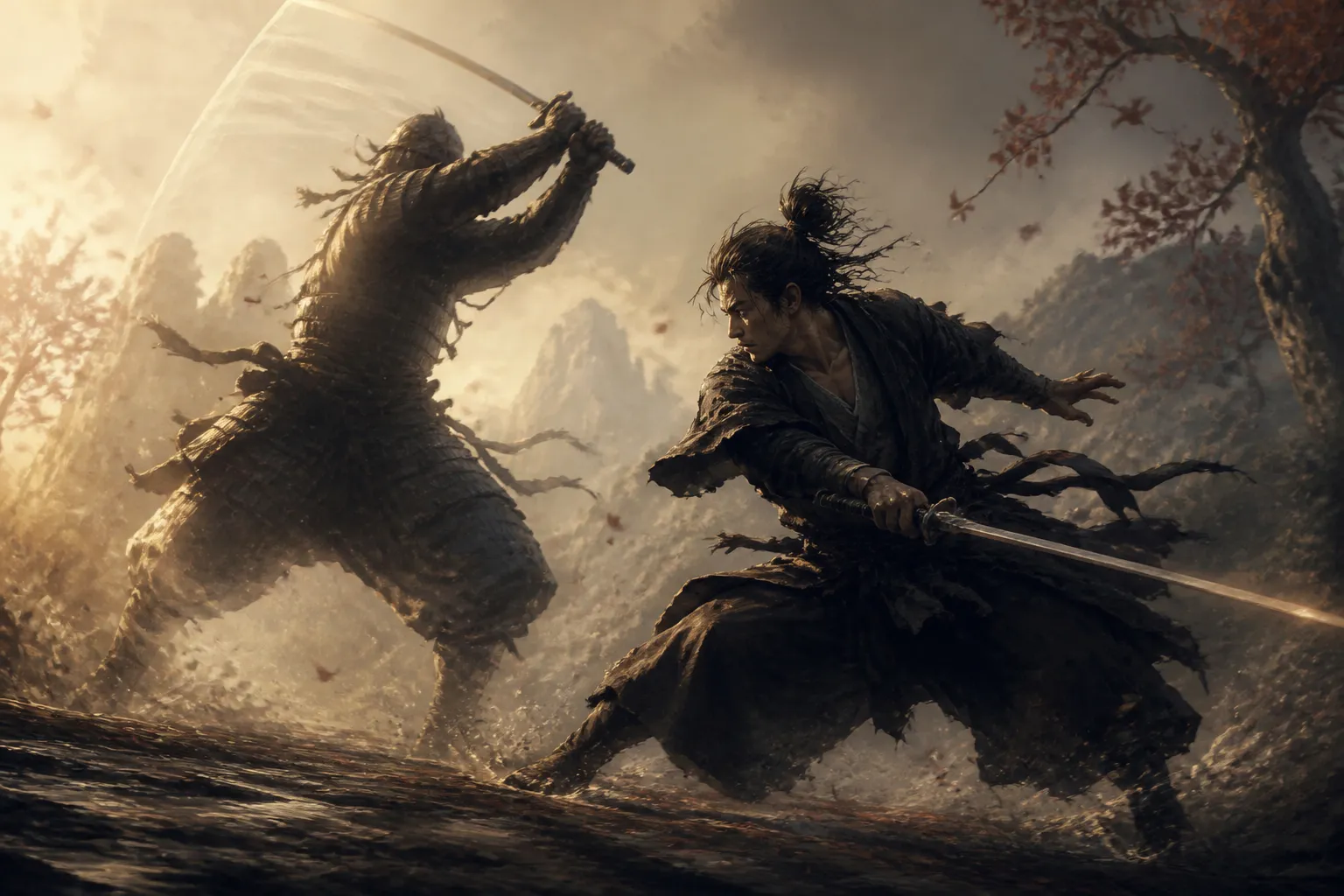
An enemy raises its weapon, pauses, and finally swings. In Clair Obscur: Expedition 33, that pause is part of the fight. Press parry too early and the attack lands. Dodge instead and you may survive long enough to recognize the rhythm next time. The useful question is not which defense is better in general. It is how much you know about the attack coming toward you.
Act I: Learn the attack before you answer it
Dodging and parrying are the two defenses you will return to throughout combat. Both can avoid an incoming hit, and every dodgeable enemy attack can also be parried. That leaves the decision with you. A dodge has a more forgiving input window, which makes it the sensible opening move against an unfamiliar enemy. You can watch how long its windup lasts without staking the attempt on a narrow parry window.
Press dodge as the attack lands and a successful standard dodge displays EVADE. Wait until the last possible second and you can get a PERFECT dodge. According to Eurogamer’s combat guidance, a perfect dodge and a parry share the same timing, yet the parry is considerably harder to execute. You do not need to chase PERFECT on every unfamiliar swing. A regular dodge can give you the breathing room to study what the enemy does next.
Use early encounters as rehearsals
Enemies usually have one or two attack combos early in the game. That makes those fights a useful place to listen for a sequence: the first movement, the pause before contact, and any follow-up. Dodge through a combo once or twice and notice which motion actually precedes a hit. The threatening part of an animation may begin well before the moment you need to press a button.
Do not mistake one avoided strike for a fully learned moveset. If an enemy follows a familiar opening with another hit, keep defending and watch the whole sequence. This matters more as the game progresses, when multi-hit combos become more common. A dodge while you are still counting hits is a practical choice, not a missed opportunity to play boldly.
Act II: Parry when the rhythm holds
Once you can recognize an attack before it connects, parrying offers a reason to accept the tighter timing. Press the parry input just before the hit lands. A success displays PARRIED and grants 1 AP to spend on skills. On PS5, the parry command is R1. The reward changes the shape of your next turn: defense has supplied a resource you can use to act.
The larger prize comes from a multi-hit combo. Parry every hit and you earn an automatic counterattack, as well as the AP and avoided damage. There is a particular exception for a combo that hits the whole party: parrying its last attack can still trigger a counterattack. These rewards make a known sequence tempting. They do not make an unknown one safer. If you cannot yet tell how many hits are coming, dodge and keep learning rather than committing to a sequence of tight inputs.
Choose the dodge when the enemy changes the story
A missed parry exposes you to the incoming attack. In a combo, the enemy may continue through the remaining hits; certain enemies can even add extra attacks. AUTOMATON WEST’s combat guide also warns that enemies can feint to disrupt your timing. An apparent opening may be an invitation to press before the real strike arrives.
That is a good moment to return to dodging, even against an enemy you have parried before. Watch what follows the feint. Does the attack arrive immediately, or does another movement come first? Likewise, when a later fight introduces a longer combo, treat it as a new rhythm rather than an extension you already know. The decision can change from one attack to the next without any change in your overall plan.
A quick decision in the middle of a fight
Before you press, ask yourself three things. Have you seen this complete attack enough times to know when it lands? If it is a combo, can you follow every hit rather than just the first? Has the enemy shown a feint or a follow-up you cannot yet read? Uncertainty in any of those answers favors a dodge. Clear answers make a parry worth considering, especially when the AP or counterattack would help your next move.
There is no universal list here of enemies you must dodge, and the available guidance does not put damage numbers on the choice. It also does not establish how equipment, stats, or Pictos might affect timing. So use the evidence the fight gives you. Dodge the first unfamiliar swing. Learn what the pause means. When you can hear the whole combo coming, press for the parry.
Sources

Alexandra Rivet explores the intricate interplay of games and culture for GoAndGame. A passionate storyteller, she delves into narratives with depth and curiosity. Her pieces often highlight the stories behind the pixels.


