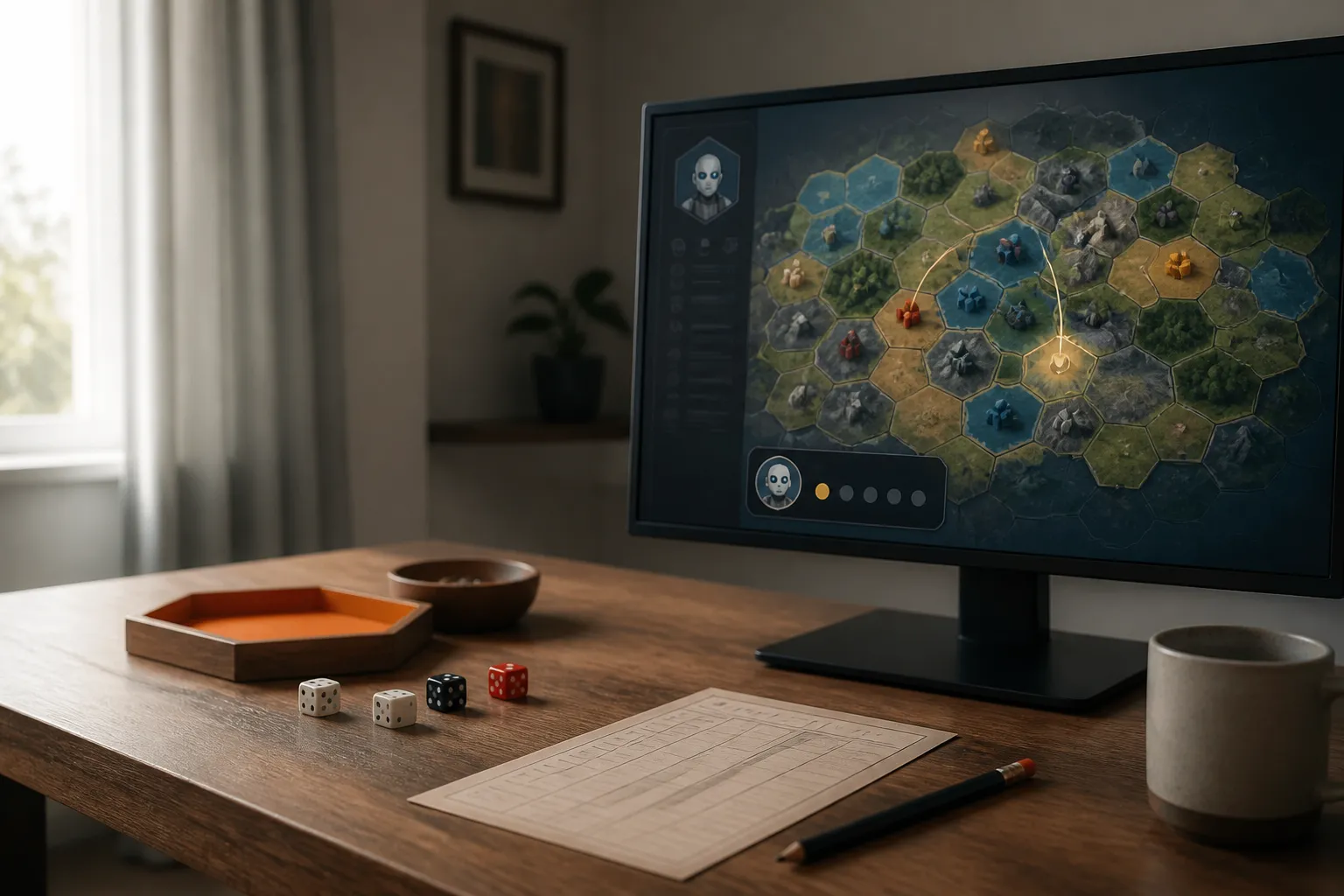
The headline version of this story is easy to say. Tabletop hits keep landing on Steam, and console ports are following. The evidence I can point to is thinner. It shows a long, steady pattern. It does not name recent console ports, and it gives no sales numbers. So this piece is an explainer, not a news report. It covers what holds up, what does not, and what to check before you pay for a digital copy of a game you can already buy in a box.
The sources describe the trend well. They do not size it.
The shift from one-off releases to steady ports
A Cardboard Republic piece from around 2017 describes the market moving away from isolated releases toward a steady flow of ports. Those ports landed on PCs, consoles, phones, and tablets alike. That is the baseline I would use.
It is also about eight years old. Treat it as history, not a reading of today. It tells us the pattern was already in place. It cannot tell us whether the pace has picked up since.
The sources give no sales figures, market size, or growth rates for Steam or console releases. That gap matters. Words like surge and boom imply a measurement, and nobody here has made one. Any claim has to stay qualitative. Adaptations are plentiful and they keep coming. How fast, the sources do not say.
What digital versions add to the physical game
The pitch is fairly consistent. Digital versions commonly add solo play against computer opponents, campaign modes, online competition, and easier portable play. Wikipedia's overview of digital tabletop games notes that online multiplayer and computer opponents for single players are typical.
PCGamesN's PC board game guide puts it in plain terms. You get zero setup time, a lower cost than a physical copy, and AI play when nobody is free. The guide is from 2025 and covers only a subset of available titles. Read it as a sample, not a census.
Companion tools have grown alongside all this. The Cardboard Republic piece mentions Dized, an app with interactive tutorials that replace studying a rulebook. It also mentions BG Stats for tracking plays. These are not ports. They show that the cardboard hobby and the screen have been mixing for a while, in more ways than straight conversion.
One practical result is worth stating. If a game takes an hour to set up and a long rules explanation, a digital version removes both. For some groups, that alone decides the purchase.
Where digital tabletop games come from
Not every title is a port. Digital tabletop games are a video game genre whose play resembles board games, card games, and role-playing games. Some were adapted from physical games. Others were built only as video games, with no cardboard version at all.
That blurs the story. A list of tabletop-style games on Steam will mix true adaptations with native digital designs. Counting both as ports would inflate any trend. Before you trust a claim about how many tabletop hits are going digital, ask what the writer counted.
It also matters for the console question. The sources say nothing about how ports are developed, what licensing deals apply, or what platform policies govern them. They do not name the specific console ports behind the current chatter, or give their dates. I would wait for official word from publishers or platform storefronts before repeating any list. Rumor spreads faster than release calendars.
Costs, admin burden, and things to watch
Cheaper does not always mean simple. PCGamesN calls Mysterium's PC version reasonably cheap, and notes it handles much of the physical game's administrative work. But every player still needs their own copy. That is the detail that changes the math.
Here is a way to compare. I use placeholders because the sources give no prices. Call the physical box price B. Call the digital price D. A group of five that all need their own copy pays five times D. If five times D is more than B, the physical box wins on cost, since one box serves the whole table. If it is less, digital wins, and you also skip setup. Check the store page first for how copies and sharing work, because the sources do not say.
Multiplayer ownership is the second check. Ask whether online play needs every player to own the game. Ask whether computer opponents work when your friends are offline. A game that is cheap but needs five purchases can cost more than it first looks.
Spending after launch is the third. Digital collectible card games may grow through booster packs or purchased cards, which can mean ongoing spending. A box game has a fixed price. A card game with microtransactions may not.
Randomness is the last catch. PCGamesN's take on Armello is that chance elements can frustrate strategic players. A game that feels balanced at a table can feel different when a computer rolls the dice for you.
Before buying, ask a few things:
- Does it support online multiplayer, computer opponents, or both?
- Does every player need their own copy?
- Does it offer the modes you want, like solo play or campaigns?
Run those three checks and the five-copy math. A group of five at the same price can land on opposite sides of the line, depending on one store page detail.
Sources

Mara Solis is a staff writer at GoAndGame covering board games, tabletop strategy, and the culture around competitive play. She has spent years logging hours at game tables from local hobby shops to international conventions. Her writing blends practical insight with a genuine enthusiasm for the communities games create.


