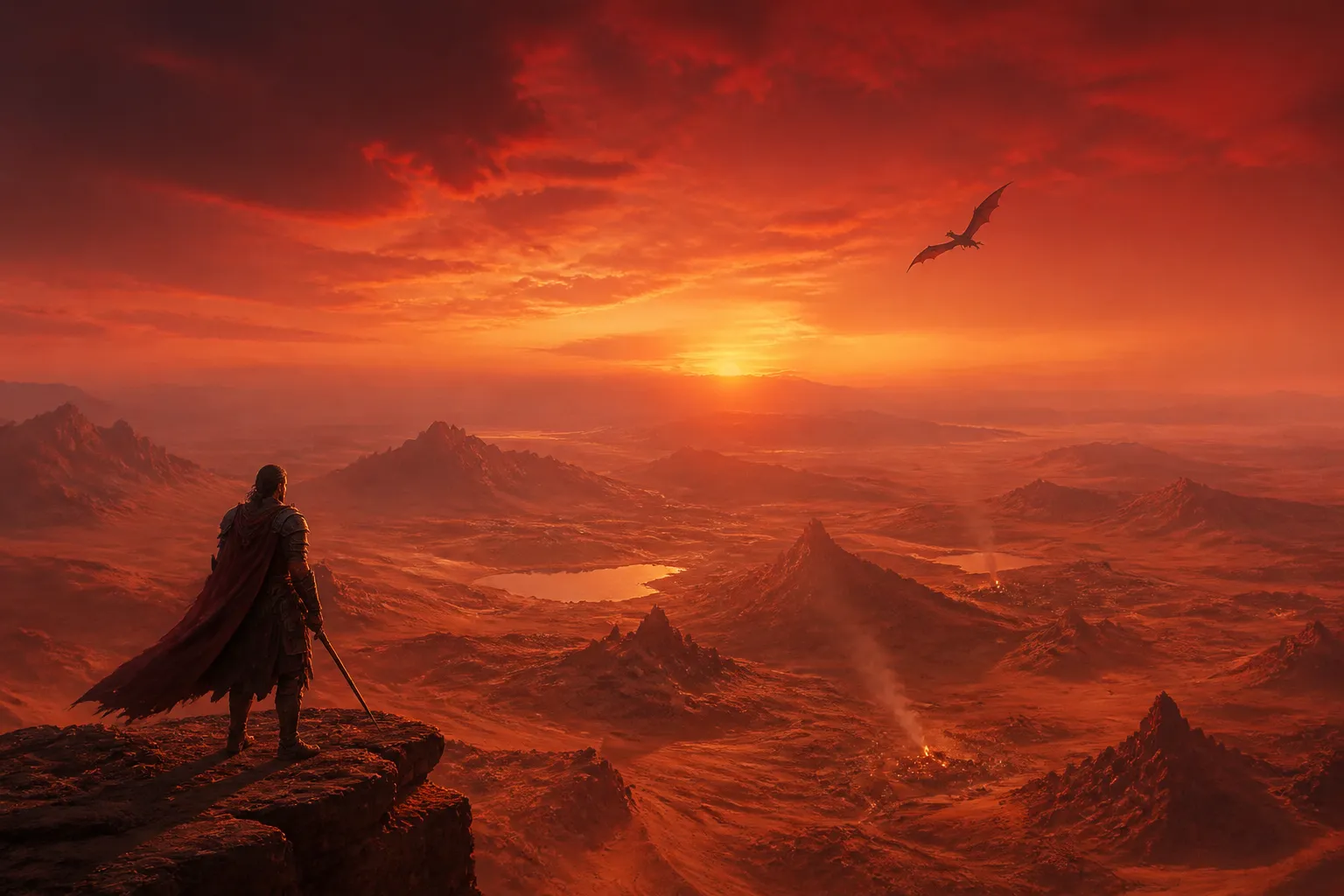
Pywel is a continent built to keep players moving. In Crimson Desert, Kliff can leave a fight behind to fish, hunt, craft, or eventually cross the sky on a dragon. There is always another activity beyond the next ridge. The harder question is what happens when he comes back down. Can a world this large make its smaller encounters feel like stories worth remembering?
A map measured against other maps
Pearl Abyss’s Will Powers has said Pywel is at least twice the playable area of Skyrim and larger than the map of Red Dead Redemption 2. He declined to give a size in measurable units, so those comparisons remain the developer’s framing, not an independently established measurement. They tell us what kind of expectation the studio is inviting: a place that can absorb a great deal of a player’s time.
Powers also argues that size does not determine quality. What matters, he says, is what players do inside the world. That is a more interesting claim than the map comparison because it can be tested in ordinary moments. A long ride needs something at its end. A fishing spot needs to feel like part of a place rather than another task on a menu. Distance gives those moments room, but it cannot make them matter by itself.
The appeal of having another thing to do
Crimson Desert has plenty of answers to the question of how to spend an afternoon. Alongside its combat and large bosses, it offers cooking, crafting, hunting, fishing, horseback fights, and dragon flight. Those activities promise different rhythms within the same journey. Kliff might pursue the main conflict for a while, then become occupied with gathering supplies or learning a route across Pywel. The breadth can make an itinerary feel self-directed even when the destination has been set for him.
In his review, Travis Northup spent 130 hours completing the main story and a good chunk of side content. That is evidence of how much there is to undertake, though it does not tell us that every hour was equally engaging. Northup found the game ambitious and uneven, praising the scope of its attempt while describing its world reactivity as underwhelming. His experience raises a useful distinction: a place can offer many actions without seeming to notice what a player has done.
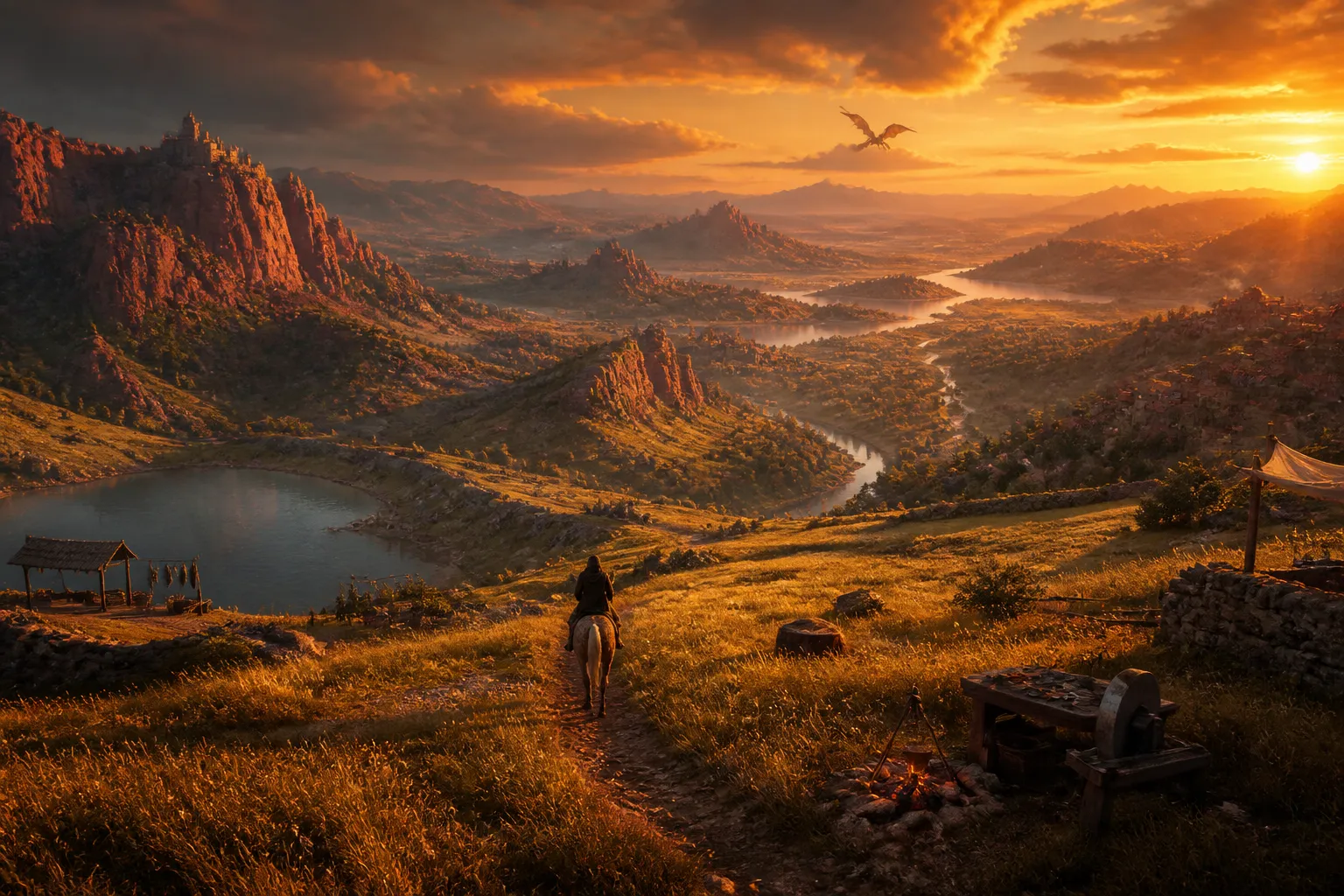
That gap matters most when the small stories are supposed to emerge from play. A hunt can become a memorable detour because of what happened on the way there. It can also end as a completed activity with little trace left behind. Crimson Desert appears to give players ample room to make their own associations, but the review suggests the world does not always meet those associations with a convincing response.
Who writes Kliff’s personal story?
Crimson Desert began development as a prequel to Black Desert Online before becoming a standalone game. Its opening gives players Kliff, a member of the Greymanes, and a path into Pywel’s conflicts. Yet Powers has said the game does not build role-playing around RPG-style choice and consequence. Players follow the same canonical storyline; their distinct experiences come from quest lines, activities, and the “head canon” they form along the way.
There is a generous idea in that approach. Two people can take the same protagonist through the same plot and still remember different days: a difficult ride, an unexpected fight, a quiet stretch spent gathering food. But it asks the player to carry much of the emotional weight. Northup called the dialogue, characters, and story laughably bad. If the authored scenes fail to give Kliff and his companions depth, a player’s private version of the journey may have little to build on when the main story calls them back.
This is where the question of smaller stories becomes sharpest. A smaller story does not require a smaller map. It might be a character whose motives grow clearer across a handful of meetings, or a choice that changes the tone of a later encounter. The available accounts do not establish that a more tightly written, less expansive Crimson Desert would have been better. They do show a tension between the personal meaning Powers hopes players will create and the weak writing Northup says they will find.
What kind of journey are you looking for?
Players drawn to games that mix styles may find Pywel’s abundance inviting. Northup’s points of comparison range from The Witcher 3 and Skyrim to Red Dead Redemption 2, Tears of the Kingdom, and GTA 5. That breadth suggests a game eager to let one outing turn into several different kinds of play. Dragon flight alone changes the feeling of distance: the far side of the map becomes a possible destination rather than a promise for another day.
The same breadth may frustrate players who want each part to feel finely tuned. Northup found the puzzles unintuitive and janky, and judged the exploration and combat short of the best open-world games. For someone who comes chiefly for dialogue, character relationships, or choices with visible consequences, the number of available diversions may offer little comfort. The most useful question before committing to Pywel is not how far it stretches. It is how much pleasure you take in making your own route when the game’s story may struggle to give that route a satisfying center.
Beyond the first horizon
Crimson Desert sold three million copies in its first week, a sign that its promise of a vast, busy world reached a large audience. That figure says nothing about how those players felt after many hours in Pywel. The source accounts also leave pricing, platform-by-platform performance, and later sales outside this assessment. Those details may shape a purchase, but they cannot settle the story question.
What remains is a familiar scene made unusually large: a player choosing where to go next, with more paths visible than they can follow at once. Powers asks us to judge the world by what happens on those paths. Northup’s review suggests that some will lead to absorbing play and others to thin characters or a place that barely answers back. Bigger worlds can hold smaller stories. In Crimson Desert, players may have to do much of the telling themselves.
Sources

Alexandra Rivet explores the intricate interplay of games and culture for GoAndGame. A passionate storyteller, she delves into narratives with depth and curiosity. Her pieces often highlight the stories behind the pixels.


