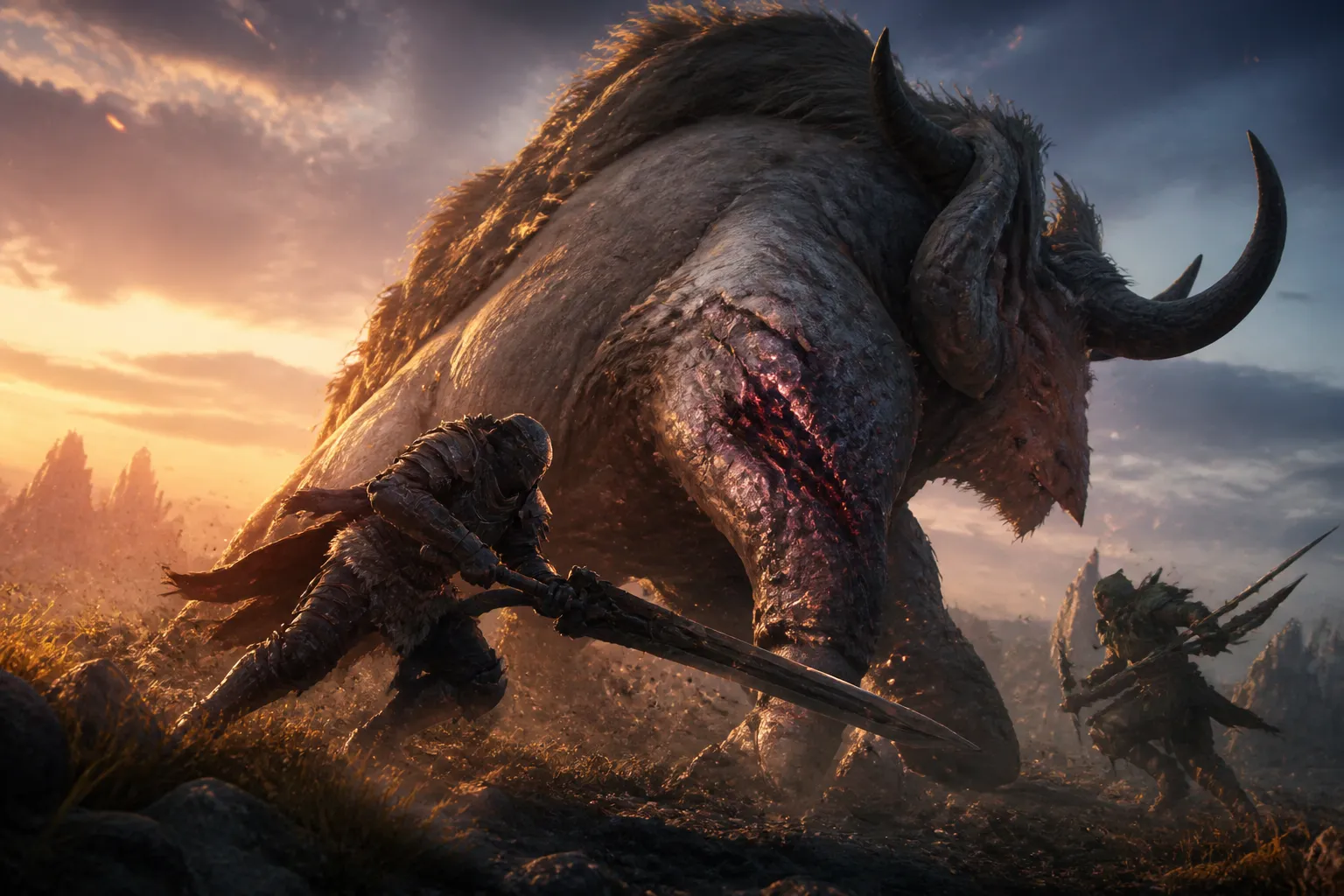
A monster turns its head just as you swing, and your next hit lands on a leg instead. Both attacks count, but only one helps you build the Wound you were working toward. In Monster Hunter Wilds, where you land repeated blows matters. Concentrate them on one spot and it can become a weak point that the whole hunting party can use.
What a Wound Is and How It Appears
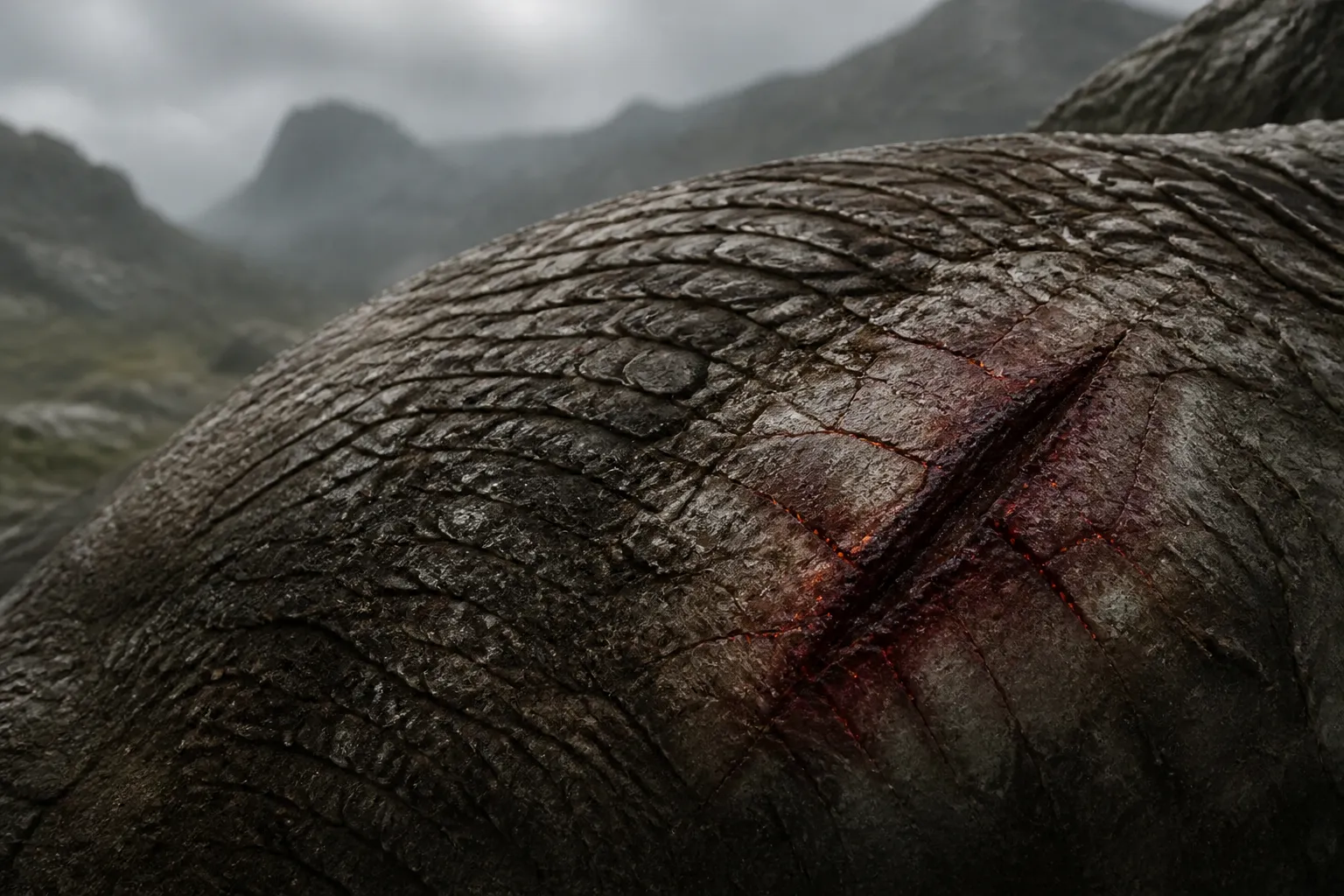
A Wound forms on a specific part of a monster after that spot has taken repeated damage. Look for a discolored patch with a dark gash at its center. Toggle Hunter Mode and a formed Wound glows red, making it easier to find while the monster moves. The system works in solo hunts and with companions, so learning to recognize that glow pays off in either setting.
Once the Wound is active, attacks to that spot deal more damage than attacks elsewhere on the monster. Four orange triangles around a damage number confirm that you have struck it. That feedback matters when the target is small or partly hidden by an animation. If you see ordinary damage numbers, check your angle before committing to another long attack sequence. A glowing leg will not help if your weapon keeps catching the body beside it.
Building a Wound Step by Step
Choose one reachable spot, such as the face or a front right leg, and keep returning to it. The choice need not be perfect. A head, tail, or frail-looking appendage may already be a natural weak point, which makes it an appealing place to focus, but a target you can hit consistently is more useful than one you chase across the arena. Watch how the monster moves, then position for repeated strikes on the same part.
After a run of hits, look for the discolored patch and dark gash. Toggle Hunter Mode to check for the red glow. There is no reliable hit count to memorize from the available guidance, nor a confirmed list of monsters and body parts that will form Wounds most readily. Use the visual cues rather than assuming every opening will produce one. If your attacks have been spread between the face, chest, and legs, pick a spot again and concentrate your next opportunities there.
Breaking Versus Keeping Wounds
A formed Wound gives you a choice. You can keep hitting it with Triangle (Y on Xbox), Circle (B on Xbox), or other attacks to benefit from the increased damage. Or you can break it with R1 (RB on Xbox). The break deals substantially more damage in that moment and gives you a monster part, but the Wound disappears afterward. You give up an active weak point in exchange for the burst and the part.
That trade matters differently across weapons. The clearest example is Insect Glaive: breaking a Wound refills Insect Juice, helping keep its powerful attacks available. For that weapon, waiting too long to break may mean passing up a refill you can use immediately. Other weapon types may get more value from attacking an open Wound for longer, though the available guidance does not establish which ones or quantify their advantage.
Before pressing R1, consider what you can do with the Wound right now. If the monster is exposed and you can land several clean hits, keeping it active may be worthwhile. If your Insect Glaive needs its refill, or the monster is about to move out of reach, a break has a clearer purpose. No exact damage multiplier or universal best moment is established here, so treat each break as a decision about your present opening rather than a fixed step in a rotation.
Using Wounds in Multiplayer
Wounds are shared. A companion may have spent the last exchange striking one leg while you worked on the head. Toggle Hunter Mode and you can see the Wound they have helped create, then attack it yourself. The four orange triangles around your damage number will tell you when your hit connects with the right spot. One hunter's focused effort can become an opportunity for everyone.
Sharing also makes the break a party decision. If one player removes the Wound immediately, the others lose the chance to keep dealing increased damage there. A quick callout before an R1 break gives teammates a chance to land their attacks or prepare for the monster's next movement. The same callout can help everyone focus on a new spot afterward, instead of scattering damage across several parts.
There are still useful questions a hunt-by-hunt guide cannot settle: the exact damage multipliers, which part each break yields, how those rewards add up over a full hunt, and the best timing for every weapon and party. For now, watch the spot you are building, confirm the red glow, and decide together when that shared weak point has done enough work.
Sources

Eliot Reed writes about the intricacies of virtual worlds, blending analysis with storytelling. As a house writer for GoAndGame, he delves deep into game mechanics and narratives, offering thought-provoking insights for players and developers alike.


