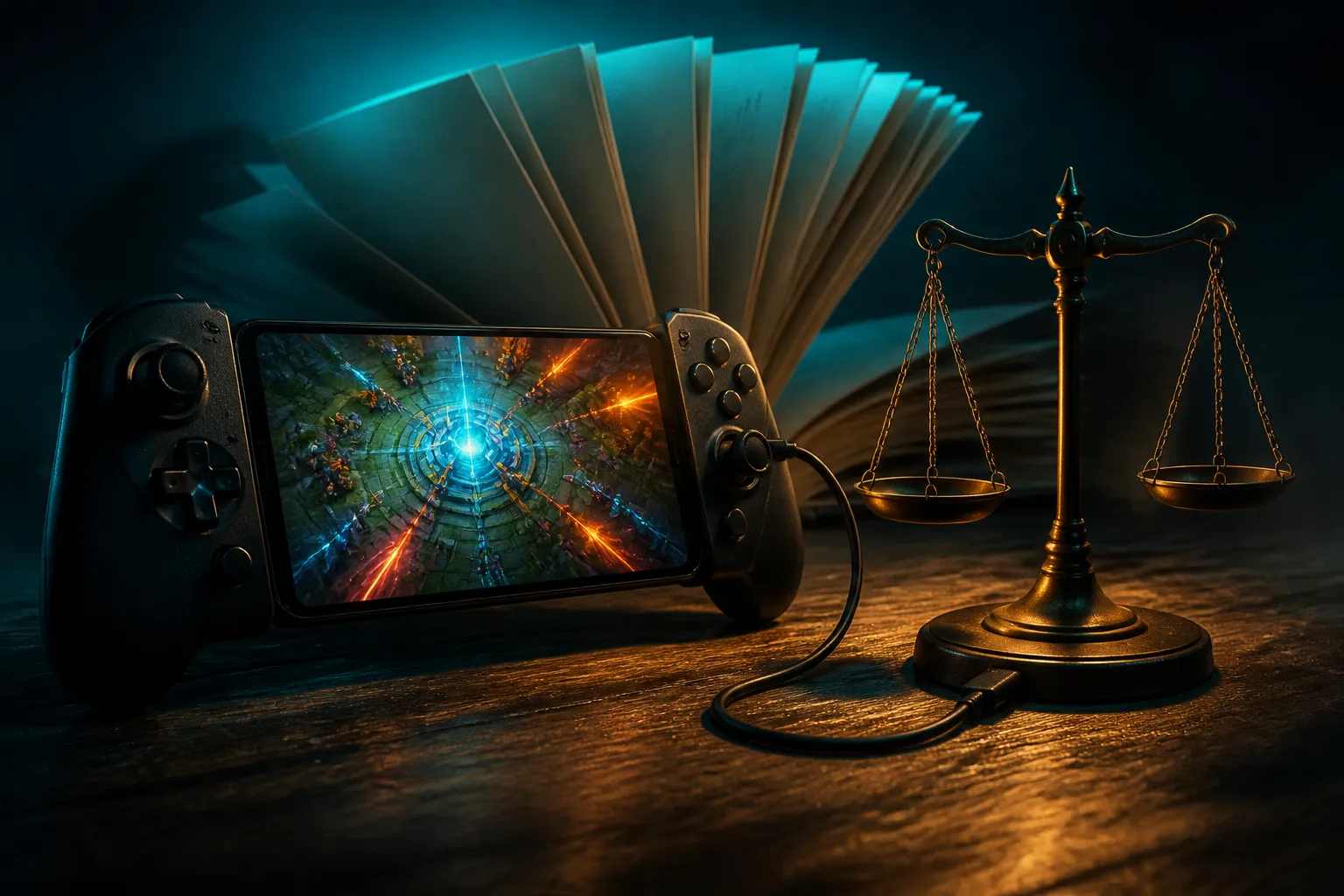
I have spent a lot of evenings in Southeast Asian internet cafes and Discord voice channels where the same argument comes up. Someone clips a controller onto a phone, someone else says that is cheating, and a third person asks who decides. This review of the Razer Kishi Ultra starts from that argument, because the hardware is the easy part. The rules are the hard part.
What the Razer Kishi Ultra Is and Why It Matters
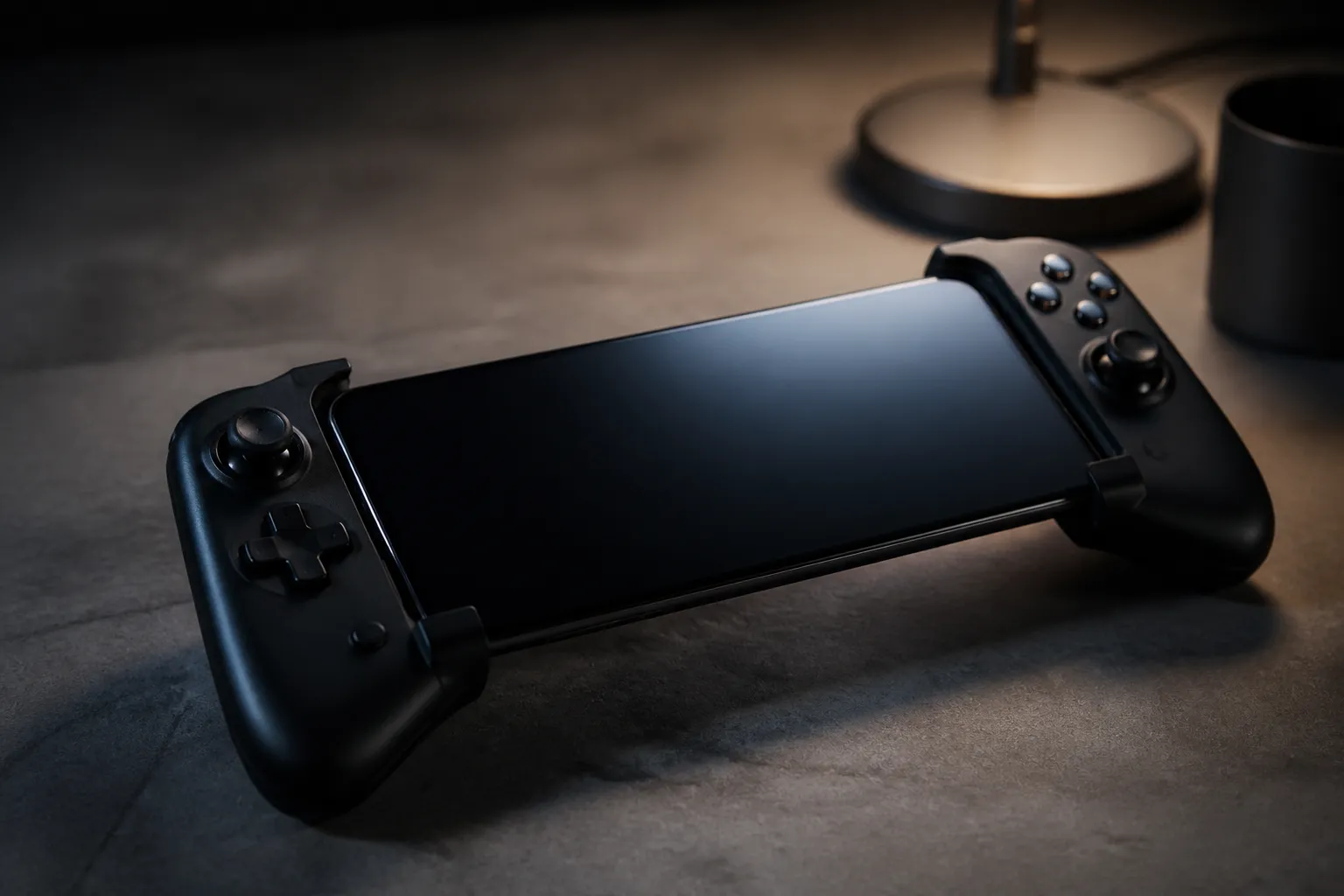
The Kishi Ultra is a clip-on controller. Your phone sits in the middle, the two grips extend on either side, and the unit connects over USB-C rather than Bluetooth. That wired link is the whole pitch. A cable should mean no pairing step and less chance of a wireless hiccup mid-fight.
The core claim for a game like Mobile Legends is that physical sticks and buttons cut input friction. Your thumbs stop covering the screen. Skills sit under your fingers instead of under glass. I want to be clear that this is a reviewer's observation, not a measured result. Nothing in the sources I have supports it, and it needs testing before anyone treats it as fact.
A useful review has to cover four things:
- Input latency against plain touch, measured and repeated.
- Button feel across a full ranked session.
- Phone compatibility, including cases and thicker handsets.
- Battery drain and heat over long sessions, since a wired unit may pass power or trap warmth.
I will not publish numbers I have not logged. Until then, treat every claim about speed, mine included, as a hypothesis.
The Competitive Case for Phone Controllers in Mobile Esports
The argument for controllers is about access. Some players have limited hand mobility. Others simply find a flat screen imprecise for fine movement. A physical grip could open the game to them, and grassroots scenes I follow care a lot about that kind of door.
The counterargument is just as real. If controllers help, then players who can afford one gain an edge over those who cannot. That swaps a skill gap for a hardware gap. In scenes where many people play on budget phones, a cost of that kind is not trivial.
Mobile Legends is my example title, but I have no source on its competitive rules. So any claim about how controllers would change matches needs evidence from the game's own scene, such as publisher statements or tournament rulebooks. I am not going to guess.
Underneath it all sits a fairness question. Does an external device change what skill is being tested? Touch precision is part of the mobile identity for some fans. For others, strategy and teamplay are the point, and the input method is just plumbing.
What Governing Rules Say and Do Not Say
The International Esports Federation describes itself as the global governing body for esports, uniting more than 150 nations. It lists four principles for its regulations: Fair Play, Respect, Transparency, and Inclusion. Member federations must comply with its rules, and non-compliance can mean sanctions, up to suspension of membership or exclusion from IESF events.
Members also take on duties beyond the rulebook. They must follow the IESF Statutes and Competition Rules, national anti-doping policies, and ethical standards. They must report on time and take part in governance. The federation is based in Busan, South Korea.
Here is what that page does not say. It never mentions the Kishi Ultra, phone controllers, or Mobile Legends. It does not say whether external hardware is allowed. It does not publish the Statutes or Competition Rules text, noting that official documents will be available soon and pointing readers to the Secretariat. So I cannot report a ruling on controllers, because none is there to report.
Notably, the principles of Fair Play and Inclusion pull in different directions on this exact issue. Inclusion could favor a controller. Fair Play could argue for uniform equipment. The principles frame the debate without settling it.
If you need an answer for a specific event, ask the IESF Secretariat directly. Then check the game publisher's device policy and the tournament organizer's rules. Those last two are where a ruling would actually live.
Open Questions and What Readers Should Watch For
Several things remain unresolved. Will organizers certify hardware, or leave it to players? How would a standard apply across hundreds of phone models and case sizes? Would a controller be treated like any other equipment rule, or as something special because it changes how the game is touched?
My reporting has limits. No source I hold covers device or equipment standards, or game-specific rules for mobile esports. That is a gap, and I would rather name it than paper over it.
Three things would change the picture:
- An official device policy from a publisher or federation.
- A published tournament rulebook that names controllers.
- Controlled latency tests, repeated across phones, showing a real difference.
I am skeptically optimistic. The Kishi Ultra feels like it belongs in the conversation, and the access argument deserves a hearing. But a feeling in my thumbs is not evidence, and a federation's values are not a rule. Watch for the documents, and for the numbers.
Sources
- Rules & Regulations: Statutes and Competition Rules | IESF
- Kishi Ultra Mobile Gaming Controller (USB C) | Razer United States
- Razer Kishi Ultra Review - Almost Perfect, Best Mobile Game Controller Yet - Pokde.Net
- A guide to Virtual Controller Mode for the Razer Kishi V2 | Pocket Gamer
- Razer Kishi Ultra Mobile Gaming Controller Review - IGN
- Razer Kishi Ultra Review | PCMag
- Razer Kishi Ultra review: the best mobile controller on the market | TechRadar
- Razer Kishi V3 Pro mobile controller review: Better than ever | Windows Central

Priya Nambiar covers competitive gaming and emerging esports ecosystems for GoAndGame, with a particular focus on Southeast Asian scenes and grassroots tournament culture. She came up through community forums before moving into sports journalism, and that background shapes everything she writes.


