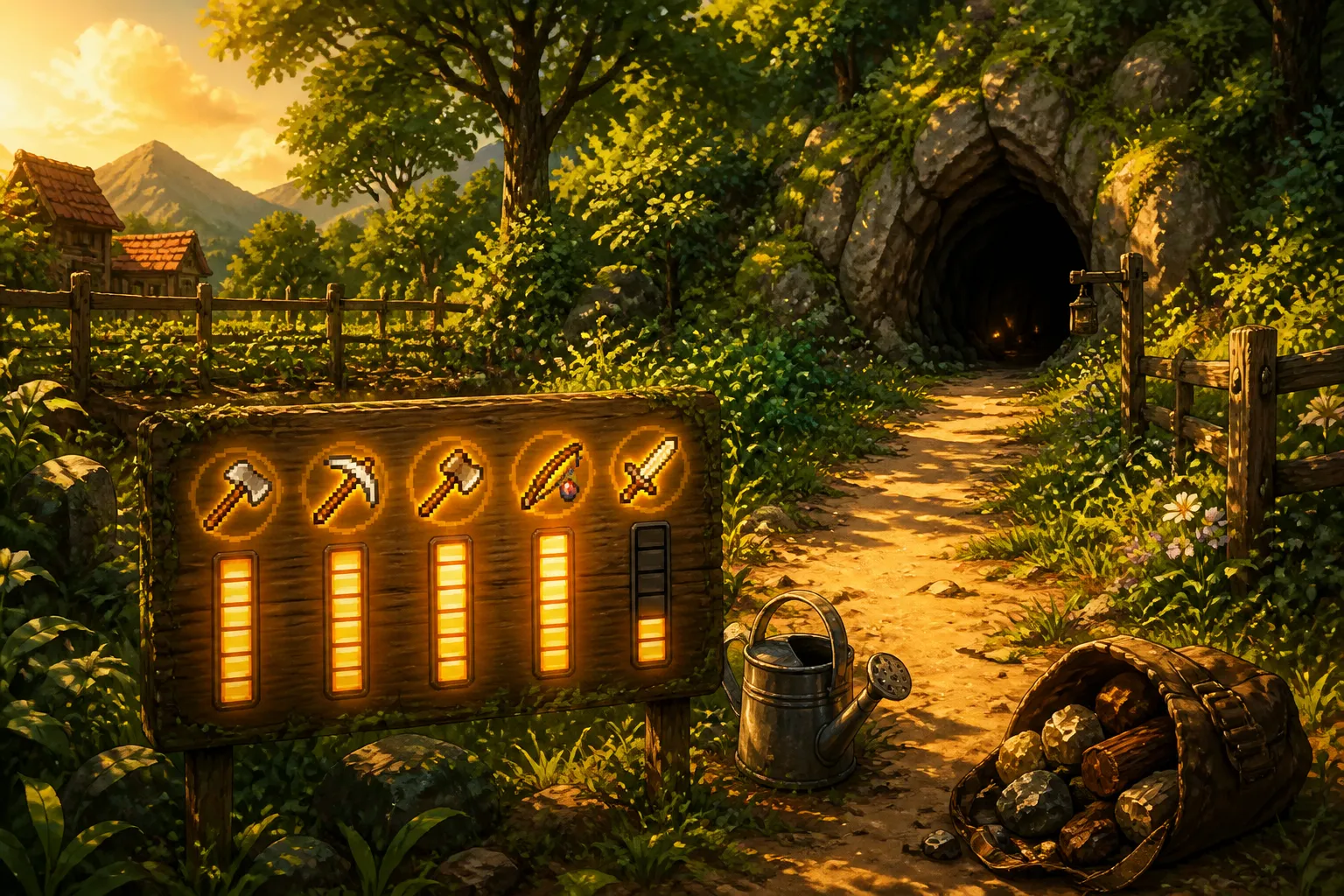
The Mastery Cave gives a late-game Stardew Valley farm a new question: which part of the work should become easier first? Update 1.6 added five mastery unlocks, but the cave will not open just because one skill has raced ahead. Farming, Mining, Foraging, Fishing and Combat must all reach level 10. For a returning player, the useful starting point is the Skills tab, not the cave door.
- Find the lagging skill. Check the Skills tab at the start of the week and make the lowest skill your main target.
- Give it a place in the schedule. Save rainy days for long fishing sessions, clear trees and hardwood stumps for Foraging, or head into the mines to work on Mining and Combat together.
- Keep materials aside. Hold on to iridium, coal, ore and hardwood while you work toward level 10 in all five skills.
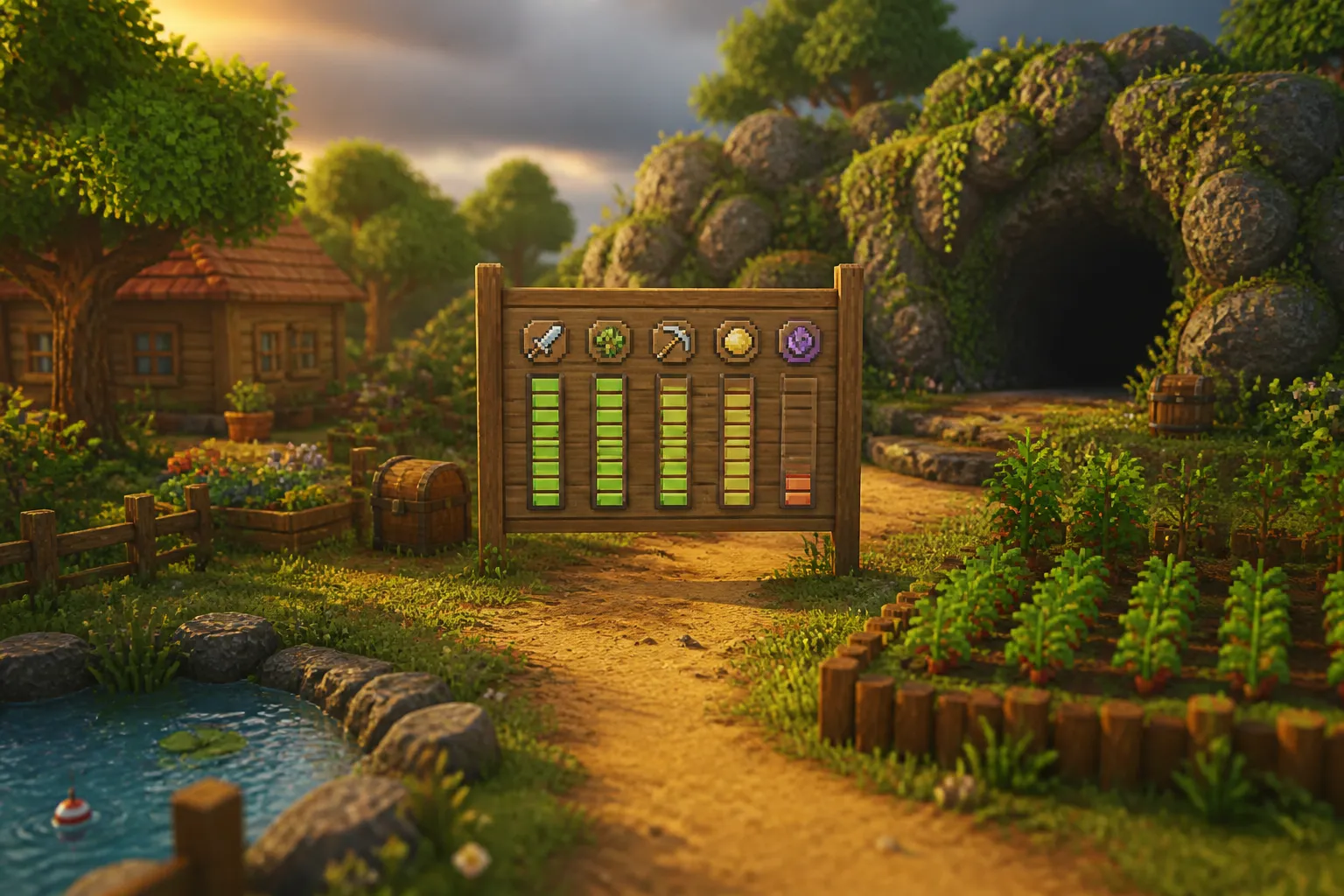
- Crops pay the bills? Consider Farming first for the Iridium Scythe and faster large harvests.
- Fish still bring in most of the gold? Consider Fishing first for the Advanced Iridium Rod, which supports two bobbers.
- Already well supplied for mine work? Mining may fit your save better, though the available guide does not fully explain that recommendation.
What the Mastery Cave asks of your save
The cave is in Cindersap Forest, but finding it is not the difficult part. Its entrance stays locked until every one of the five skills reaches level 10. A farmer who has spent years tending crops can still be held back by Fishing or Combat. That requirement makes the cave a useful measure of the whole save, including the work that a profitable routine may have left untouched.
Think of unlocking the door and choosing a reward as two separate jobs. First, bring every skill to the threshold. Then visit the cave and look at the mastery choices before spending points. The guide informing this plan is aimed at advanced saves and returning players. Its most practical advice is to choose rewards for the work you expect to do next, rather than follow one fixed order.
Make a week out of the lowest skill
A weekly check of the Skills tab can turn a vague goal into a manageable plan. If Fishing is behind, use rain to your advantage. With less watering to do, you can spend a longer stretch at a river or the ocean instead of trying to squeeze a few casts between farm chores. If Foraging is lowest, tree cutting and hardwood stump clearing give that skill a regular place in the day.
The mines are especially useful when both Mining and Combat need attention, since one trip can advance the two skills together. High-luck days are good candidates for mine visits when you also want geodes and valuable materials. Keep an eye on what comes home. Iridium, coal, ore and hardwood are worth setting aside before you inspect mastery recipes. Reaching the cave only to discover that the next project needs materials you recently used elsewhere is an avoidable detour.
There is no reliable calendar promise to attach to this routine. The available guide gives no number of days or hours for raising each skill. The Skills tab is a better measure than a countdown: let it tell you what needs another week, then adjust the farm schedule around that answer.
What five unlocks will cost
The first mastery unlock costs 10,000 mastery points. All five cost 100,000 points in total, and each successive unlock costs more than the last. Those numbers make the first decision important without making it permanent. You can eventually have all five, but the early reward will shape what your next stretch of play feels like.
Do not build a detailed savings plan from the total alone. The guide does not provide the individual costs of unlocks two through five. Check the amounts in your game before deciding how long to save or what to take next. The same caution applies to materials: inspect a reward and its associated recipes rather than assuming that a full chest means you can make everything immediately.
Choose for the farm you actually run
Farming is a sensible first pick when crop harvests dominate the calendar. The Iridium Scythe can make a large harvest considerably faster. On a farm where rows of crops already supply the money and materials for other projects, that time saving feeds straight back into the routine you use most.
Fishing tells a different story. If fish remain the main source of gold, the Advanced Iridium Rod and its support for two bobbers may be more relevant than a faster harvest. Mining is another possible first choice for a save that already holds the materials it needs, but the available guide cuts off before it explains that case fully. Treat it as a prompt to inspect the in-game reward, not as a blanket recommendation.
The useful question is what you will do during the week after the purchase. A field ready for repeated harvests makes Farming attractive. A save built around fishing trips has a reason to look at Fishing. If the farm is not yet earning enough to support the projects you want, that underlying money and materials problem matters more than a universal unlock ranking.
What to verify at the cave
This plan has limits. The available guide stops before giving complete Mining, Foraging, Combat and Fishing reward lists or a full recommended order. It also leaves out the exact costs of the later unlocks. Although it refers to an official 1.6 changelog and a Steam page, it neither links nor quotes them, so their wording cannot be checked from that guide. It is a single fan-style account, not a cross-checked record of every reward.
Use it to plan the trip, then let the live game settle the purchase. Confirm that all five skills have reached level 10, visit the Cindersap Forest cave, read the current point cost and reward details, and choose the unlock that serves the work already waiting back on your farm.
Sources

Alexandra Rivet explores the intricate interplay of games and culture for GoAndGame. A passionate storyteller, she delves into narratives with depth and curiosity. Her pieces often highlight the stories behind the pixels.


