
I have lost count of the evenings I spent at a hobby shop table, waiting on one player to finish a very long turn. Digital board games fix that problem first. The better ones go further and try to feel like the table itself. The evidence is partial, but it points in a hopeful direction.
What counts as a digital board game adaptation
Start with a simple split. Some digital board games are standalone apps, the kind ranked on Steam and often sold on mobile too. Others live on platforms like Tabletop Simulator and Board Game Arena, which host modded or custom versions of many games. The ranking I leaned on leaves those platforms out, because they are sandboxes and not single adaptations.
That split matters if you want one specific game done properly. A sandbox gives you freedom and a lot of setup. A standalone app gives you a finished product with one rulebook. The same ranking names Splendor, Pandemic, Carcassonne, Blood Bowl 2 and Ticket to Ride: All Aboard as near misses, so the category is wide, from light card engines to heavy team sports.
Who makes these adaptations and how the studio side works
One name worth knowing is Auroch Digital. It is a Bristol-based developer focused on strategy and management games, and on turning board games into digital ones. Its credits include work with Games Workshop, Steve Jackson Games and Modiphius Entertainment. That tells you something simple: these adaptations usually run through licenses, so rights holders sit in the room.
The ownership story moves quickly. Sumo Group acquired the studio in September 2021 for $8.3 million, and 61 employees were listed that year. In November 2025 it was sold to Roundtable Interactive. I would not read game quality into any of that. The sources do not connect those deals to how any adaptation plays.
How the digital versions try to play like the table
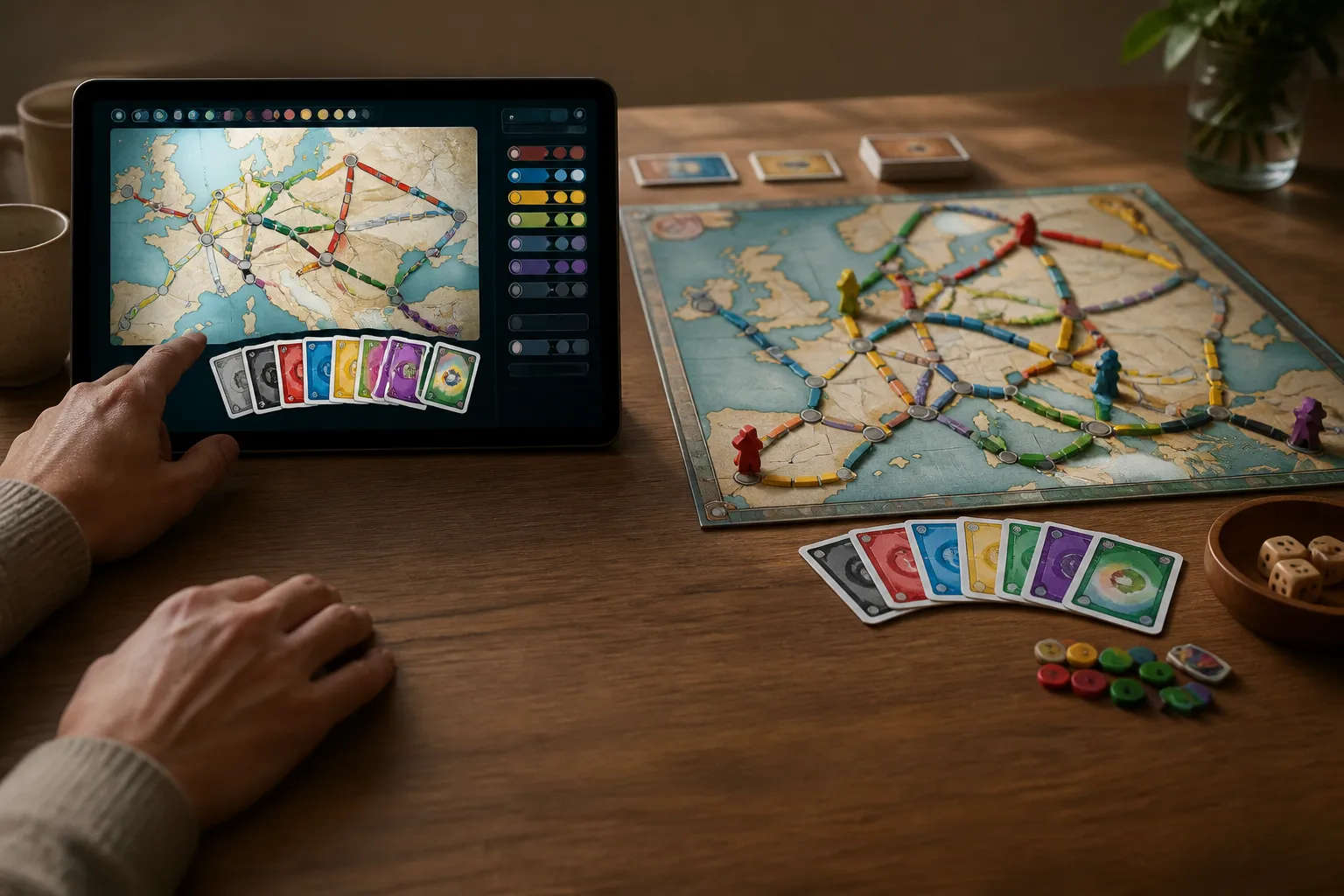
The most useful trick is the practice room. Some adaptations let you learn the rules against AI opponents before you sit down with people, or rehearse a strategy for later. That is a kind courtesy to your friends, who no longer have to explain the scoring for twenty minutes.
Digital Ticket to Ride is the clearest example. You can speed up turns against the AI, so a few rounds finish in minutes. The AI difficulty scales from easiest to hardest, which means a beginner and a grudge-holder can both find a fit. The interface gets praise too, easy to understand and uncluttered. Good screens matter more than people admit.
I do have to be careful here. The sources do not say how closely any adaptation follows the physical rules, components or social feel. Fast and readable is not the same as faithful. I can tell you it is pleasant. I cannot tell you it is identical.
Cost, value and warning signs
Price is a real draw. Digital board games can cost much less than a physical copy. The catch is expansions. Collecting all of them for digital Ticket to Ride will cost a fair amount, and it is easy to drift there one add-on at a time.
Watch for the free-to-play version too. Some free apps lock nearly everything behind a paywall and give you only limited plays per day, with Risk and Catan cited as examples. Check the model before you download, not after you have invited three friends. One caveat: the sources give no specific prices for games, expansions or platforms, so I can't offer a real cost comparison.
Open questions and the Netflix angle
Even the praised example comes with an asterisk. Digital Ticket to Ride is called a strong gameplay adaptation, but it is marked down for a poorly handled relaunch decision. The source cuts off before explaining it, so I can't judge it.
There is also a media angle. A Netflix listing says the service has optioned or plans to adapt board games, and it names Exploding Kittens among those already adapted. It does not describe the others in detail. That is a sign of attention, not a measure of quality.
So are digital adaptations finally respecting the table? Better AI, faster turns and cleaner interfaces say yes, at least in the best cases. But the sources are silent on commercial success and overall player ratings. For now it is my judgment, not a settled finding, and I would happily be argued out of it over a game of Ticket to Ride.
Sources

Mara Solis is a staff writer at GoAndGame covering board games, tabletop strategy, and the culture around competitive play. She has spent years logging hours at game tables from local hobby shops to international conventions. Her writing blends practical insight with a genuine enthusiasm for the communities games create.


