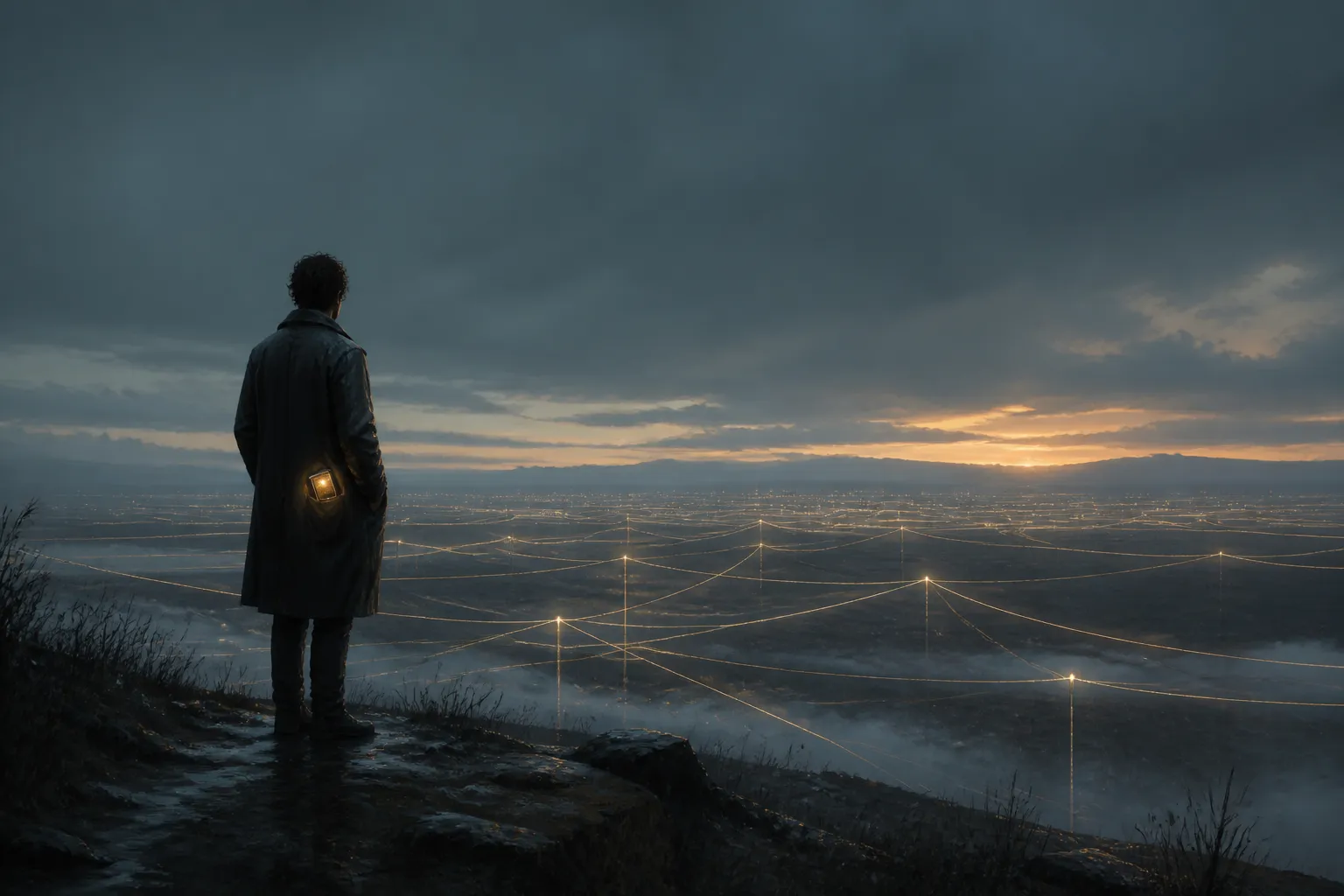
In the first Death Stranding, connection sounded like a destination. A fractured country could be joined again, one link at a time. Hideo Kojima now describes the sequel from a less certain position. After a pandemic made online contact part of daily survival, the question is no longer simply how to bring people together. It is what happens when being connected becomes ordinary.
The first connection
The original game places its hope in an extraordinary piece of infrastructure. Its North America has been nearly destroyed by portals to the realm of the dead. The Chiral Network, a spectral internet routed through the purgatorial Beach, offers a way to reunite the divided country. The premise gives connection a visible task: restore links where a disaster has broken them.
That hope also belonged to the moment in which Kojima made the game. As Rock Paper Shotgun reports, citing VGC, he recalled a world moving toward isolation and division, with the UK’s departure from the EU among his examples. He described the first game’s theme as “Let’s connect.” That is Kojima’s retrospective account, rather than proof that every part of the game was uncomplicatedly optimistic. Still, it explains why the Chiral Network could feel like an answer. Its purpose was clear before anyone had to ask what living with it might be like.
Three months changed the question
Kojima said the first game arrived before COVID-19 and that the pandemic followed about three months later. The sequence matters because it changed the practical meaning of his theme. During lockdown, he argued, the internet helped people survive by allowing them to remain in contact. Connection was no longer only an ideal to pursue across a divided world. It was something people depended on through an ordinary day spent apart.
His account reaches us through VGC as cited by Rock Paper Shotgun, not through a primary transcript in the material available here. Even with that limit, the shift he describes is pointed. A network can answer loneliness in one moment and become an assumed condition of life in the next. Once it is always there, its benefits may be harder to separate from the demands it creates: another conversation to maintain, another channel that stays open. That is a question the first game’s call to connect did not have to settle.
When a solution becomes a habit
Rock Paper Shotgun frames Kojima’s newer view of the Chiral Network more negatively. That makes the sequel’s relationship to the first game more interesting than a simple reversal. A tool can have been needed when it was built and still deserve scrutiny once everyone relies on it. Restoring a connection is an event. Living inside the system that maintains it is a routine.
The available report cuts off before Kojima’s fuller description of that negative portrayal, so it does not establish exactly how far the sequel takes the criticism. The headline of Digital Trends’ review says the game “weighs the cost of connection,” a useful description of the critical question. The review text is not available in the supplied excerpt, though, so that headline cannot stand in for its argument or verdict. What can be said is narrower: Kojima’s account changes the meaning of the old solution. Reuniting people may be necessary without being the end of the story.
Who benefits from being always connected?
Kojima’s dislike of the “metaverse” sharpens that concern. Rock Paper Shotgun describes the term as a monetisable “web 3.0” umbrella covering such things as VR and cryptocurrency. In that framing, connection can become more than a way for people to reach one another. It can become an experience packaged for sale, with participation treated as something to capture and sustain.
That does not mean every digital meeting carries the same cost, or that Kojima’s objections supply a complete account of the sequel. It does make the everyday question harder to dismiss. An online connection may be precious when distance keeps people apart. It may also become exhausting when the expectation to remain available never recedes. The tension lies in wanting the door to stay open while retaining the freedom to step away from it.
The work of staying connected
There is an important limit to this reading. The sources here do not describe the sequel’s plot or mechanics, and they provide no basis for claims about its release details or price. They support an interpretation of Kojima’s changing question, not a scene-by-scene account of how the game answers it. The first Death Stranding imagined a country that needed its links restored. Kojima’s pandemic-era reflection asks what those links ask of people after restoration.
That is a quieter test for Death Stranding 2. A broken network presents an obvious job. A working one presents smaller decisions that repeat: when to answer, when to depend on someone else, and when connection has begun to feel compulsory. The Chiral Network’s first promise was that separated people could find one another again. Its harder question begins the morning after, when the connection is still there.
Sources

Eliot Reed writes about the intricacies of virtual worlds, blending analysis with storytelling. As a house writer for GoAndGame, he delves deep into game mechanics and narratives, offering thought-provoking insights for players and developers alike.


